€2,50 EUR
Save {price}%
€1.250,00 EUR kg
Price plus shipping
Delivery time: 1-2 business days (PT – international may vary)
reicht für ca. 5 m²

In stock

Traditional cultivation method & heirloom variety. Genetically stable & open-pollinated - 100% free from hybrid breeding, GMOs, and synthetic fertilizers. Organically propagated - Non-proprietary variety.

Local pickup at Benjis Seeds

Bohnensamen2

Harvest year:

2024

Seed viability:

3 years (species-specific)
Detailed information on germination capacity

Description

Cultivation & Characteristics

Tips & Reviews

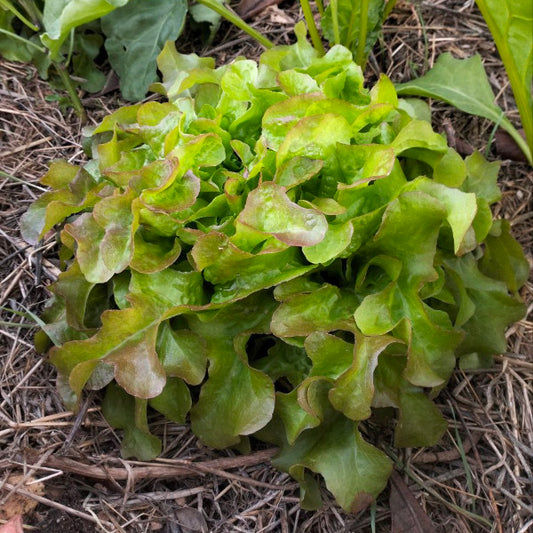
Red Orach – Decorative leafy vegetable with bright red leaves. 

This variety is a robust orach with bright red, large leaves and a mild‑spicy flavor. It grows upright and is ideally suited for open‑field cultivation. Fast‑growing, high‑yielding, and open-pollinated – optimal for self‑sufficiency and organic farming.


  Origin & History

The red orach is a selected cultivated form of common orach that has been grown in Europe for centuries. The Greeks and Romans already used it as both a vegetable and a dye plant. In the Middle Ages it was among the most important leafy vegetables in monastery and peasant gardens, before spinach displaced it. Today, as an old cultivated plant, it is experiencing a renaissance in organic gardening.

The red variety was deliberately selected for its bright leaf color and decorative value. Its leaves show an intense red to purple, especially vivid in spring, later shifting toward pink or greenish tones. This striking coloration made it valued not only as a kitchen vegetable but also as a dye plant for producing red pigments for textiles. In traditional medicine it was also used as a healing plant.

Red forms of orach were distinguished early as special varieties. They were considered an ornament in cottage gardens and, thanks to their milder taste, were eaten raw—unlike other red orachs, which were often bitter. Today, red orach is regarded as an important cultivated plant for maintaining varietal diversity. It stands as a symbol of the rediscovery of old vegetable forms that had long disappeared from gardens and are now consciously preserved and passed on as part of traditional cultural heritage.


  Appearance & Characteristics

The plant grows upright and reaches a height of 150 cm. It develops large, triangular to arrow‑shaped leaves in intense red to purple and shows high tolerance to drought and salinity. Annual, not winter‑hardy – it dies back with frost.

Leaf details:

  • Size: Large, approx. 10-20 cm long leaves

  • Shape: Triangular to arrow‑shaped, alternately arranged

  • Color: Bright red to purplish red, young leaves more intensely colored

  • Texture: Tender in young leaves, later firmer

  • Flavor: Mild‑spicy with a slightly earthy note


 Usage & Cultivation Highlights

The young leaves are excellent for fresh consumption in salads, smoothies, and as decorative garnish. Their mild‑spicy flavor and tender texture make them an appealing alternative to spinach. They can also be steamed or lightly sautéed as a warm side dish, used in soups and stews, and add both fine flavor and intense color to pestos or herb spreads. As part of diet and low‑carb cuisine they are popular for being nutrient‑rich yet low in calories.

Thanks to its rapid growth and low demands, red orach grows reliably outdoors and in large pots. The variety matures early and continuously produces new leaves. It is easy to care for, adapts well to different sites, and delivers stable yields even under dry conditions. Particularly noteworthy are its tolerance to salt and drought and its suitability as a green manure crop. It shows strong resilience to changing weather and thrives even in poorer soils. Its robust nature allows cultivation with minimal effort. The plant can be harvested multiple times, as it continuously regenerates new foliage. It is excellent as a gap‑filler in beds, extends the harvest season from spring into autumn, and contributes to garden design with its decorative leaf color. In mixed culture it is beneficial, quickly covering soil, suppressing weeds, and improving soil structure with its deep roots.

Compared to other leafy vegetables, red orach is especially undemanding and decorative – ideal for anyone who values open‑pollinated greens with striking appearance and traditional heritage.

Cultivation_Overview_-_Anbau_im_Uberblick_-_Visao_geral_do_cultivo_-_www

Origin & Cultivation at a Glance

First mention:

1597

Breeder:

Unknown – heritage variety

Origin:

West- und Zentralasien

Propagation site:

Algarve - Portugal

Suitable for:

Open field, Raised bed, Balcony / pot, Urban gardening

Care requirements:

Low – easy to care for, ideal for beginners.

Overwintering:

Winter-hardy - suitable for outdoor cultivation.

Suitability for cultivation and use:

Early crop, Summer crop, Peak season, Self-sufficiency, Biodiversity, Variety conservation, Educational projects / School garden, Direct marketing, Ornamental variety, Fresh consumption, Processing
Plant_Growing_Instructions_-_Pflanzen_Anbau-Anleitung_-_Instrucoes_de_cultivo_de_plantas_-_www

Cultivation guide for

<tc>Red Orach</tc>

Growing difficulty:

Easy
• Im subtropischen Klima ab Februar bis September sonnig bis halbschattig ins Freiland aussäen – Vorkultur nicht empfehlenswert.
• In gemäßigten Regionen ab März bis Juli sonnig bis halbschattig direkt ins Freiland aussäen – Vorkultur nicht empfehlenswert.
Sow in well‑drained, humus‑rich, and moderately nutrient‑rich loamy soil. Light germinator - do not cover with soil. Plant spacing: 30 × 50 cm.
For baby leaf, sow densely with row spacing of 10-15 cm.

Special features:

Annual variety / Fast-growing, Fast-growing, High-yielding, Resilient, Low-maintenance, Sun-loving / sunny, Schattenverträglich / halbschattig, Drought-tolerant, Heat-tolerant

Cultivation tips:

Direct sowing is recommended - young plants grow quickly and vigorously.
Water regularly - consistent moisture promotes tender leaves and mild flavor.
Keep evenly moist - drought stress leads to bolting.
Removing flowers extends leaf usage.

Storage instructions:

Store seeds in a cool, dry, dark, and airtight environment to maximize shelf life and germination.
Detailed information on seed storage
Plant_Profile_-_Pflanzen_Steckbrief_-_Ficha_da_planta_-_www

Plant Profile

Plant details

Botanical name:

<tc>Atriplex hortensis L. var. rubra 'Rote Gartenmelde'</tc>

Growth habit:

Upright growth, Herbaceous

Botanical family:

Amaranthaceae

Plant height:

150 cm

Plant type:

Leafy vegetables

Plant width:

50 cm

Life cycle:

Annual

Root type:

Shallow to moderately rooted, Taprooted

Cultivation period:

3-4 months

Hardy to:

0 °C - tolerable for a short time, but not winter-hardy.

Cultural meaning:

Historical, Traditional

Propagation method:

Generative propagation by seed, Self-seeding

Propagation:

• Diese Sorte ist fremdbefruchtend durch Windbestäubung und gehört zur Art Atriplex hortensis.
For seed production, a minimum isolation distance of 800–1000 m from other varieties of the same species is recommended, as cross-pollination is easily possible.
The plant is annual – after flowering it produces small, branched inflorescences with numerous, small, well‑ripening seeds.
The seeds are ready for harvest once the seed heads have completely dried and become straw‑like and brittle.

Sowing & Planting

Germination

Planting

Germination type:

Light germinator, Temperate germinator

Pot culture:

Requires a minimum container size of 5 liters.

Sowing depth:

0-0,5 cm

Plant spacing:

30 cm

Germination temperature:

18-24 °C

Row spacing:

50 cm

Germination time:

7-14 Tage

Row spacing for baby leaf:

10-15 cm

Pricking out / thinning out:

No thinning required – direct sowing recommended.

Planting time:

Transplanting not required - direct sowing is recommended.

Soil

Soil type:

Deep, well-drained, humus-rich to sandy loam soil.

Soil pH:

6.5-7.5 - neutral to slightly alkaline

Nutrient requirements:

Light feeder

Soil moisture:

Evenly moist, Adaptable, Sensitive to waterlogging

Soil preparation:

Loosen soil before sowing, Prepare soil weed-free and with a fine crumb structure.

Companion planting, Crop rotation & Harvest

Companion plants:

Lettuce, Brassicas, Bean, Pea, Radish, Carrot, Onion, Dill, Coriander

Incompatible plants:

Celery, Cucurbits, Potato, Corn, Sunflower, Amaranthaceae-Arten

Crop rotation guidelines:

• Nicht nach anderen Amaranthaceae-Arten pflanzen - mindestens 3 Jahre Abstand empfohlen.
Repeated cultivation at the same site increases disease pressure, leads to nutrient depletion, and impairs soil structure.

Harvest time:

Spring, Summer

Sowing to harvest:

1-1,5 months

Harvested parts:

Leaves

Suitable for consumption:

Yes - edible raw or cooked.

Intended use:

Diet cuisine, Low Carb, Raw consumption, Salad, Steaming, Cooking, To purée, Smoothies, Freezing, Drying / Dehydrating, Natural garden, Decoration

Care & Cultivation practices

Water requirements:

Moderate

Plant care techniques:

Thin out after germination when sown directly, Water regularly - even during dry periods, Maintain weed-free, Gelegentliches Auslichten bei dichter Bestandesentwicklung

Plant protection:

Well-ventilated location and good drainage recommended.

Cultivation notes:

Proven and easy to cultivate Susceptible to slugs and snails in early development. At a later stage, the hardier leaves are less vulnerable. May develop mildew in damp weather – an airy location is recommended. Sensitive to waterlogging – use well-drained soil.

Other names

EN - English names:

• Red Orach

DE - German names:

• Rote Gartenmelde

PT - Portuguese names:

• Arroche vermelha

ES - Spanish names:

• Acelga roja • Arroche roja

FR - French names:

• Arroche rouge
Practical_Planting_and_Care_Tips_-_Praktische_Aussaat-_und_Pflegetipps_-_Dicas_praticas_de_sementeira_e_cuidados_-_www

Practical sowing and care tips

Saattiefe - Bedingt Keimverhalten und Gesundheit

Sowing depth - Determines germination and health

Germination rate too low or plants bending over? Decisive factors for sowing depth. In this article from my gardening handbook,...
Read more here
Aussaat-Arten - Direktsaat und Vorkultivierung

Sowing methods - direct sowing and pre-cultivation

How do I sow seeds: direct sowing or pre-cultivation? In this article, we'll explain the background of both methods, along...
Read more here
Keimarten und Umgebungsfaktoren - Wie Samen keimen

Germination types and environmental factors - How seeds germinate

Which germination types are relevant, and what should you consider when germinating seeds? In this article, we've compiled a simple,...
Read more here
Mulch - Wasser sparen und Wachstum fördern

Mulching - save water and promote growth

Nature as a model - mulching has numerous advantages that benefit the health of soil life and plants. In this...
Read more here

Customer Reviews

Be the first to write a review
0%
(0)
0%
(0)
0%
(0)
0%
(0)
0%
(0)

Further recommendations for you

100% open-pollinated & reproducible