Common Valerian - Valeriana officinalis

€2,50 EUR
Save {price}%
€6.250,00 EUR kg
Price plus shipping
Delivery time: 1-2 business days (PT – international may vary)
reicht für ca. 5 m²

In stock

Historic, traditional and unchanged wild form. Genetically stable & open-pollinated - 100% free from hybrid breeding, GMOs, and synthetic fertilizers. Organically propagated - preserved in its original form.

Local pickup at Benjis Seeds

Bohnensamen2

Harvest year:

2024

Seed viability:

3 years (species-specific)
Detailed information on germination capacity

Description

Cultivation & Characteristics

Tips & Reviews

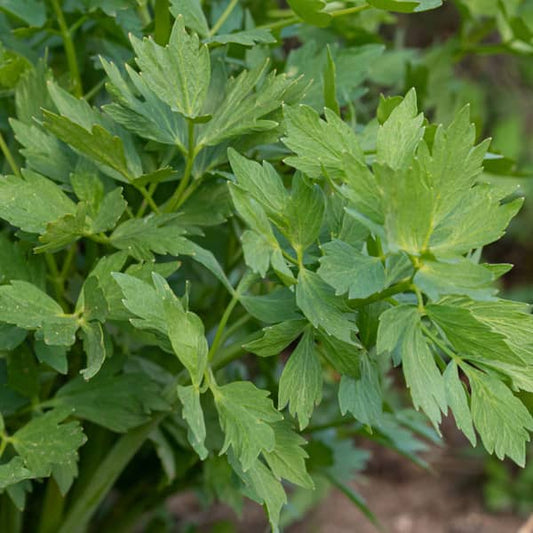
The perennial valerian is a medicinal plant that has been known since ancient times and has calming properties and is used as a natural pain-relieving sleeping aid and nerve-calming relaxant. It attracts many insects such as beetles, butterflies and hoverflies to the garden. Ideal for direct sowing, pot cultivation possible, sowing spring-autumn, good for mixed culture, harvesting the flowers and leaves.

 Description 
Valerian is a very old perennial medicinal plant that has been known in Europe since the 4th century. The medicinal herb has calming ingredients and is used as a natural pain-relieving sleeping aid and nerve-calming relaxant. Valerian is an easy-care marsh and wet meadow plant and is therefore used to changing conditions of wet and dry. The leaves are used in ointments or prepared in the form of a tea. The plant attracts many insects such as beetles, butterflies and hoverflies to the garden. Valerian grows throughout Europe, especially on moorland meadows and on river and stream banks.

 Mixed culture 
Optimal mixed culture: Bean, Dill, Pea, Potato, Cabbage
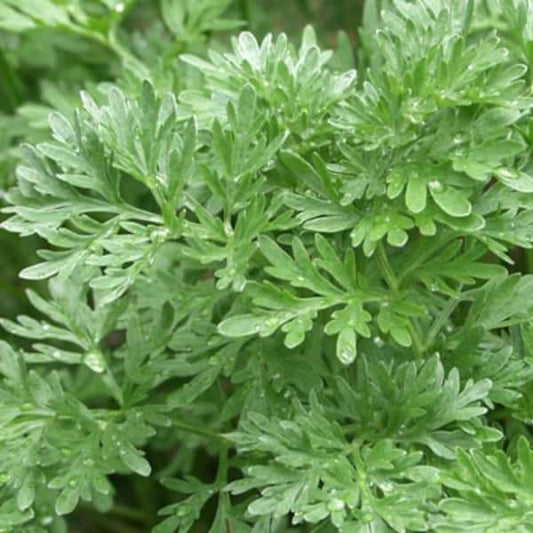
Unfavorable mixed culture: Lamb's lettuce, Wormwood

 Sowing by climate zone 
Subtropic climate (Mediterranean) (e. g. B. Portugal, Spain, Italy)
We recommend direct sowing from March to May or in autumn from September to October. The ideal location for the plants is sunny to partially shaded.
Moderate climate (e. g. B. Germany, Switzerland, Poland)
Direct sowing from May to June is recommended. The plants should ideally be planted in a sunny location.

 General recommendations 
Direct sowing is recommended. Direct sowing should be treated with particular care as it may dry out or be carried away by small animals such as ants. After germination, thin out the plants to the specified plant spacing.
Valerian prefers a permeable, moderately nutrient-rich, moist, humus-rich and clayey loamy soil. As a typical marsh and wet meadow plant, it tolerates waterlogging well.

 Additional tips 
Seedlings need to be watered regularly, after which larger plants can be left drier. Soils can also be flooded at times, the species is used to changing wet conditions and can also cope with drier soils in the garden. Tends to self-seed heavily. In order to quickly obtain a fine, crumbly and permeable soil with good nutrient and water retention capacity, additional incorporation of biochar and primary rock flour is recommended.

 Type of propagation 
Propagation occurs via seeds.

 Plant care 
No care or fertilization necessary.

Cultivation_Overview_-_Anbau_im_Uberblick_-_Visao_geral_do_cultivo_-_www

Origin & Cultivation at a Glance

First mention:

Origin:

Breeder:

Wild form – taken into cultivation unchanged

Propagation site:

Lower Saxony – Germany

Suitable for:

Care requirements:

Low – easy to care for, ideal for beginners.

Overwintering:

Hardy – suitable for perennial cultivation outdoors.

Special features:

Plant_Growing_Instructions_-_Pflanzen_Anbau-Anleitung_-_Instrucoes_de_cultivo_de_plantas_-_www

Cultivation guide for

Echter Baldrian

Growing difficulty:

Easy
• Im subtropischen Klima von Dezember bis März sonnig bis halbschattig aussäen – Vorkultur ab Januar möglich.
• In gemäßigten Regionen Direktsaat von März bis Juni nach dem Frost in sonnigen bis halbschattigen Lagen – Vorkultur ab März sinnvoll.
• Aussaat in tiefgründigen, durchlässigen, humusreichen und nährstoffreichen Lehmboden – Lichtkeimer – nicht mit Erde bedecken. Pflanzabstand: 40 × 50 cm.

Cultivation tips:

Storage instructions:

Store seeds in a cool, dry, dark, and airtight environment to maximize shelf life and germination.
Detailed information on seed storage
Plant_Profile_-_Pflanzen_Steckbrief_-_Ficha_da_planta_-_www

Plant Profile

Plant details

Botanical name:

Valeriana officinalis L.

Botanical family:

Valerianaceae

Plant type:

Life cycle:

Perennial, long‑lived (3–5+ years)

Cultivation period:

10-18 Monate

Growth habit:

Plant width:

45 cm

Plant height:

150 cm

Root type:

Hardy to:

-30 °C

Cultural meaning:

Historical, Traditional

Suitability for cultivation and use:

Propagation method:

Propagation:

Sowing & Planting

Germination type:

Light germinator, Temperate germinator

Sowing depth:

0 cm

Germination temperature:

10-20 °C

Germination time:

10-28 days

Pot culture:

Row spacing for baby leaf:

Not suitable for baby-leaf cultivation.

Plant spacing:

40 cm

Row spacing:

50 cm

Pricking out / thinning out:

Planting time:

Soil

Soil type:

Deep, well-drained, humus-rich loam

Soil pH:

6.0-7.5 – slightly acidic to alkaline

Nutrient requirements:

Moderate to heavy feeder

Soil moisture:

Soil preparation:

Companion planting, Crop rotation & Harvest

Companion plants:

Incompatible plants:

Crop rotation guidelines:

Harvest time:

Sowing to harvest:

10-18 Monate

Harvested parts:

Suitable for consumption:

Intended use:

Care & Cultivation practices

Water requirements:

Moderate to high

Plant care techniques:

Plant protection:

Cultivation notes:

Other names

EN - English names:

• Common Valerian • Garden Valerian

DE - German names:

• Echter Baldrian • Großer Baldrian • Wurmkraut • Mondwurz

PT - Portuguese names:

• Valeriana

ES - Spanish names:

• Valeriana

FR - French names:

• Valériane officinale
Practical_Planting_and_Care_Tips_-_Praktische_Aussaat-_und_Pflegetipps_-_Dicas_praticas_de_sementeira_e_cuidados_-_www

Practical sowing and care tips

Saattiefe - Bedingt Keimverhalten und Gesundheit

Sowing depth - Determines germination and health

Germination rate too low or plants bending over? Decisive factors for sowing depth. In this article from my gardening handbook,...
Read more here
Aussaat-Arten - Direktsaat und Vorkultivierung

Sowing methods - direct sowing and pre-cultivation

How do I sow seeds: direct sowing or pre-cultivation? In this article, we'll explain the background of both methods, along...
Read more here
Keimarten und Umgebungsfaktoren - Wie Samen keimen

Germination types and environmental factors - How seeds germinate

Which germination types are relevant, and what should you consider when germinating seeds? In this article, we've compiled a simple,...
Read more here
Mulch - Wasser sparen und Wachstum fördern

Mulching - save water and promote growth

Nature as a model - mulching has numerous advantages that benefit the health of soil life and plants. In this...
Read more here

Customer Reviews

Be the first to write a review
0%
(0)
0%
(0)
0%
(0)
0%
(0)
0%
(0)

Further recommendations for you

100% open-pollinated & reproducible