True Watercress - Nasturtium officinale

€2,50 EUR
Save {price}%
€5.000,00 EUR kg
Price plus shipping
Delivery time: 1-2 business days (PT – international may vary)
reicht für ca. 4 m²

In stock

Historic, traditional and unchanged wild form. Genetically stable & open-pollinated - 100% free from hybrid breeding, GMOs, and synthetic fertilizers. Organically propagated - preserved in its original form.

Local pickup at Benjis Seeds

Bohnensamen2

Harvest year:

2024

Seed viability:

Up to 6 years (species-specific)
Detailed information on germination capacity

Description

Cultivation & Characteristics

Tips & Reviews

True Watercress historic water‑ and marsh plant for wet habitats. 

Perennial medicinal and vegetable plant with a peppery‑fresh aroma and a high content of vitamins and minerals. It grows reliably in moist to wet locations, is winter‑hardy and suitable for open ground, pond edges and container culture. It germinates reliably and can live for many years. Ideal for self‑sufficiency and ecological vegetable cultivation.


  Origin & History

The true watercress is a wild, perennial aquatic and marsh plant from the mustard family (Brassicaceae), within the tribe Cardamineae and the genus Nasturtium. Its original range extends from Europe through western to central Asia. Today it is cultivated in many regions of northern and eastern Africa as well as in temperate and subtropical climates worldwide, and in some of these areas it can also be found naturalised. It prefers clear, cool, flowing water and grows at springs, streams, ditches and moist sites, where it thrives partly fully submerged and partly on muddy banks. It is considered an indicator plant for clean, clear running waters. The name “Brunnenkresse” derives from the Middle High German brunne for spring or spring water and refers to its typical habitat.

The true watercress is among the oldest documented European wild vegetables and was already valued in antiquity as both a medicinal and food plant. Its high vitamin C content made it an important herb against deficiency symptoms. Its close association with flowing, “living” water and its invigorating properties made it a symbolic plant in herbal medicine, representing clarity, purification and vitality.

In the Middle Ages it remained a cherished spring herb in monastic gardens, where it was cultivated for its cleansing and strengthening effects. Its peppery‑sharp flavour is based on mustard oils, which have given it a firm place in traditional European cuisine and folk medicine for centuries. Thanks to its wide distribution and long history of use, the true watercress is still regarded today as one of the most important traditional medicinal and vegetable plants of Europe.


 Appearance & Characteristics

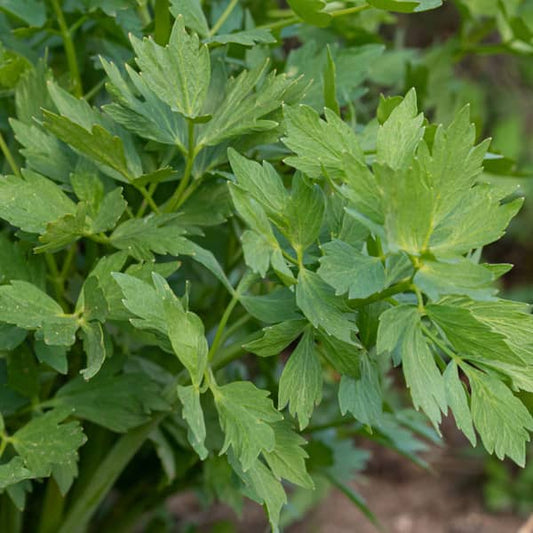
The plant is perennial and herbaceous, growing from creeping to upright. It forms hollow stems with dark green, imparipinnate leaves. The small white flowers appear from May to September in loose racemes and are pollinated by insects. The shoots root at the nodes and form dense mats. The species is hardy to around –15 °C.

Plant details:

  • Height: Low, 10–40 cm

  • Form: Creeping to upright, strongly branched

  • Leaves: Imparipinnate, fleshy, dark green

  • Flowers: White, in racemes

  • Flavor: Peppery‑sharp, savory, fresh, aromatic


 Usage & Cultivation Highlights

True watercress is ideal for salads, soups, smoothies, sandwiches, herb pastes and as a fresh garnish. It refines dips, quark, herb butter and light sauces, and pairs excellently with potato, egg and fish dishes. It also develops its full aroma in pestos, green juices, cold starters and fresh spring dishes. The leaves and shoots are rich in vitamin C, iron, calcium and mustard oils. Its peppery‑sharp flavour makes it a popular ingredient in healthy cuisine, especially for raw dishes and light, fresh meals. The young shoots are particularly tender and aromatic.

True watercress grows reliably in naturalistic water gardens, along streams and pond edges, in water bowls and in pots with consistently high moisture. Perennial and winter‑hardy, it is very robust and vigorous. Thanks to its rapid regenerative ability, it quickly closes gaps and forms dense, vital stands. It also grows reliably in small water containers or mini‑ponds and remains easy to care for. Its ability to form new roots immediately at the stem nodes makes it especially strong in regeneration and ideal for continuous harvesting over many years.

Compared to other cress species, True Watercress is the historic traditional medicinal and vegetable plant with a particularly high nutrient content – ideal for anyone seeking low‑maintenance, perennial leafy vegetables with a peppery flavour for moist locations.

Cultivation_Overview_-_Anbau_im_Uberblick_-_Visao_geral_do_cultivo_-_www

Origin & Cultivation at a Glance

First mention:

1st century AD

Origin:

Europe and Western Asia

Breeder:

Wild form – taken into cultivation unchanged

Propagation site:

Lower Saxony – Germany

Suitable for:

Open field, Greenhouse, Polytunnel, Cold frame, Balcony / pot, Urban gardening

Care requirements:

Low to medium - generally uncomplicated, manageable with some attention.

Overwintering:

Hardy – can be grown outdoors as long as the water does not freeze solid.

Special features:

Perennial / Winter green, Quickly usable, Fast-growing, High-yielding, Resilient, Low-maintenance, Shade-tolerant / partial shade, Cold-hardy
Plant_Growing_Instructions_-_Pflanzen_Anbau-Anleitung_-_Instrucoes_de_cultivo_de_plantas_-_www

Cultivation guide for

<tc>True watercress</tc>

Growing difficulty:

Medium
In subtropical climates, sow from March to September in semi‑shade – pre‑cultivation not recommended.
In temperate regions, direct sowing from April to July in semi‑shaded to sunny locations – pre‑cultivation not recommended.
Sowing in very moist to wet, humus‑rich soils or in floating pots. Light‑dependent germinator – do not cover with soil. Plant spacing: 20 × 25 cm.
For baby leaf, sow densely with row spacing of 10-15 cm.

Cultivation tips:

Direct sowing is recommended - young plants grow quickly and vigorously.
Thin out early so the plants have enough space.
Keep constantly moist – drought causes immediate growth cessation.
Good air circulation protects against aphids and fungal diseases.
Removing flowers – prevents lignification and bitterness, and extends the harvesting period.
Pruning at bud formation or when yellowing occurs stimulates new growth.

Storage instructions:

Store seeds in a cool, dry, dark, and airtight environment to maximize shelf life and germination.
Detailed information on seed storage
Plant_Profile_-_Pflanzen_Steckbrief_-_Ficha_da_planta_-_www

Plant Profile

Plant details

Botanical name:

<tc>Nasturtium officinale W.T.Aiton</tc>

Botanical family:

Brassicaceae

Plant type:

Leafy vegetables

Life cycle:

Perennial, long‑lived (2–4 years)

Cultivation period:

1–4 years

Growth habit:

Creeping, Herbaceous, Runner‑forming

Plant width:

30 cm

Plant height:

40 cm

Root type:

Shallow-rooted

Hardy to:

–15 °C

Cultural meaning:

Historical, Traditional

Suitability for cultivation and use:

Year-round crop, Peak season, Self-sufficiency, Biodiversity, Variety conservation, Educational projects / School garden, Fresh consumption, Processing

Propagation method:

Generative propagation by seed, Vegetative propagation, Runner-forming, Division possible, Propagation by cuttings

Propagation:

This variety is cross‑pollinating via insect pollination and belongs to the species Nasturtium officinale.
A minimum distance of 500–800 m from other varieties of the same species is recommended for seed production, as cross‑pollination is possible.
The plant is perennial – after flowering it produces numerous small seeds that ripen well in dry pods.
The seeds are ready for harvest once the seed heads have fully dried and become slightly brittle.

Sowing & Planting

Germination type:

Light germinator, Temperate germinator

Sowing depth:

0 cm

Germination temperature:

8–18 °C

Germination time:

7-14 days

Pot culture:

Requires a minimum container size of 5 liters.

Row spacing for baby leaf:

10-15 cm

Plant spacing:

20 cm

Row spacing:

25 cm

Pricking out / thinning out:

No thinning required – direct sowing recommended.

Planting time:

Transplanting not required - direct sowing is recommended. Only once the soil is frost-free.

Soil

Soil type:

Water‑saturated, humus‑rich, slightly calcareous loamy soil

Soil pH:

6.5-7.5 - slightly acidic to alkaline

Nutrient requirements:

Medium feeder

Soil moisture:

Evenly moist, Moisture-loving

Soil preparation:

Loosen soil before sowing, Apply compost before planting., Prepare weed‑free

Companion planting, Crop rotation & Harvest

Companion plants:

Chives, Water mint (Mentha aquatica), Sorrel, Brooklime

Incompatible plants:

Heavy feeder, Fast‑growing aquatic plants, Duckweed, Yellow flag, Bulrush, Mint

Crop rotation guidelines:

Perennial – remains in the same location for several years.

Harvest time:

Spring, Summer, Autumn, Winter

Sowing to harvest:

0,7-1,5 months

Harvested parts:

Leaves, Young shoots, Shoot tips

Suitable for consumption:

Yes - edible raw or cooked.

Intended use:

Diet cuisine, Low Carb, Culinary herb, Raw consumption, Salad, Steaming, To purée, Smoothies, Tea, Freezing, Natural garden, Wild perennial, Companion perennial

Care & Cultivation practices

Water requirements:

Very high

Plant care techniques:

Thin out after germination when sown directly, Inspect regularly for pest infestation, Remove blooms, Fertilize, Thin out, Regularly refresh the water – helps prevent algae formation.

Plant protection:

Well-ventilated location and good drainage recommended., Slug protection recommended, Check early for aphids.

Cultivation notes:

Proven and easy to cultivate Susceptible to slugs and snails Algae formation in stagnant water – refresh the water regularly. Loss of quality in heat – prefer cool locations. Growth stops under drought – consistent water supply required.

Other names

EN - English names:

True watercressBrook cress

DE - German names:

Echte BrunnenkresseBachkresseQuellkresse

PT - Portuguese names:

Agrião de águaAgrião verdadeiroAgrião‑silvestre

ES - Spanish names:

Berro de aguaBerro verdadero

FR - French names:

Cresson de fontaineCresson d’eauCresson officinal
Practical_Planting_and_Care_Tips_-_Praktische_Aussaat-_und_Pflegetipps_-_Dicas_praticas_de_sementeira_e_cuidados_-_www

Practical sowing and care tips

Saattiefe - Bedingt Keimverhalten und Gesundheit

Sowing depth - Determines germination and health

Germination rate too low or plants bending over? Decisive factors for sowing depth. In this article from my gardening handbook,...
Read more here
Aussaat-Arten - Direktsaat und Vorkultivierung

Sowing methods - direct sowing and pre-cultivation

How do I sow seeds: direct sowing or pre-cultivation? In this article, we'll explain the background of both methods, along...
Read more here
Keimarten und Umgebungsfaktoren - Wie Samen keimen

Germination types and environmental factors - How seeds germinate

Which germination types are relevant, and what should you consider when germinating seeds? In this article, we've compiled a simple,...
Read more here
Mulch - Wasser sparen und Wachstum fördern

Mulching - save water and promote growth

Nature as a model - mulching has numerous advantages that benefit the health of soil life and plants. In this...
Read more here

Customer Reviews

Be the first to write a review
0%
(0)
0%
(0)
0%
(0)
0%
(0)
0%
(0)

Further recommendations for you

100% open-pollinated & reproducible