Lettuce Seedlings - Selection of different varieties

<tc>Lettuce Seedlings - Selection of different varieties</tc>
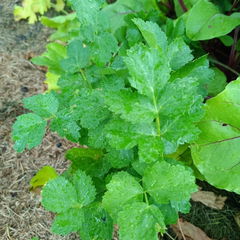
Cichorium endivia ‘Escariol Grüner’ – open‑pollinated mature Escariol Grüner endive plant growing outdoors in natural light, close‑up of fully developed broad green leaves with dense, well‑formed head structure, photographed for Benjis Seeds.
€0,30 EUR
€857,14 EUR kg

Pickup at Benjis Seeds

Seedlings are available exclusively for pickup at our nursery or at markets in Portugal.
Further details about your pickup

In stock

Our seedlings are raised in a natural way and carefully hardened off. Genetically stable & open-pollinated - 100% free from hybrid breeding, GMOs, and synthetic fertilizers. Ecologically propagated – non‑proprietary varieties.

Description

Cultivation & Characteristics

Lettuce seedlings – aromatic leafy greens in traditional varieties ready for direct planting. 

Lettuce seedlings enable a safe and rapid establishment in the bed. Our pre‑raised young plants shorten the cultivation period, ease the start of the season and provide a reliable foundation for vigorous plants. Ideal for home gardeners, professionals and self‑sufficient growers who want to plant directly without the effort of raising their own seedlings.


 Planting Guidance

Lettuce seedlings are planted directly into the bed or into larger pots at the same height or slightly higher.
Important for good development:

  • regular watering and consistent soil moisture

  • loose, humus‑rich and nutrient‑rich soil
  • water thoroughly after planting

For seedlings that still need to root in the bed, we recommend planting in subtropical climates during the evening as temperatures begin to fall. This allows the seedlings to adjust gradually to sun, wind and outdoor conditions during the first hours and days at their new location. Cover the soil surface with mulch and keep the soil evenly moist during the first week.


 Variety Details & Seeds

All seedlings are grown exclusively from varieties that are also available as seeds in our assortment.
You can find further information and the seeds of these varieties here:


All seedlings are grown from our own open‑pollinated varieties, allowing them to be fully propagated and remain genetically stable. Ideal for home gardeners, professionals, self‑sufficient growers and anyone who values diversity and quality.

Cultivation_Overview_-_Anbau_im_Uberblick_-_Visao_geral_do_cultivo_-_www

Anbau im Überblick

Suitable for:

Open field, Greenhouse, Balcony / pot, Polytunnel, Cold frame, Urban gardening, Raised bed, Vertical cultivation, Plant towers or tiered systems

Care requirements:

Low – easy to care for, ideal for beginners.

Pot culture:

Requires a minimum container size of 3 liters.

Überwinterung:

Hardy to a limited degree – some varieties tolerate brief frost, while others require frost‑free conditions.
Plant_Growing_Instructions_-_Pflanzen_Anbau-Anleitung_-_Instrucoes_de_cultivo_de_plantas_-_www

Cultivation guide for

<tc>Escariol Grüner</tc>

Growing difficulty:

Easy
In subtropical climates, plant preferably in partial shade from February to November.
Planting in well‑drained, humus‑rich and nutrient‑rich loam soil.
Set the seedlings at the same height or slightly higher than their previous planting level. Spacing: 30 × 40 cm.

Cultivation tips:

For a staggered harvest, several plantings spaced 4 weeks apart are recommended.
For a long harvest period, regularly pick outer leaves from the outside in - protect the heart to maintain growth.
Water regularly - consistent moisture promotes tender leaves and mild flavor.
Keep evenly moist - drought stress leads to bolting.
Good air circulation protects against aphids and fungal diseases.
Biochar and rock dust improve soil structure and enhance the retention of nutrients and water.

Aufbewahrungshinweise:

Keep seedlings bright, airy and frost‑free until planting. Protect them from direct midday sun and maintain even moisture.
Plant_Profile_-_Pflanzen_Steckbrief_-_Ficha_da_planta_-_www

Species Profile

Species details

Plant type:

Leafy vegetables

Cultivation period:

1,5-3 months

Life cycle:

Annual

Planting

Plant spacing:

30 cm

Row spacing:

40 cm

Bodenart:

Well-drained, humus-rich loam soil

Soil pH:

6.0-7.5 – slightly acidic to alkaline

Nutrient requirements:

Medium feeder

Soil moisture:

Evenly moist, Adaptable, Sensitive to waterlogging

Soil preparation:

Loosen the soil before planting, Apply compost before planting., Prepare soil weed-free and with a fine crumb structure., Mulch layer for moisture regulation

Soil

Companion plants:

Bean, Pea, Onion crops, Beetroot, Carrot, Radish, Dill, Coriander

Incompatible plants:

Brassicas, Celery, Potato, Corn, Sunflower

Crop rotation guidelines:

Do not plant after other leafy greens – observe a minimum crop rotation break of 3 years.
Repeated cultivation at the same site increases disease pressure, leads to nutrient depletion, and impairs soil structure.
Ideal previous crops include legumes, onions, root vegetables, and green manure – rotating crops supports healthy soil.
Ripens in a short time and is therefore ideally suited as an intercrop or follow-up crop.

Harvest time:

Spring, Autumn, Winter

Suitable for consumption:

Yes - edible raw.

Companion planting, Crop rotation & Harvest

Water requirements:

Moderate

Plant care techniques:

Water regularly - even during dry periods, Maintain weed-free

Plant protection:

Well-ventilated location and good drainage recommended., Slug protection recommended, Mulching recommended

Cultivation notes:

Susceptible to slugs and snails in early development. At a later stage, the hardier leaves are less vulnerable. Sensitive to waterlogging – use well-drained soil.

Customer Reviews

Be the first to write a review
0%
(0)
0%
(0)
0%
(0)
0%
(0)
0%
(0)

Reviews in Other Languages

Further recommendations for you

100% open-pollinated & reproducible