East Indian Lemongrass [Cymbopogon flexuosus]

€2,50 EUR
Save {price}% Sold out
€12.500,00 EUR kg
Price plus shipping
Delivery time: 1-2 business days (PT – international may vary)

In stock

Local pickup at Benjis Seeds

Bohnensamen2

Harvest year:

2024

Seed viability:

2 years (species-specific)
Detailed information on germination capacity

Description

Cultivation & Characteristics

Tips & Reviews

The perennial East Indian lemongrass is a tropical aromatic, spice and medicinal plant with a special significance in medicine. High vitamin C content helps with colds and essential oils have a pleasant expectorant effect. Ideal for direct sowing or pre-cultivation, pot cultivation possible, sowing spring-summer-autumn, good for mixed culture, harvesting the leaves.

 Description 
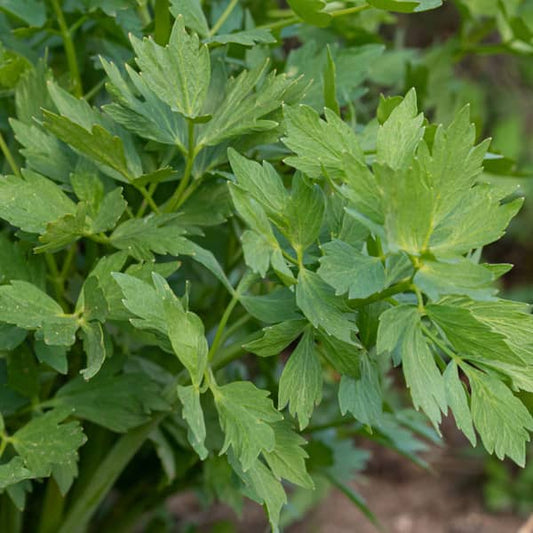
East Indian lemongrass is a very old, tropical and perennial aromatic, spice and medicinal plant that originally comes from India. Due to its numerous uses, the evergreen species has a special significance in traditional Chinese medicine. The plants form narrow, long leaves and are more delicate in growth than West Indian lemongrass and have a slightly spicier taste, which is popular for refining cold and warm dishes. The pleasantly scented herb is used for bath additives, soaps, ointments and as a tea, and the plant has a diuretic effect that can transport toxins out of the body. In the case of colds, the high vitamin C content and the essential oils of the medicinal herb help to achieve a pleasant expectorant effect. The scent is floral, sweet and has a light lemon aroma.

 General information 
Plant family: Poaceae
Life cycle:
Perennial
Days to harvest:
150 days
Plant height approx.:
100 cm
Root type:
Deep rooter
Nutrient requirements:
Low
Water requirements:
Medium
Winter hardiness:
Up to 0°C
Location:
Sunny
Soil:
Permeable, humus-rich sandy loam soil

pH value: 6.5 to 7.5

 Sowing and planting information 
Germination type:
Light germinator
Sowing depth:
0 cm
Optimal germination temperature:
20-28 °C
Germination time:
7-21 days
Plant and row spacing:
50x50 cm

Germination ability of seeds: 1-2 years

 Mixed culture 
Optimal mixed culture: -
Unfavorable mixed culture: -

 Sowing by climate zone 
Subtropic climate (Mediterranean) (e. g. B. Portugal, Spain, Italy)
Direct sowing from March to August is recommended. The ideal location for the plants is warm and sunny.
Moderate climate (e. g. B. Germany, Switzerland, Poland)
Pre-cultivation from March to May is recommended. The ideal location for the plants is warm and sunny.

 General recommendations 
The species naturally has a low germination rate of 40 to 60%. Direct sowing or pre-cultivation is recommended depending on the location. After germination, thin out the plants to the specified plant spacing.
East indian Lemongrass prefers a permeable, nutrient-rich, moist, sandy and humus-rich loamy soil. Does not tolerate waterlogging.

 Additional tips 
It easily self-seeds as a wind pollinator and establishes itself in the garden without spreading too much. In order to quickly obtain a fine, crumbly and permeable soil with good nutrient and water storage capacity, additional incorporation of biochar and primary rock flour is recommended.

 Type of propagation 
Propagation occurs via seeds or root division.

 Plant care 
Regular watering results in faster growth. Fertilizing with plant manure in the spring of the following year is recommended to encourage strong new growth.

 Other names 
Botanical names: Cymbopogon flexuosus
English names: East Indian lemongrass
German names: Zitronengras, Sereh
Portuguese names: Capim-limão da Índia Oriental
Spanish names: Limoncillo de las Indias Orientales
French names: Citronnelle des Indes orientales

 Origin 
Country: Portugal

Cultivation_Overview_-_Anbau_im_Uberblick_-_Visao_geral_do_cultivo_-_www

Origin & Cultivation at a Glance

First mention:

Breeder:

Origin:

Propagation site:

Suitable for:

Care requirements:

Overwintering:

Suitability for cultivation and use:

Plant_Growing_Instructions_-_Pflanzen_Anbau-Anleitung_-_Instrucoes_de_cultivo_de_plantas_-_www

Cultivation guide for

Growing difficulty:

Special features:

Cultivation tips:

Storage instructions:

Store seeds in a cool, dry, dark, and airtight environment to maximize shelf life and germination.
Detailed information on seed storage
Plant_Profile_-_Pflanzen_Steckbrief_-_Ficha_da_planta_-_www

Plant Profile

Plant details

Botanical name:

Growth habit:

Botanical family:

Plant height:

Plant type:

Plant width:

Life cycle:

Root type:

Cultivation period:

Hardy to:

Cultural meaning:

Propagation method:

Propagation:

Sowing & Planting

Germination

Planting

Germination type:

Pot culture:

Sowing depth:

Plant spacing:

Germination temperature:

Row spacing:

Germination time:

Row spacing for baby leaf:

Pricking out / thinning out:

Planting time:

Soil

Soil type:

Soil pH:

Nutrient requirements:

Soil moisture:

Soil preparation:

Companion planting, Crop rotation & Harvest

Companion plants:

Incompatible plants:

Crop rotation guidelines:

Harvest time:

Sowing to harvest:

Harvested parts:

Suitable for consumption:

Intended use:

Care & Cultivation practices

Water requirements:

Plant care techniques:

Plant protection:

Cultivation notes:

Other names

EN - English names:

DE - German names:

PT - Portuguese names:

ES - Spanish names:

FR - French names:

Practical_Planting_and_Care_Tips_-_Praktische_Aussaat-_und_Pflegetipps_-_Dicas_praticas_de_sementeira_e_cuidados_-_www

Practical sowing and care tips

Saattiefe - Bedingt Keimverhalten und Gesundheit

Sowing depth - Determines germination and health

Germination rate too low or plants bending over? Decisive factors for sowing depth. In this article from my gardening handbook,...
Read more here
Aussaat-Arten - Direktsaat und Vorkultivierung

Sowing methods - direct sowing and pre-cultivation

How do I sow seeds: direct sowing or pre-cultivation? In this article, we'll explain the background of both methods, along...
Read more here
Keimarten und Umgebungsfaktoren - Wie Samen keimen

Germination types and environmental factors - How seeds germinate

Which germination types are relevant, and what should you consider when germinating seeds? In this article, we've compiled a simple,...
Read more here
Mulch - Wasser sparen und Wachstum fördern

Mulching - save water and promote growth

Nature as a model - mulching has numerous advantages that benefit the health of soil life and plants. In this...
Read more here

Customer Reviews

Be the first to write a review
0%
(0)
0%
(0)
0%
(0)
0%
(0)
0%
(0)

Further recommendations for you

100% open-pollinated & reproducible