Crown daisy – traditional aromatic leafy vegetable with edible flowers.
Crown daisy is a fast‑growing, delicately aromatic leafy vegetable with decorative and edible yellow‑white flowers. It grows upright, reaches 30–70 cm in height and forms finely divided, aromatic leaves that can be used fresh or cooked. Ideal for open ground, raised beds and container culture. Easy to grow, heat‑tolerant, open‑pollinated and versatile – perfect for self‑sufficiency, natural gardens and Asian‑Mediterranean cuisine.
 Origin & History
Crown daisy is a traditional vegetable plant from East Asia, especially from China and Japan, where it has been cultivated for centuries as an aromatic leafy and flowering vegetable. There it is known as Shungiku and is firmly rooted in everyday cuisine, used in soups, hotpots and stir‑fried dishes. Botanically, crown daisy belongs to the family Asteraceae, subfamily Asteroideae, genus Glebionis.
The first clear mention as an edible crop dates to 601 AD in the Chinese agricultural text Qimin Yaoshu, where it is described as a well‑defined leafy vegetable. In the Japanese Honzo Wamyo of 918 AD, it appears again as an independent vegetable with culinary and health‑related uses. These sources document its established role in East Asian diets long before its introduction to Europe. It is the cultivated vegetable form of the crown daisy and was traditionally selected over many generations for tender leaves, balanced flavour and reliable seed production.
In the 19th and early 20th century it reached Europe, where it was initially grown as an ornamental plant. With increasing interest in Asian cuisine, it became established as a fast‑growing, aromatic leafy vegetable that also thrives reliably in temperate climates. Today, crown daisy is considered a versatile, easy‑to‑grow and decorative crop that combines culinary value with ecological benefits. Its edible flowers and spicy‑green aroma make it a popular plant in modern natural and kitchen gardens.
 Appearance & Characteristics
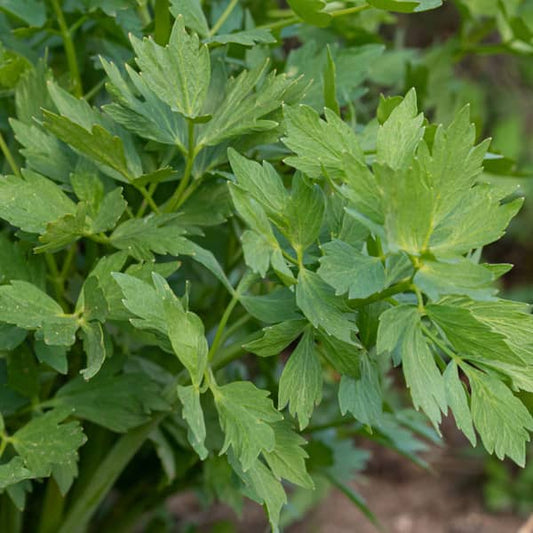
Crown daisy grows upright with an open, lightly branched habit and reaches 30–70 cm in height. It forms finely divided, aromatic leaves and numerous yellow‑white flowers. Heat‑tolerant, fast‑growing and ideal for beds and containers. Grown as an annual, not winter hardy.
Plant details:
Height: Medium, 30–70 cm
Form: Upright, herbaceous, loosely bushy, finely branched
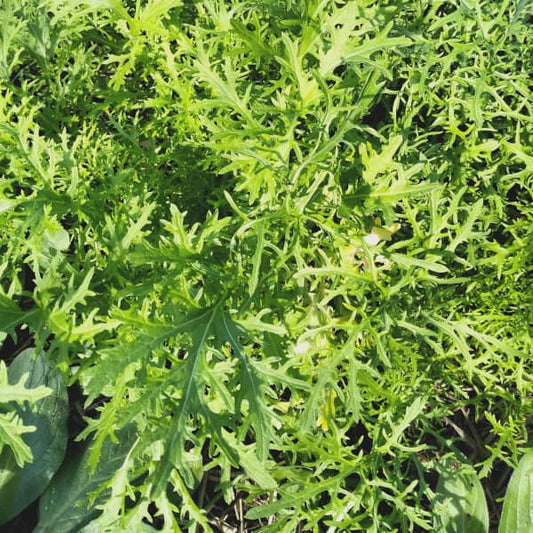
Leaves: Deeply divided, fresh green, delicately textured
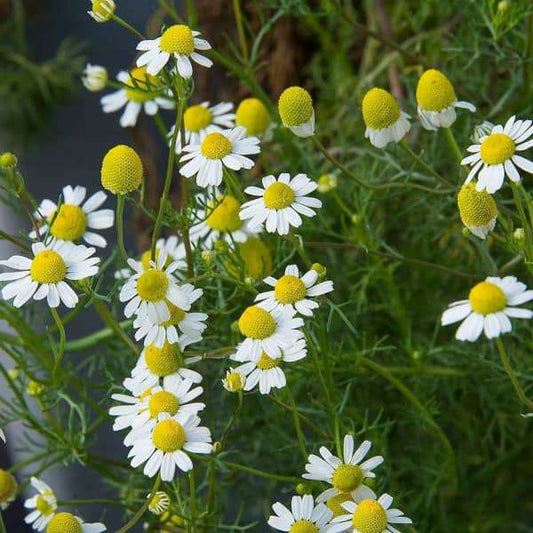
Flowers: Yellow‑white, solitary or loosely branched
Flavor: Leaves spicy‑green, slightly herbaceous, aromatic; flowers mildly spicy
 Usage & Cultivation Highlights
The young leaves of crown daisy are excellent for salads, bowls and as an aromatic addition to warm dishes. Steamed, cooked or briefly stir‑fried, they develop a spicy flavour that is especially appreciated in Asian cuisine. The edible flowers add a decorative, aromatic touch to salads, soups and fine dishes. The tender leaves also enrich wok dishes, hotpots and noodle stir‑fries, while in modern cooking they are used in wraps, rice bowls and vegetable pans. Briefly blanched, they pair well with dumplings, gyoza fillings and light broths. The flowers are suitable for edible decorations, herb butter and delicate appetisers. In Asian cuisine, the leaves are traditionally used in tempura, where they develop a gently herbaceous flavour.
Thanks to its rapid growth, crown daisy provides fresh leaves over many weeks. It grows reliably in open ground, raised beds and pots. The species is easy to cultivate, heat‑tolerant and can be harvested multiple times. Its flowers attract pollinators, making it ideal for natural gardens and mixed plantings. It also shows stable development even in changeable weather, vigorous early growth and good competitiveness against weeds. The plants remain sturdy, tolerate short dry periods and regenerate well with regular cutting. Its short cultivation period allows flexible integration into crop rotations, and successive sowings ensure a continuous harvest over a long season.
Compared to other leafy vegetables, crown daisy is aromatic, versatile and decorative – ideal for anyone who values open‑pollinated, uncomplicated leafy greens with both culinary and ecological benefits.