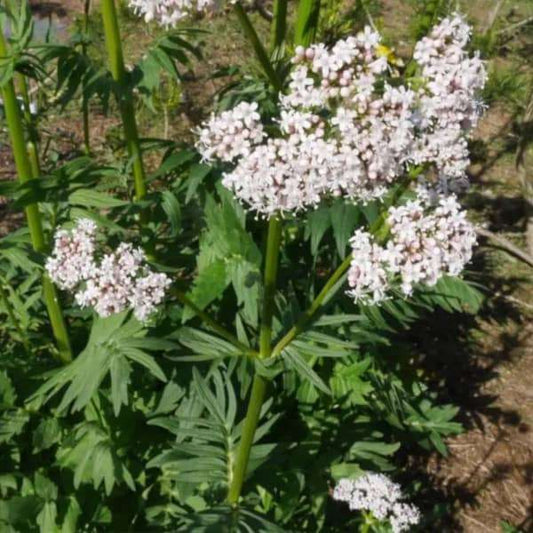
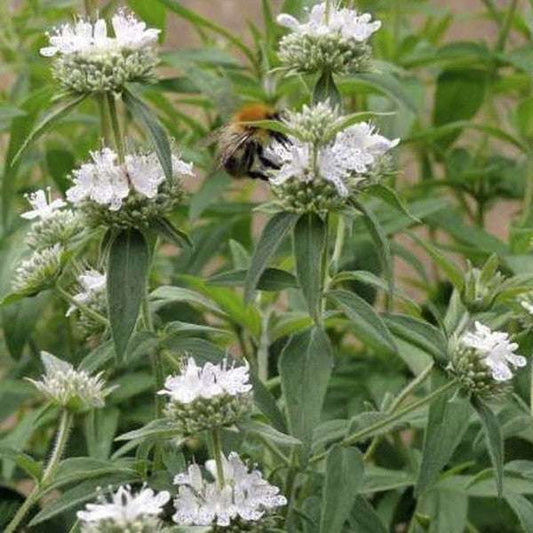
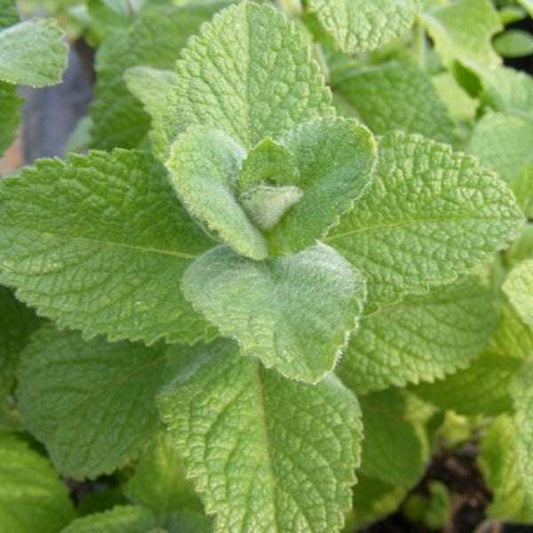
Siberian Motherwort - Marihuanilla [Leonurus sibiricus]

€2,50 EUR
Save {price}% Sold out
€5.000,00 EUR kg
Price plus shipping
Delivery time: 1-2 business days (PT – international may vary)

In stock

Local pickup at Benjis Seeds

Bohnensamen2

Harvest year:

2024

Seed viability:

Up to 4 years (species-specific)
Detailed information on germination capacity

Description

Cultivation & Characteristics

Tips & Reviews

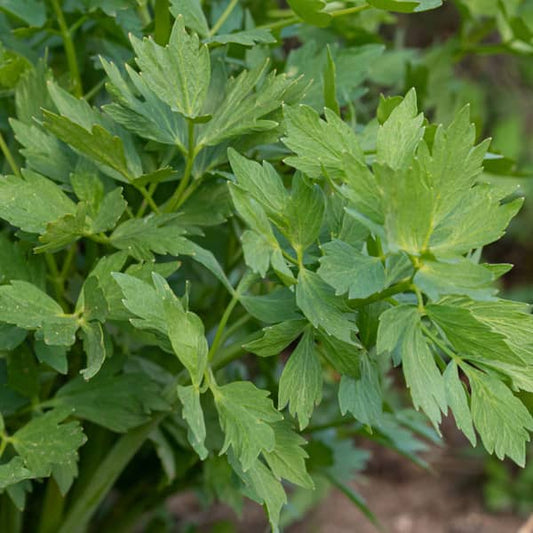
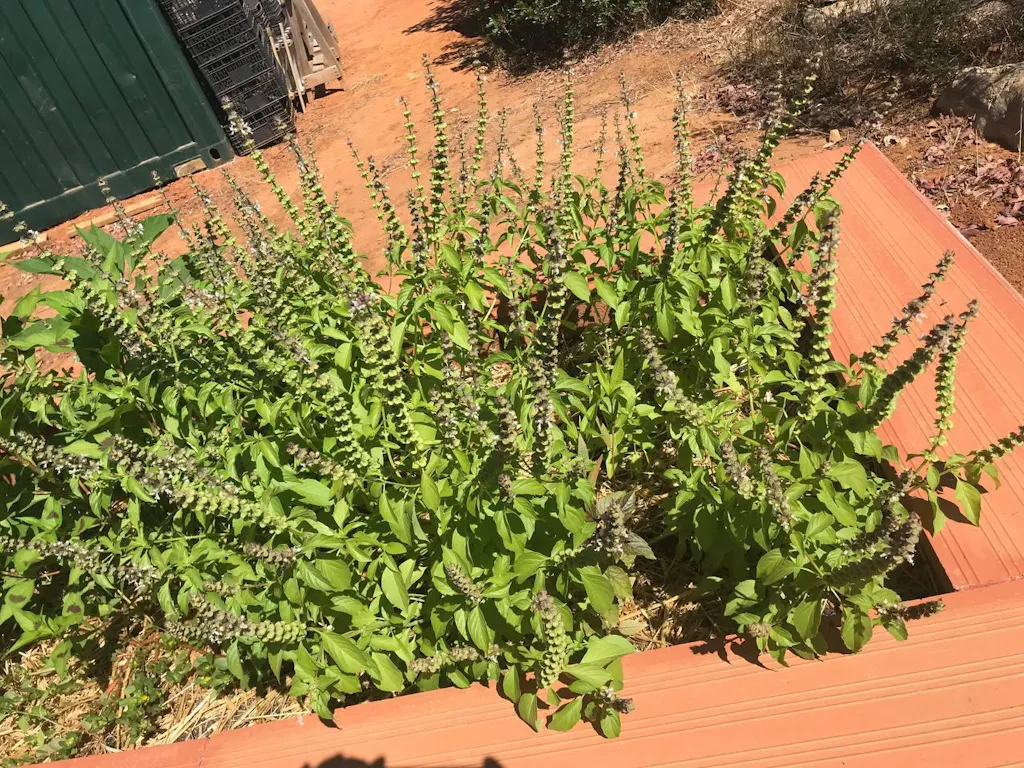
The biennial Siberian motherwort is a very old Chinese tea, incense and medicinal plant and was mentioned in the old Chinese "Book of Songs". A proven remedy for menstrual cramps with a general strengthening effect. Ideal for direct sowing, pot cultivation possible, sowing spring-summer, good for mixed culture, harvesting the flowers and leaves.

 Description 
Siberian motherwort is a biennial, very old Chinese tea, incense and medicinal plant from Malaysia. The species grows wild in Brazil and Mexico and develops purple flowers. In Chinese medicine, the herb is praised as a very good remedy for menstrual cramps and also has a generally strengthening effect and was also mentioned in the old Chinese "Book of Songs" (ca. 1000-500 BC) as "t'uei". In Malaysia, too, the dried plant is ceremoniously smoked in ceremonies and smoked as a herbal cigarette. It can be used externally for rheumatic complaints, eczema and abscesses. The plants magically attract bumblebees.

 General information 
Plant family: Lamiaceae
Life cycle:
Biennial
Days to harvest:
100 days
Plant height approx.:
150 cm
Root type:
Deep rooter
Nutrient requirements:
Low
Water requirements:
Low
Winter hardiness:
Up to 3°C
Location:
Sunny until semi shady
Soil:
Permeable, humus-rich loamy soil

pH value: 6.5 to 7.5

 Sowing and planting information 
Germination type:
Light germinator
Sowing depth:
0 cm
Optimal germination temperature:
18-22 °C
Germination time:
10-21 days
Plant and row spacing:
30x40 cm

Germination ability of seeds: 3-4 years

 Mixed culture 
Optimal mixed culture: -
Unfavorable mixed culture: -

 Sowing by climate zone 
Subtropic climate (Mediterranean) (e. g. B. Portugal, Spain, Italy)
Direct sowing from March to July is recommended. The plants should ideally be planted in a sunny location.
Moderate climate (e. g. B. Germany, Switzerland, Poland)
Direct sowing from April to June is recommended. The plants should ideally be planted in a sunny location.

 General recommendations 
Germination naturally occurs irregularly over a period of 6 weeks. Cool temperatures produce better germination results, but are not absolutely necessary. Direct sowing is recommended. After germination, thin out the plants to the specified plant spacing.
Siberian Motherwort prefers a permeable, moderately nutrient-rich, moist and humus-rich loamy soil. Doesn't tolerate waterlogging.

 Additional tips 
The plant is only biennial in warm climates and flowers in the first year. In order to quickly obtain a fine, crumbly and permeable soil with good nutrient and water storage capacity, additional incorporation of biochar and primary rock flour is recommended.

 Type of propagation 
Propagation occurs via seeds.

 Plant care 
Regular watering results in faster growth. No fertilization necessary.

 Other names 
Botanical names: Leonurus sibiricus
English names: Honeyweed, Siberian motherwort, Marihuanilla
German names: Chinesischer Löwenschwanz, Sibirischer Herzgespann, Sibirischer Löwenschwanz, Marihuanilla, Sibirisches Mutterkraut 
Portuguese names: Marijuanilla
Spanish names: Marijuanillo
French names: Marijuanilla

 Origin 
Country: Portugal

Cultivation_Overview_-_Anbau_im_Uberblick_-_Visao_geral_do_cultivo_-_www

Origin & Cultivation at a Glance

First mention:

Breeder:

Origin:

Propagation site:

Suitable for:

Care requirements:

Overwintering:

Suitability for cultivation and use:

Plant_Growing_Instructions_-_Pflanzen_Anbau-Anleitung_-_Instrucoes_de_cultivo_de_plantas_-_www

Cultivation guide for

Growing difficulty:

Special features:

Cultivation tips:

Storage instructions:

Store seeds in a cool, dry, dark, and airtight environment to maximize shelf life and germination.
Detailed information on seed storage
Plant_Profile_-_Pflanzen_Steckbrief_-_Ficha_da_planta_-_www

Plant Profile

Plant details

Botanical name:

Growth habit:

Botanical family:

Plant height:

Plant type:

Plant width:

Life cycle:

Root type:

Cultivation period:

Hardy to:

Cultural meaning:

Propagation method:

Propagation:

Sowing & Planting

Germination

Planting

Germination type:

Pot culture:

Sowing depth:

Plant spacing:

Germination temperature:

Row spacing:

Germination time:

Row spacing for baby leaf:

Pricking out / thinning out:

Planting time:

Soil

Soil type:

Soil pH:

Nutrient requirements:

Soil moisture:

Soil preparation:

Companion planting, Crop rotation & Harvest

Companion plants:

Incompatible plants:

Crop rotation guidelines:

Harvest time:

Sowing to harvest:

Harvested parts:

Suitable for consumption:

Intended use:

Care & Cultivation practices

Water requirements:

Plant care techniques:

Plant protection:

Cultivation notes:

Other names

EN - English names:

DE - German names:

PT - Portuguese names:

ES - Spanish names:

FR - French names:

Practical_Planting_and_Care_Tips_-_Praktische_Aussaat-_und_Pflegetipps_-_Dicas_praticas_de_sementeira_e_cuidados_-_www

Practical sowing and care tips

Saattiefe - Bedingt Keimverhalten und Gesundheit

Sowing depth - Determines germination and health

Germination rate too low or plants bending over? Decisive factors for sowing depth. In this article from my gardening handbook,...
Read more here
Aussaat-Arten - Direktsaat und Vorkultivierung

Sowing methods - direct sowing and pre-cultivation

How do I sow seeds: direct sowing or pre-cultivation? In this article, we'll explain the background of both methods, along...
Read more here
Keimarten und Umgebungsfaktoren - Wie Samen keimen

Germination types and environmental factors - How seeds germinate

Which germination types are relevant, and what should you consider when germinating seeds? In this article, we've compiled a simple,...
Read more here
Mulch - Wasser sparen und Wachstum fördern

Mulching - save water and promote growth

Nature as a model - mulching has numerous advantages that benefit the health of soil life and plants. In this...
Read more here

Customer Reviews

Be the first to write a review
0%
(0)
0%
(0)
0%
(0)
0%
(0)
0%
(0)

Further recommendations for you

100% open-pollinated & reproducible