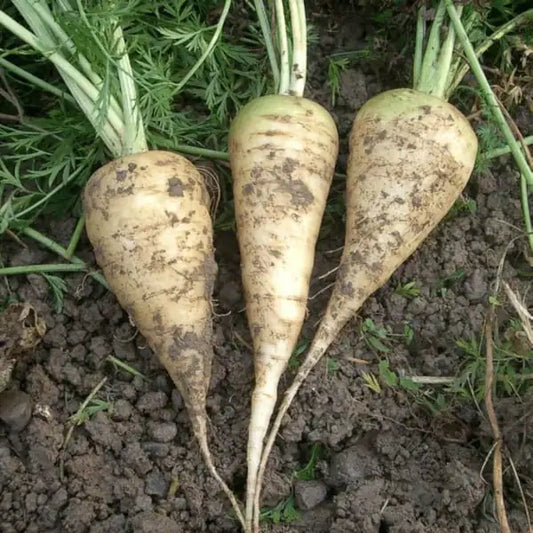
Parsnip ‘Halblange Weiße’ – historic, high-yielding variety with robust, creamy-white roots.
This open-pollinated parsnip produces robust, uniformly shaped roots with creamy-white flesh and a pleasantly sweet, aromatic flavour. Its firm, juicy flesh becomes tender when cooked and is suitable for a wide range of autumn and winter dishes. Its high yield and good storage qualities make this variety particularly useful for keeping a home supply of vegetables. With its medium-long roots and vigorous foliage, ‘Halblange Weiße’ is a proven choice for vegetable beds and raised beds. The variety is suitable for the mild growing periods in Mediterranean climates and for cultivation in Central European regions.
 Origin & History
‘Halblange Weiße’ has been known under this name since at least 1948 and is one of the old standard varieties of German vegetable growing. By the 1950s, it was recommended for both garden and field cultivation, including on somewhat heavier soils. Its medium-long, pale roots with broad shoulders and an evenly tapering tip were already characteristic of the variety at that time. The winter hardiness of mature roots allowed harvesting to continue beyond autumn, as they could still be harvested and used even after severe frosts.
The variety continues to be maintained through conservation breeding in biodynamic seed production. Florian Jordan is among its present-day maintenance breeders. Its uniform root shape, vigorous foliage and high yield remain valued characteristics. Its winter-hardy roots have good storage qualities and are suitable both for storage and for harvesting directly from the garden during winter. To this day, ‘Halblange Weiße’ is maintained as an open-pollinated variety for its reliable growth and propagated for both home gardens and vegetable production.
 Appearance & Characteristics
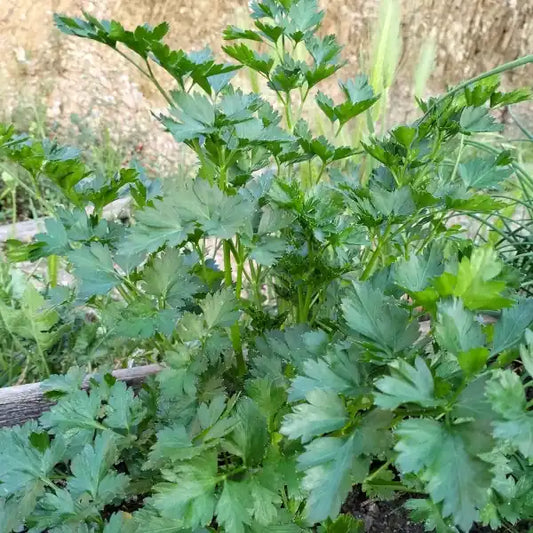
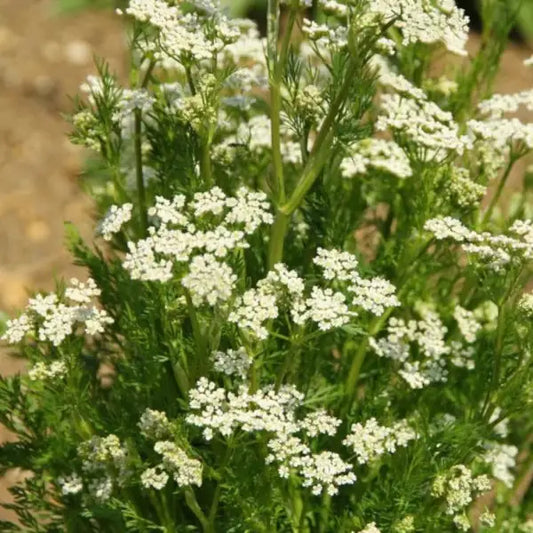
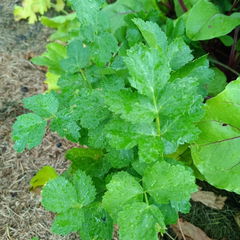
The plants form an upright, vigorous rosette of green, pinnate leaves with distinctly toothed margins. During root development, the foliage usually reaches around 30–40 cm in height. Beneath the foliage, broad, wedge-shaped roots develop, tapering to a pointed tip. Their creamy-white surface is predominantly smooth to slightly ridged. In the second year, plants left for seed production develop branched flower stalks around 100–150 cm tall, bearing yellow umbels. The roots are winter-hardy; during prolonged severe frost, a protective mulch covering is recommended.
Root details:
Size: Medium-long to long, 20–30 cm in length
Shape: Wedge-shaped, with broad shoulders and tapering to a pointed tip
Color: Creamy-white skin and white to creamy-white flesh
Texture: Firm and juicy, becoming tender when cooked
Flavor: Sweet and aromatic with a mild nutty note
 Usage & Cultivation Highlights
The roots can be used in soups, purées, stews and bakes. Steamed, braised or roasted in the oven, they make an aromatic accompaniment to potatoes and other winter vegetables. Finely grated young roots add flavour to raw salads, while thin slices can be made into crisp vegetable crisps. Their natural sweetness also works well in savoury and sweet baked dishes. For longer-term storage, mature roots can be stored whole, or prepared pieces can be blanched and frozen.
After its slow early development, the variety forms a robust crop and requires comparatively little maintenance. Its moderate nutrient requirements make it easy to incorporate into crop rotations in the home garden. In addition to growing in level beds, it is also suitable for cultivation in ridges, providing further options on heavier soils. The wedge-shaped roots are comparatively easy to harvest. Their long period of usability makes it possible to use some fresh while leaving the remaining roots for later harvesting or storage.
Compared with very long, slender parsnip varieties, ‘Halblange Weiße’ stands out for its flavour and robust, medium-long roots with broad shoulders. Its high yield and uniform shape make it a proven variety for autumn and winter use. Its sweet, aromatic flavour is particularly well suited to traditional root vegetable dishes and a wide range of preserved and stored foods.