The perennial Mugwort is a wild, ancient tea, incense, spice and medicinal herb that has many uses. It was considered particularly sacred by the Celts, Germanic tribes, and Druids. It is effective against many illnesses and a healthy food ingredient. Ideal for direct sowing or pre-cultivation, pot culture possible, sowing in spring, good for mixed culture, harvesting roots, stems, flowers and leaves.
Description
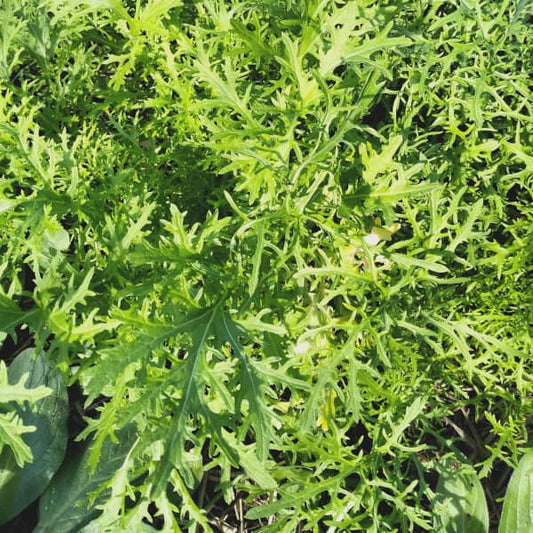
Common Mugwort is a traditional wild and perennial tea, incense, spice and medicinal herb that was considered particularly sacred by the Celts, Germanic tribes and Druids. This semi-cryptophyte is native to Europe, Asia, and North Africa, and has spread widely to other continents due to its robustness. It can often be found on roadsides, railway embankments, fallow land or even on the edges of forests and stream banks. This ancient medicinal plant is considered a nitrogen indicator and thrives particularly well in locations with nutrient-rich soil and plenty of sunlight, but it also grows happily in partial shade. It forms feathery, aromatic leaves with small, light yellow or reddish flowers. For centuries, the herb has been important in various ancient cultures and has been a component of almost every ritual. When burned with incense, it surrounds the body with soothing warmth, provides strength and confidence, and dispels negative thoughts; therefore, it also served as protection against "evil" spirits. In the Middle Ages, this woody subshrub was called the "Mother of Herbs" due to its medicinal value. In traditional Chinese, Hindu, and European medicine, mugwort is used to treat gastrointestinal complaints and gynecological diseases, and serves as an energy and circulatory stimulant. In cooking today, the herb is primarily used as a spice in the preparation of fatty dishes, lending a distinctive flavor to fish and potato dishes, soups, egg dishes, and seafood. Due to its high content of healthy bitter compounds, it is used only in small quantities in dishes and has even served as a traditional spice for brewing beer. This adaptable plant develops its own strong defenses against insects and diseases, making it attractive for mixed cultivation. Easily propagates via self-sowing. Easy to care for and is well suited as a pot culture for cultivation on balconies or terraces.
General information
Plant family: Asteraceae
Life cycle: Perennial
Days to harvest: 100 days
Plant height approx.: 150 cm
Root type: Deep rooter
Nutrient requirements: Medium
Water requirements: Low
Winter hardiness: Up to -37°C
Location: Sunny until semi shady
Soil: Permeable, humus-rich sandy loam soil
pH value: 6 to 7.5
Sowing and planting information
Germination type: Light germinator
Sowing depth: 0 cm
Optimal germination temperature: 18-24 °C
Germination time: 7-14 days
Plant and row spacing: 50x50 cm
Germination ability of seeds: 10-40 years
Mixed culture
Optimal mixed culture: Lavender, Thyme, Sage, Chamomile, Oregano, Wildflowers
Unfavorable mixed culture: -
Sowing by climate zone
Subtropic climate (Mediterranean) (e. g. B. Portugal, Spain, Italy)
Direct sowing or pre-cultivation from February to June is recommended. The plants should ideally be planted in a sunny location.
Moderate climate (e. g. B. Germany, Switzerland, Poland)
Direct sowing or pre-cultivation from March to May is recommended. The ideal location for the plants is sunny.
General recommendations
Direct sowing or pre-cultivation is recommended. After germination, thin the plants to the specified spacing. Requires permeable and nutrient-rich soil.
Common mugwort prefers a permeable, nutrient-rich, dry to moist and humus-rich sandy loam soil. Doesn't tolerate waterlogging.
Additional tips
In favorable locations, the species establishes itself. Very hardy and easy to care for, it thrives in almost any soil and can easily become naturalized. The flowers are pollinated only by the wind. In order to quickly obtain a fine, crumbly and permeable soil with good nutrient and water storage capacity, additional incorporation of biochar and primary rock flour is recommended.
Type of propagation
Propagation occurs via seeds or root division.
Plant care
During hot periods, watering is necessary to maintain growth. Because the plants initially grow slowly, we recommend weeding surrounding herbs regularly. No fertilization necessary.
Other names
Botanical names: Artemisia vulgaris
English names: Common Mugwort, Mugwort
German names: Echter Beifuß, Gewöhnlicher Beifuß, Gemeiner Beifuß, Beifuß, Weißer Beifuß, Kraftwurz, Machtwurz, Bitterkraut, Gänsekraut, Weiberkraut
Portuguese names: Artemísia comum
Spanish names: Artemisa común, Ajenjo, Asensio, Ajorizo, Artemisia amarga, Hierba maestra, Hierba sant
French names: Armoise commune
Origin
Country: Portugal


![American Mountain Mint [Pycnanthemum pilosum]](http://www.benjis.net/cdn/shop/files/AmerikanischeBergminze-Americanmint-Pycnanthemumpilosum-www.benjis.net.jpg?v=1704292329&width=533)
![Anise [Pimpinella anisum]](http://www.benjis.net/cdn/shop/files/Anise_-_Pimpinella_anisum_-_www.benjis.net.jpg?v=1738942704&width=533)
![Apple mint [Mentha rotundifolia]](http://www.benjis.net/cdn/shop/files/Apfelminze-Applemint-Hortelamaca-Mentharotundifolia-www.benjis.net.jpg?v=1763734068&width=533)
![Artischoke Imperial Star [Cynara cardunculus var. scolymus]](http://www.benjis.net/cdn/shop/files/ArtischockeImperialStar-Artichoke-Alcachofra-Cynaracardunculusvar.scolymus-www.benjis.net.jpg?v=1705194551&width=533)