Broccoli 'Calabrese Natalino' - Brassica oleracea var. italica

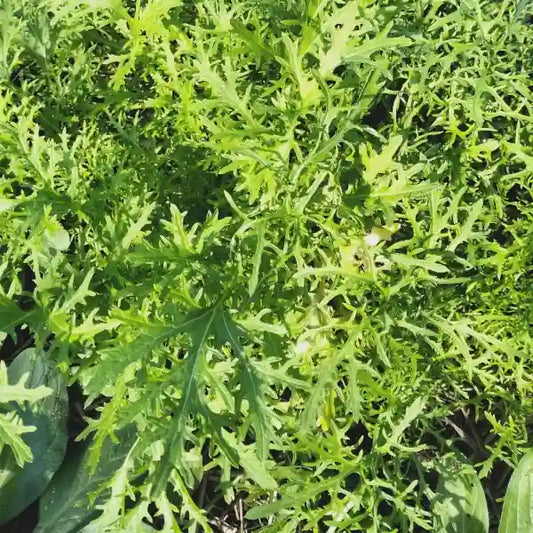
Brassica oleracea var. italica ‘Calabrese Natalino’ – open‑pollinated broccoli shown as a close‑up of the compact, dark‑green head with fine, tightly packed florets forming a dense dome. The surface texture appears uniform and beaded, with small unopened buds creating the characteristic broccoli structure, photographed for Benjis Seeds.
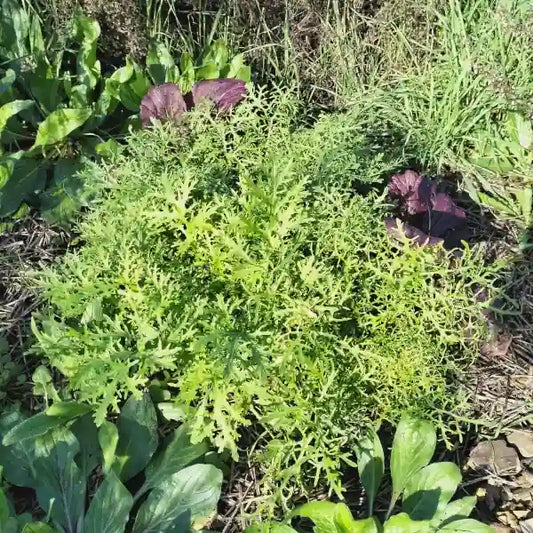
Brassica oleracea var. italica ‘Calabrese Natalino’ – open‑pollinated broccoli shown as a full plant with a compact, dark‑green central head of tightly packed florets, surrounded by broad, matte blue‑green leaves. The upright growth habit and well‑formed dome highlight the classic calabrese type, photographed for Benjis Seeds.
€3,00 EUR
€6.000,00 EUR 1kg
Price plus shipping
Delivery time: 1-2 business days (PT – international may vary)
reicht für ca. 80 plants

In stock

Historic variety. Open-pollinated & non-hybrid – 100% free from genetic engineering & synthetic fertilisers. Ecologically propagated – non‑proprietary variety.
Bohnensamen2

Harvest year:

2026

Seed viability:

Up to 4 years (species-specific)
Detailed information on germination capacity

Description

Cultivation & Characteristics

Broccoli ‘Calabrese Natalino’ – a historic Italian variety with tender florets and a generous harvest of side shoots.

This open-pollinated variety produces compact green main heads with tender florets and a pleasantly mild, delicate broccoli flavour. After the main harvest, numerous smaller side shoots develop, providing fresh vegetables over several weeks. The heads and tender stems are versatile in the kitchen and can be enjoyed both raw and gently cooked. The variety is particularly well suited to early summer and autumn cultivation, as well as to the cooler season in mild regions. The variety is suitable for the cooler growing periods in Mediterranean climates and for early summer and autumn cultivation in Central European climates.

  Origin & History

‘Calabrese Natalino’ is one of the old Italian broccoli varieties. Its documented cultivation tradition dates back to the late 19th century. A characteristic feature is the combination of a compact main head with a substantial secondary harvest of smaller side shoots. It is still offered today under the alternative name ‘Ramoso Calabrese’. This name refers to its branching growth habit, and both names are also linked in the Italian variety catalogue, where the variety is listed with a registration date of 1977.

The variety played an important role in the spread of open-pollinated broccoli cultivation and was later also used as breeding material for new varieties. From 1999 onwards, further breeding work based on ‘Calabrese Natalino’ began within the Kultursaat network, eventually leading to the variety ‘Calinaro’ after several years of selection. ‘Calabrese Natalino’ itself has remained preserved as a distinct open-pollinated variety. Its Italian origin, delicate flavour and continuous production of side shoots continue to make it a valued classic for home gardens.

  Appearance & Characteristics

The plant grows upright with strong stems and broad, grey-green leaves. During the harvest stage, it usually reaches around 50–70 cm in height; if left to mature for seed, it develops much taller, branching flower stems. The larger main head forms above the leaf rosette first, followed later by smaller heads on the side shoots. Unharvested buds open into yellow flowers. The variety tolerates short periods of light frost but is not reliably winter-hardy as a permanent crop and requires protection during harder frost.

Head details:

  • Size: Main heads around 15–20 cm in diameter; later side heads remain considerably smaller

  • Shape: Rounded to domed, with densely packed, closed flower buds

  • Color: Medium to dark green; open flowers are yellow

  • Texture: Firm, finely textured florets with tender stems

  • Flavor: Mild and delicately aromatic, with a characteristic broccoli flavour

 Usage & Cultivation Highlights

The florets are suitable for steaming, stir-fries, soups and casseroles, or as a fresh side dish. When harvested young and tender, they can also be eaten raw in salads. Peeled stems can be sliced and cooked together with the florets, while young leaves can be added to cooked vegetable dishes. The smaller side heads are particularly convenient for harvesting fresh portions as needed. For storage, the harvested broccoli can be briefly blanched and then frozen.

For good head quality, steady growth and harvesting before the buds begin to open are essential. Several smaller sowings spaced a few weeks apart help spread the start of the harvest and prevent too many main heads from becoming ready at the same time. After the main heads have been cut, the plants remain in the bed for further harvesting; an appropriate supplementary application of organic fertiliser supports the development of side shoots. In regions with hot summers, it is advantageous to time head formation for the milder autumn, winter or spring period.

Compared with other broccoli varieties, the particular strength of ‘Calabrese Natalino’ lies in the combination of a well-developed main head and numerous subsequent side heads. This makes it particularly suitable for a continuous supply of smaller, freshly harvested portions. Its mild flavour, versatile edible stems and open-pollinated nature make it an interesting choice for home gardens and growing your own food.

Cultivation_Overview_-_Anbau_im_Uberblick_-_Visao_geral_do_cultivo_-_www

Origin & Cultivation at a Glance

First mention:

19th century

Origin:

Italy

Breeder:

Unknown

Propagation site:

Zurich – Switzerland

Suitable for:

Open field, Raised bed

Overwintering:

Possible outdoors in mild winters, protect from severe frost.

Special features:

High-yielding, Low-maintenance, Fast-growing
benjis-seeds-plant-growing-instructions-icon

Cultivation guide for

Broccoli 'Calabrese Natalino'

Growing difficulty:

Light to medium

Care requirements:

Medium – requires some attention.
This variety grows best in humus-rich, nutrient-rich and well-drained loamy soil. Before planting, loosen the soil deeply, incorporate well-rotted compost and then allow the soil to settle well so that the plants have firm support.

For sowing under cover, fill small trays with seed compost and moisten it. Sow the seeds spaced apart on the surface and cover with a 0.5–1 cm layer of compost. Firm gently, water carefully and keep evenly moist at 18–22 °C. Germination usually takes 7–14 days. Once the first true leaves have developed, carefully prick out the seedlings individually into small pots or module trays.

Plant out well-rooted young plants with several true leaves 40–50 cm apart within the row, leaving 50 cm between rows. Keep the root ball as undisturbed as possible and water thoroughly. Water regularly, remove weeds and apply additional organic fertiliser as needed. Insect-proof netting fitted securely with no gaps protects against cabbage root flies and butterflies. After harvesting the main head, leave the plants in place to produce side shoots.

Mediterranes Klima

In Mediterranean climates, we recommend sowing under cover in small trays from August to October or from January to February. Plant the young plants outdoors after 4–6 weeks, from September to November or from February to March, in as cool and sheltered a position as possible, in full sun to light shade. Mild temperatures favour the development of firm heads. Intense summer heat can result in looser heads and encourage premature flowering. The first harvest is usually 3–4 months after sowing. Depending on the sowing time, harvesting takes place from autumn to early summer.

Mitteleuropäisches Klima

In Central European climates, we recommend sowing under cover in small trays from March to June. Plant the young plants outdoors after 4–6 weeks, from April to August, in a sunny, sheltered position that remains as cool as possible during summer. Protect early plantings with fleece when frost is forecast and, where possible, plant summer crops out during cooler weather. Harvest from early summer into autumn.

Cultivation tips:

• For a staggered harvest, it’s recommended to sow seeds in intervals of 4 weeks.
• Harvest the main head with a short section of stem and leave the plant in place to produce side shoots.
• Consistent watering improves bud quality and supports healthy plant growth.
• After the main harvest, apply additional organic fertiliser as needed to support the development of side shoots.
• Cover with insect-proof netting immediately after planting, ensuring there are no gaps, to keep cabbage root flies and butterflies out.
• Use the spaces between plants for fast-growing crops before the broccoli shades the bed.

Storage instructions:

Store seeds in a cool, dry, dark, and airtight environment to maximize shelf life and germination.
Detailed information on seed storage
Plant_Profile_-_Pflanzen_Steckbrief_-_Ficha_da_planta_-_www

Plant Profile

Broccoli 'Calabrese Natalino'

Plant details

Botanical name:
Brassica oleracea L. 'Calabrese Natalino'
Botanical family:
Brassicaceae – cabbage family
Plant type:
Brassica vegetables
Growth habit:
Upright growth, Herbaceous, Forms a rosette
Plant width:
50–100 cm
Plant height:
50–150 cm
Root type:
Deep-rooted, Taprooted
Hardy to:
-3 °C possible for short periods
Cultivation period:
4-6 months
Life cycle:
Biennial (grown as an annual)

Sowing & Planting

Germination type:
Light-independent germinator
Sowing depth:
0,5-1 cm
Germination temperature:
18-22 °C
Germination time:
7-14 days
Pot culture:
Not recommended - better grown in garden beds or raised beds.
Row spacing for baby leaf:
For baby leaf production, we recommend using sprouting and microgreens seeds.
Plant spacing:
40–50 cm
Row spacing:
70 cm
Pricking out / thinning out:
Thin out seedlings within 2 weeks after the formation of the first true leaf pairs.
Planting time:
Young transplants can be planted outdoors about 3 weeks after sowing.

Soil

Soil type:
Well-drained, humus-rich loam soil
Soil pH:
6.5-7.5 - slightly acidic to alkaline
Nutrient requirements:
Heavy feeder
Soil moisture:
Evenly moist, Sensitive to waterlogging
Soil preparation:
Loosen the soil deeply before planting, Apply compost before planting., Mulch layer for moisture regulation

Companion planting, Crop rotation & Harvest

Companion plants:
Lettuce, Onion crops, Nasturtium, Tagetes, Thyme species
Incompatible plants:
Crop rotation guidelines:
• Do not plant after other crucifers - at least 3 years interval recommended.
Sowing to harvest:
3-4 months
Harvested parts:
Flower buds, Stems
Suitable for consumption:
Yes - edible raw.
Intended use:
Salad, Steaming, Cooking, Roasting, Grilling, Baking, Freezing

Care & Cultivation practices

Water requirements:
Moderate to high
Plant care techniques:
Occasional watering — even during dry periods, Loosen and hoe, Fertilize, Maintain weed-free, Inspect regularly for pest infestation
Plant protection:
Slug protection recommended, Mulching recommended, Vegetable protection net advisable., Well-ventilated location and good drainage recommended., Check early for aphids., Frost protection is recommended during prolonged frost or when temperatures below −3 °C are forecast
Cultivation notes:
Susceptible to slugs and snails in early development. Sensitive to waterlogging – use well-drained soil. Can be infested by aphids - occasional monitoring recommended. Loss of quality in heat – prefer cool locations.
Propagation method:
Generative propagation by seed
Propagation:
• This variety is pollinated by insects and belongs to the species Brassica oleracea.
• For seed production, a minimum isolation distance of 800–1000 m from other varieties of the same species is recommended, as cross-pollination is easily possible.
• For seed saving, collect seeds from 20–50 healthy, true-to-type plants.
• The seeds are ready for harvest once the pods have fully dried and become straw‑coloured and brittle.
• Allow harvested pods to finish drying in a well-ventilated place, remove the seeds, clean them and dry them thoroughly.

Other names

EN - English names:

• Broccoli

DE - German names:

• Brokkoli • Spargelkohl

PT - Portuguese names:

• Brócolos

ES - Spanish names:

• Brócoli • Brécol • Bróculi

FR - French names:

• Brocoli

Customer Reviews

Be the first to write a review
0%
(0)
0%
(0)
0%
(0)
0%
(0)
0%
(0)

Reviews in Other Languages

Further recommendations for you

Open-pollinated and reproducible