Bulb Fennel 'Géant Mammouth perfection' - Foeniculum vulgare

€3,00 EUR
€3.000,00 EUR 1kg
Price plus shipping
Delivery time: 1-2 business days (PT – international may vary)
reicht für ca. 100 plants

In stock

Historic variety. Open-pollinated & non-hybrid – 100% free from genetic engineering & synthetic fertilisers. Ecologically propagated – non‑proprietary variety.
Bohnensamen2

Harvest year:

2026

Seed viability:

3 years (species-specific)
Detailed information on germination capacity

Description

Cultivation & Characteristics

Bulb fennel ‘Géant Mammouth perfection’ – a historic variety with large, tender bulbs.

This open-pollinated Florence fennel variety produces large, white to ivory-coloured bulbs with a juicy, tender and crisp texture and a mild, pleasantly sweet aniseed flavour. Its vigorous growth and reliable bulb formation make it a productive choice for growing in vegetable beds. The present-day selection is suitable for different sowing dates throughout the outdoor growing season, providing flexibility when planning the harvest. In addition to the bulbs, the finely divided foliage can also be used fresh as a seasoning.

  Origin & History

‘Géant Mammouth perfection’ is also offered under the Italian name ‘Bianco Perfezione’. The associated historic variety ‘Perfektion’ has been documented since 1942 and was grown in Switzerland, including in the canton of Zurich. Other recorded names include ‘Perfection’ and ‘Perfezione’. Characteristic features are its large, densely formed bulbs and vigorous, upright foliage. Under the French name ‘Géant mammouth perfection’, it is also listed in the French variety catalogue.

Through subsequent selection, the variety was further developed for cultivation over a broader period of the outdoor growing season. Its high yield has also been demonstrated in organic vegetable production: in a German autumn cultivation trial in 2003, the variety listed as ‘Perfektion’ was among the three highest-yielding of eight fennel varieties tested. Despite being planted in mid-September and receiving limited autumn light, it produced marketable bulbs.

  Appearance & Characteristics

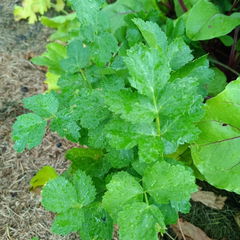
The vigorous plants grow upright and produce finely divided green foliage, with the leaf stalks arranged in a fan-like pattern above the bulb. At the vegetable harvest stage, they usually reach around 60–90 cm in height. If left to flower, the plants can grow to around 100–150 cm and develop yellow umbels. The variety is frost-sensitive and should be protected when frost is expected.

Bulb details:

  • Size: Large to very large; for culinary use, bulbs are often harvested at around 10–15 cm in diameter

  • Shape: Rounded to slightly flattened, with tightly overlapping, fleshy leaf bases

  • Color: White to ivory, becoming pale green towards the upper leaf stalks

  • Texture: Juicy and tender; crisp when raw and soft when cooked

  • Flavour: Mild and aromatic, slightly sweet and characteristically aniseed-like

 Usage & Cultivation Highlights

The tender bulbs can be thinly sliced for fresh salads, for example with orange, apple or a mild dressing. When steamed, braised or baked, their flavour becomes rounder and sweeter; the fleshy leaf bases are particularly suitable for roasted vegetables, casseroles and side dishes served with fish or pulses. Fresh fennel foliage can be used to season salads, soups and sauces. For storage, prepared pieces of bulb can be blanched and frozen.

Steady growth is particularly important for the development of well-shaped bulbs. Direct sowing avoids root disturbance; plants raised under cover should be planted out with the root ball intact and without setting them too deeply. Adequate spacing gives the bulbs room to develop, while consistent moisture helps reduce the risk of premature bolting. In mild regions with wet winters, cultivation during the cooler part of the year is particularly suitable. Several staggered sowings allow the harvest to be spread over a longer period without mature bulbs having to remain in the bed for too long.

Compared with other Florence fennel varieties, ‘Géant Mammouth perfection’ is distinguished by its combination of large, tender bulbs, vigorous growth and a broad outdoor growing window. It is a suitable choice for self-sufficient growing of historic, open-pollinated Florence fennel and for versatile use of both the bulb and fresh foliage.

Cultivation_Overview_-_Anbau_im_Uberblick_-_Visao_geral_do_cultivo_-_www

Origin & Cultivation at a Glance

First mention:

1942

Origin:

Unknown

Breeder:

Unknown

Propagation site:

Zurich – Switzerland

Suitable for:

Open field, Raised bed

Care requirements:

Medium – requires some attention.

Overwintering:

Possible outdoors in mild winters – protect from severe frost.

Special features:

High-yielding, Fast-growing, Low-maintenance
Plant_Growing_Instructions_-_Pflanzen_Anbau-Anleitung_-_Instrucoes_de_cultivo_de_plantas_-_www

Cultivation guide for

Knollenfenchel 'Géant Mammouth perfection'

Growing difficulty:

Medium
• In subtropical climates, sow in a sunny position from August to October or from February to March – sowing under cover from July or January is also possible, then plant out after 4–6 weeks once there is no risk of frost.
• In temperate regions, sow in a sunny position from May to July – sowing under cover from April is also possible, then plant out after 4–6 weeks once there is no risk of frost.
• Sow 1 cm deep in well-drained, humus-rich loamy soil. Plant spacing: 30 × 40 cm.

Cultivation tips:

• For a staggered harvest, it’s recommended to sow seeds in intervals of 4 weeks.
• Thin out early so the plants have enough space.
• Keep evenly moist – drought stress can encourage premature flowering.
• Do not plant young plants raised under cover any deeper than before, the base of the bulb should remain above the soil surface.
• Once the bulbs begin to form, earth up lightly, keeping the centre of the plant exposed.
• Harvest the bulbs before they begin to elongate and a flower stalk develops.

Storage instructions:

Store seeds in a cool, dry, dark, and airtight environment to maximize shelf life and germination.
Detailed information on seed storage
Plant_Profile_-_Pflanzen_Steckbrief_-_Ficha_da_planta_-_www

Plant Profile

Plant details

Botanical name:

Foeniculum vulgare Mill. ‘Géant Mammouth perfection’

Botanical family:

Apiaceae - carrot family

Plant type:

Leafy vegetables

Growth habit:

Upright growth, Herbaceous, Forms a rosette

Plant width:

50–100 cm

Plant height:

60–90 cm

Root type:

Moderately to deep rooted, Taprooted

Hardy to:

-3 °C possible for short periods

Cultivation period:

3-4 months

Life cycle:

Biennial

Propagation method:

Generative propagation by seed

Propagation:

• This variety is pollinated by insects and belongs to the species Foeniculum vulgare.
• For seed production, a minimum isolation distance of 250–500 m from other flowering populations of the same species is recommended, as cross-pollination can occur.
• For seed saving, collect seeds from at least 60 healthy, true-to-type plants.
• Overwinter plants selected for seed production and allow them to flower in the second year.
• The seeds are ready to harvest once they turn brown and can be easily removed from the umbels.
• Allow harvested umbels to finish drying in a well-ventilated place, remove the seeds, clean them and dry them thoroughly.

Sowing & Planting

Germination type:

Light-independent germinator

Sowing depth:

0,5-1 cm

Germination temperature:

18-22 °C

Germination time:

10-21 days

Pot culture:

Not recommended - better grown in garden beds or raised beds.

Row spacing for baby leaf:

Not suitable for baby-leaf cultivation.

Plant spacing:

20–30 cm

Row spacing:

30-40 cm

Pricking out / thinning out:

Thin out seedlings within 2 weeks after the formation of the first true leaf pairs.

Planting time:

Transplanted seedlings can be planted outdoors about 3 weeks after pricking out.

Soil

Soil type:

Well-drained, humus-rich loam soil

Soil pH:

6.5-7.5 - slightly acidic to alkaline

Nutrient requirements:

Medium feeder

Soil moisture:

Evenly moist, Sensitive to waterlogging

Soil preparation:

Loosen the soil deeply before planting, Mulch layer for moisture regulation

Companion planting, Crop rotation & Harvest

Companion plants:

Lettuce, Endive, Pea, Cucumber

Incompatible plants:

Crop rotation guidelines:

• Don't plant after other umbellifers – a minimum interval of 3 years is recommended.

Harvest time:

Subtropical: autumn to spring – Temperate: summer to autumn

Sowing to harvest:

3-4 months

Harvested parts:

Tubers, Leaves, Stems

Suitable for consumption:

Yes - edible raw.

Intended use:

Raw consumption, Salad, Steaming, Cooking, Roasting, Grilling, Baking, Culinary herb, Freezing

Care & Cultivation practices

Water requirements:

Moderate to high

Plant care techniques:

Thin out after germination when sown directly, Water regularly - even during dry periods, Maintain weed-free, Hill up

Plant protection:

Slug protection recommended, Mulching recommended, Well-ventilated location and good drainage recommended.

Cultivation notes:

Susceptible to slugs and snails in early development. Sensitive to waterlogging – use well-drained soil. Premature flowering can occur due to cold, heat or drought stress.

Other names

EN - English names:

• Bulb fennel • Florence fennel

DE - German names:

• Knollenfenchel • Gemüsefenchel • Florentiner Fenchel

PT - Portuguese names:

• Funcho bulboso • Funcho de florença

ES - Spanish names:

• Hinojo de Florencia • Hinojo bulboso

FR - French names:

• Fenouil bulbeux • Fenouil de Florence

Customer Reviews

Be the first to write a review
0%
(0)
0%
(0)
0%
(0)
0%
(0)
0%
(0)

Reviews in Other Languages

Further recommendations for you

Open-pollinated and reproducible