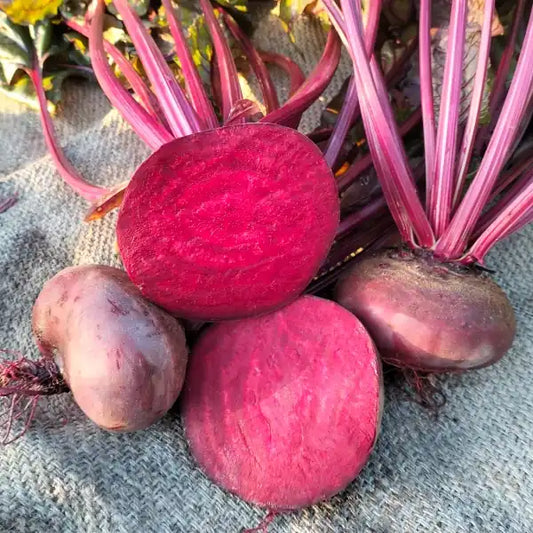
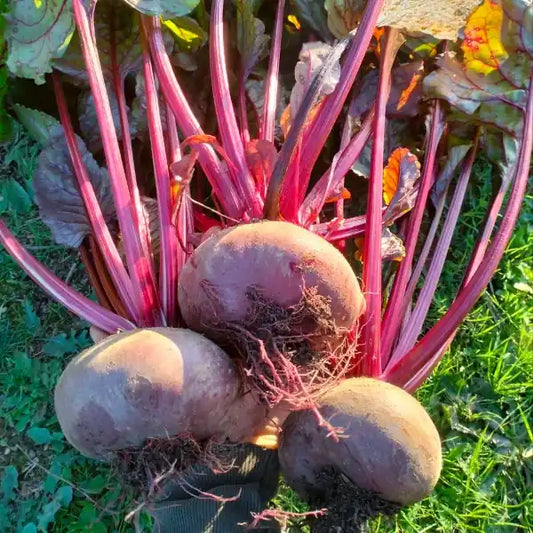
Yellow Beet 'Burpees Golden' - Beta vulgaris
€3,00 EUR
€750,00 EUR 1kg
Price plus shipping
Delivery time: 1-2 business days (PT – international may vary)
reicht für ca. 7 m Reihe

In stock

Traditional cultivar & heirloom variety. Open-pollinated & non-hybrid – 100% free from genetic engineering & synthetic fertilisers. Ecologically propagated – non‑proprietary variety.
Bohnensamen2

Harvest year:

2025

Seed viability:

5 years (species-specific)
Detailed information on germination capacity

Description

Cultivation & Characteristics

Golden beet ‘Burpee’s Golden’ – a historic rarity with golden-yellow flesh.

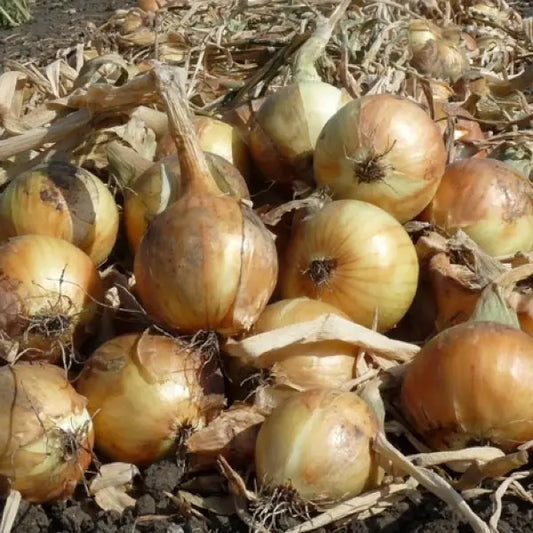
This open-pollinated golden beetroot produces rounded roots with orange skin, bright golden-yellow flesh and a pleasantly mild, sweet flavour. Its juicy, tender texture and low earthy note make it particularly versatile in the kitchen. It is well suited to raw dishes and cooked vegetable dishes without staining. In addition to the roots, the rich green leaves with their yellow veins can also be eaten. Its comparatively early maturity and compact growth allow for productive cultivation in garden beds, raised beds and sufficiently deep containers.

  Origin & History

‘Burpee’s Golden’ originates from the USA and was bred by the W. Atlee Burpee & Co. seed company in Pennsylvania. A golden beetroot was introduced under the name ‘Golden’, producing orange-coloured roots with yellow flesh and a characteristic flavour. It was among the first commercially available yellow beetroot varieties to gain international significance. The name ‘Burpee’s Golden’, commonly used today, reflects the breeding company from which it originated.

Alongside its golden-yellow roots, the edible leaves were already among the variety’s valued characteristics. It became established as a vegetable grown for both its roots and leafy greens and offers a mild alternative to red beetroot without staining. Beyond American horticulture, it also became established in Europe. Today, this historic variety has a firm place in organic seed production and continues to be maintained and propagated as an open-pollinated golden beetroot. Still relatively little known, the variety is valued as part of the heritage of international organic horticulture and as a rare speciality in the kitchen.

  Appearance & Characteristics

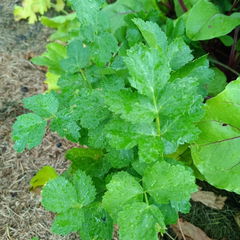
The plants develop a compact rosette of rich green, slightly wavy leaves with yellow veins and pale yellow leaf stalks. During the root-harvesting stage, the foliage usually reaches around 25–40 cm in height. The rounded roots sit partly visible above the soil surface. In their second year, plants left for seed production can develop branching flower stems around 100–150 cm tall with inconspicuous greenish flowers. The plants tolerate light frost, but the roots should be protected or harvested before severe or prolonged frost.

Root details:

  • Size: Medium-sized, around 6–8 cm in diameter

  • Shape: Round to slightly flattened

  • Color: Orange skin with pale to golden-yellow flesh

  • Texture: Juicy, tender and fine-textured; crisp when raw and soft when cooked

  • Flavor: Mildly sweet, slightly fruity and less earthy than many red beetroot varieties

 Usage & Cultivation Highlights

The roots can be finely grated or thinly sliced for raw salads and are also suitable for steaming, boiling, frying or roasting. Their sweet flavour works well in savoury vegetable dishes, soups and purées. They can also be pickled or fermented. Small leaves can be added fresh to salads, while larger leaves and their stalks can be prepared in the same way as chard. For storage, cooked pieces of beetroot can also be frozen.

Their low to moderate nutrient requirements and robust growth make this variety an uncomplicated choice for the home garden. Its suitability for spring and summer sowings allows harvesting over a large part of the growing season. Both tender baby beetroot and fully developed roots can be used, providing a flexible harvest window. The good storage potential of mature roots also makes the variety suitable for winter supplies.

Compared with other beetroot varieties, ‘Burpee’s Golden’ is distinguished by its golden-yellow flesh and mild, sweet, distinctive flavour. Its medium-sized, rounded roots are particularly practical for fresh cooking, while the plants also provide edible leaves.

Cultivation_Overview_-_Anbau_im_Uberblick_-_Visao_geral_do_cultivo_-_www

Origin & Cultivation at a Glance

First mention:

1940

Origin:

US

Breeder:

W. Atlee Burpee & Co.

Propagation site:

Zurich – Switzerland

Suitable for:

Open field, Greenhouse, Balcony / pot, Urban gardening, Raised bed, Plant towers or tiered systems

Care requirements:

Low – easy to care for, ideal for beginners.

Overwintering:

Not winter-hardy – can be cultivated outdoors as an annual. Overwintering only possible in frost-free conditions for seed production.

Special features:

Bolt-resistant, Heat-tolerant, Resilient, Low-maintenance, Sun-loving / sunny, High-yielding
Plant_Growing_Instructions_-_Pflanzen_Anbau-Anleitung_-_Instrucoes_de_cultivo_de_plantas_-_www

Cultivation guide for

Burpee’s Golden

Growing difficulty:

Easy
• In subtropical climates, sow from March in sunny or semi-shaded locations – indoor pre-cultivation possible from January.
• In temperate regions, direct sowing from April after the last frost in full sun – pre-cultivation from March recommended.
• Sowing in well‑drained, humus‑rich and nutrient‑rich loam soil – 2–3 cm deep. Plant spacing: 20 × 30 cm.
• For baby leaf, sow densely with row spacing of 10-15 cm.

Cultivation tips:

• Thin out early so the plants have enough space.
• For a staggered harvest, it’s recommended to sow seeds in intervals of 4 weeks.
• Good air circulation protects against aphids and fungal diseases.
• Biochar and rock dust improve soil structure and enhance the retention of nutrients and water.

Storage instructions:

Store seeds in a cool, dry, dark, and airtight environment to maximize shelf life and germination.
Detailed information on seed storage
Plant_Profile_-_Pflanzen_Steckbrief_-_Ficha_da_planta_-_www

Plant Profile

Plant details

Botanical name:

Beta vulgaris L. subsp. vulgaris var. conditiva 'Burpee’s Golden'

Botanical family:

Amaranthaceae

Plant type:

Root & tuber vegetables

Growth habit:

Herbaceous, Forms a rosette, Compact growth with a rounded root

Plant width:

30 cm

Plant height:

40 cm

Root type:

Shallow to moderately rooted

Hardy to:

-2 °C short-term possible.

Cultivation period:

3.5-4.5 months

Life cycle:

Biennial (grown as an annual)

Propagation method:

Generative propagation by seed

Propagation:

• This variety is cross-pollinated by wind and belongs to the species Beta vulgaris.
• For seed production, a minimum isolation distance of 800–1000 m from other varieties of the same species is recommended, as cross-pollination is easily possible.
• This plant is biennial – after flowering, it develops branched inflorescences with small to medium-sized seeds that mature well.
• Seeds are ready for harvest once the seed heads are fully dried and slightly brittle.

Sowing & Planting

Germination type:

Dark germinator, Temperate germinator

Sowing depth:

1-2 cm

Germination temperature:

15-22 °C

Germination time:

7-10 days

Pot culture:

Requires a minimum container size of 5 liters.

Row spacing for baby leaf:

Limited suitability for baby-leaf cultivation. Swiss chard is the more suitable choice for baby-leaf cultivation.

Plant spacing:

15-20 cm

Row spacing:

15-20 cm

Pricking out / thinning out:

Thin out seedlings within 2 weeks after the formation of the first true leaf pairs.

Planting time:

Transplanted seedlings can be planted outdoors about 3 weeks after pricking out. Only once the soil is frost-free.

Soil

Soil type:

Well-drained, humus-rich loam soil

Soil pH:

6.0-7.5 – slightly acidic to alkaline

Nutrient requirements:

Moderate to heavy feeder

Soil moisture:

Evenly moist, Sensitive to waterlogging

Soil preparation:

Loosen soil before sowing, Prepare soil weed-free and with a fine crumb structure., Apply compost before planting., Consistent moisture and neutral pH soil promote root development., Mulch layer for moisture regulation

Companion planting, Crop rotation & Harvest

Companion plants:

Lettuce, Lamb’s lettuce, Brassicas, Cucumber, Bean, Broad bean, Onion crops, Dill, Savory, Calendula, Tagetes

Incompatible plants:

Spinach, Chard, Root crops, Corn, Potato, Celery

Crop rotation guidelines:

• Do not plant after other Beta species (Swiss chard, beetroot) - a minimum interval of 3 years is recommended.
• Repeated cultivation at the same site increases disease pressure, leads to nutrient depletion, and impairs soil structure.
• Ideal previous crops include legumes, onions, root vegetables, and green manure – rotating crops supports healthy soil.
• Crop rotation with low-nutrient-demanding plants is recommended to prevent soil fatigue and maintain healthy growing conditions.

Harvest time:

Spring, Summer, Autumn

Sowing to harvest:

2-4 months

Harvested parts:

Roots

Suitable for consumption:

Yes - edible raw or cooked.

Intended use:

Raw consumption, Diet cuisine, Low Carb, Natural garden, Salad, Juice / juicing, Smoothies, Fermentation, Steaming, Cooking, Baking, Pickling, To purée, Freezing, Preserving

Care & Cultivation practices

Water requirements:

Moderate to high

Plant care techniques:

Thin out after germination when sown directly, Water regularly - even during dry periods, Maintain weed-free

Plant protection:

Slug protection recommended, Mulching recommended

Cultivation notes:

May develop mildew in damp weather – an airy location is recommended. Susceptible to slugs and snails in early development. At a later stage, the hardier leaves are less vulnerable. Sensitive to waterlogging – use well-drained soil.

Other names

EN - English names:

• Yellow Beet • Beetroot • Garden beet • Table beet

DE - German names:

• Gelbe Bete • Rande • Rübe

PT - Portuguese names:

• Beterraba amarela • Beterraba dourada

ES - Spanish names:

• Remolacha amarilla

FR - French names:

• Betterave jaune

Customer Reviews

Be the first to write a review
0%
(0)
0%
(0)
0%
(0)
0%
(0)
0%
(0)

Reviews in Other Languages

Further recommendations for you

Open-pollinated and reproducible