Annual mugwort is a very effective medicinal plant that has been used in traditional Chinese medicine for around 2,000 years. The herb has wound-healing and hemostatic properties and is used to treat skin diseases. Ideal for direct sowing or pre-cultivation, pot culture possible, sowing in spring, good for mixed culture, harvesting of flowers and leaves.
Description
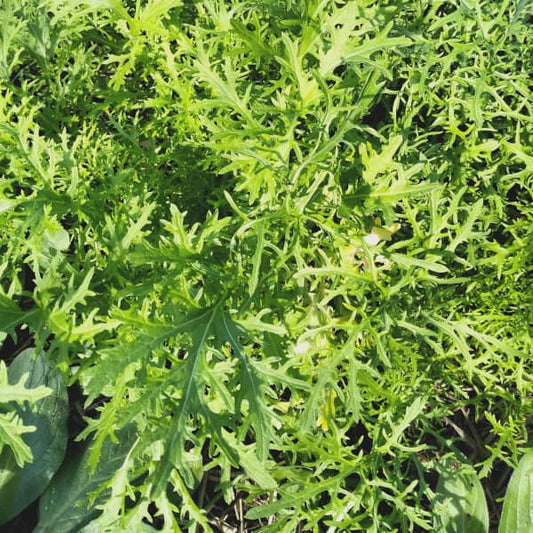
This type of mugwort is an annual medicinal plant and originally comes from China, where it is called Qing Hao. This special medicinal herb has been used in traditional Chinese medicine for around 2,000 years, and became popular again in Europe in 1970 due to its reputation and the active ingredient artemisinin. This type of mugwort has been popular since the 4th century AD and has healing effects on malaria and other fevers. It is also considered to be a wound-healing and hemostatic agent, and is used for skin diseases. The robust plant grows wild along paths and rivers, mainly in China, Europe, and North America. The finely feathered, dark green leaves exude an aromatic scent and contain the plant's high active ingredient content. The taste is very bitter. The fast-growing and adaptable plant develops its own strong defenses against insects and diseases, which makes it attractive in mixed cultures. It reproduces easily through self-seeding.
General information
Plant family: Asteraceae
Life cycle: Annual
Days to harvest: 80 days
Plant height approx.: 180 cm
Root type: Deep rooter
Nutrient requirements: Medium
Water requirements: Low
Winter hardiness: Up to 0°C
Location: Sunny
Soil: Permeable, humus-rich loamy soil
pH value: 6 to 7
Sowing and planting information
Germination type: Light germinator
Sowing depth: 0 cm
Optimal germination temperature: 10-15 °C
Germination time: 7-21 days
Plant and row spacing: 30x50 cm
Germination ability of seeds: 10-40 years
Mixed culture
Optimal mixed culture: Lavender, Thyme, Sage, Chamomile, Oregano, Wildflowers
Unfavorable mixed culture: -
Sowing by climate zone
Subtropic climate (Mediterranean) (e. g. B. Portugal, Spain, Italy)
Direct sowing or pre-cultivation from February to June is recommended. The plants should ideally be planted in a sunny location.
Moderate climate (e. g. B. Germany, Switzerland, Poland)
Direct sowing or pre-cultivation from mid-May to June is recommended. The ideal location for the plants is sunny.
General recommendations
It can take up to 3 weeks for the seeds to germinate. Mugwort plants are medium feeders and only need a moderate supply of nutrients, which is sufficient in a prepared bed. Additional fertilization is then not necessary. Direct sowing is recommended. After germination, thin out the plants to the specified plant spacing. Pre-cultivation in pots is also a good idea.
Annual mugwort prefers a permeable, nutrient-rich, moist and humus-rich loamy soil. Doesn't tolerate waterlogging.
Additional tips
The species establishes itself in favorable locations. In winter, the soil should be rather dry. The flowers are only pollinated by the wind. In order to quickly obtain a fine, crumbly and permeable soil with good nutrient and water storage capacity, additional incorporation of biochar and primary rock flour is recommended.
Type of propagation
Propagation occurs via seeds.
Plant care
During hot periods, watering is necessary to maintain growth. Because the plants initially grow slowly, we recommend weeding surrounding herbs regularly. No fertilization necessary.
Other names
Botanical names: Artemisia annua
English names: Annual mugwort
German names: Einjähriger Beifuß, Süßer Beifuß, Einjähriger Wermut
Portuguese names: Artemísia anual
Spanish names: Artemisa anual
French names: Armoise annuelle
Origin
Country: Portugal


![American Mountain Mint [Pycnanthemum pilosum]](http://www.benjis.net/cdn/shop/files/AmerikanischeBergminze-Americanmint-Pycnanthemumpilosum-www.benjis.net.jpg?v=1704292329&width=533)
![Anise [Pimpinella anisum]](http://www.benjis.net/cdn/shop/files/Anise_-_Pimpinella_anisum_-_www.benjis.net.jpg?v=1738942704&width=533)
![Apple mint [Mentha rotundifolia]](http://www.benjis.net/cdn/shop/files/Apfelminze-Applemint-Hortelamaca-Mentharotundifolia-www.benjis.net.jpg?v=1763734068&width=533)
![Artischoke Imperial Star [Cynara cardunculus var. scolymus]](http://www.benjis.net/cdn/shop/files/ArtischockeImperialStar-Artichoke-Alcachofra-Cynaracardunculusvar.scolymus-www.benjis.net.jpg?v=1705194551&width=533)