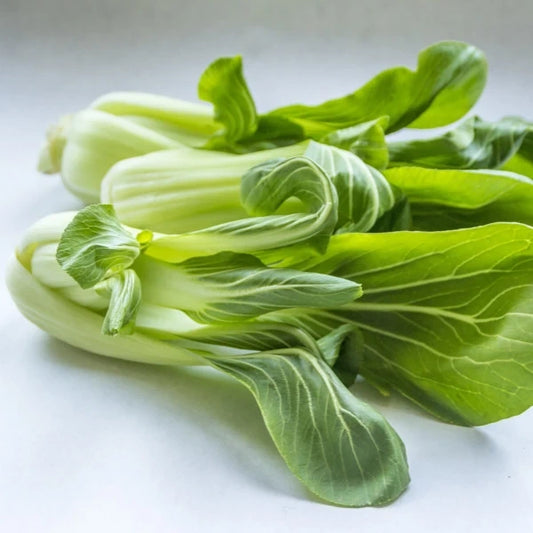
'Lucullus' Chard – historic and hardy variety with robust traits and striking leaves.
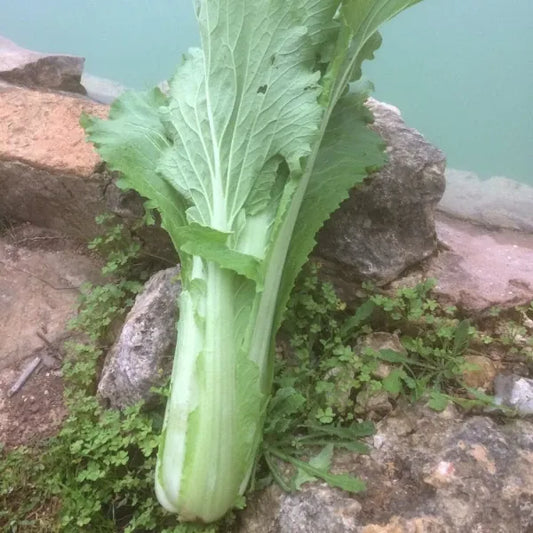
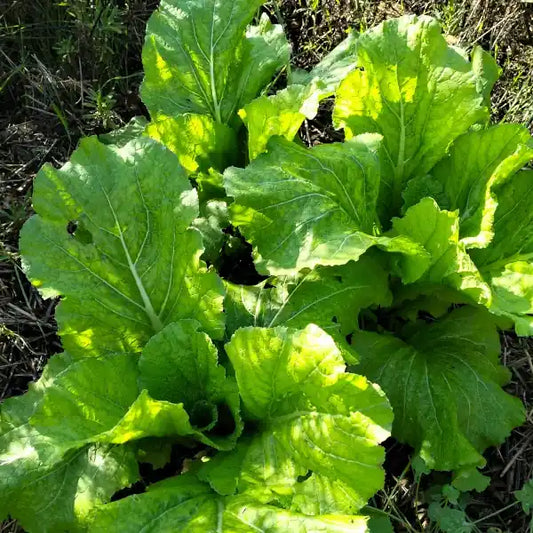
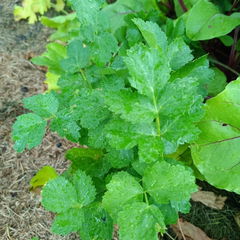
It is a biennial Swiss chard with light green, heavily ruffled leaves and broad, creamy-white stalks. Mild, aromatic flavor. Upright growth, undemanding, and ideally suited for open field and greenhouse cultivation. Robust, high-yielding, and open-pollinated – perfect for self-sufficiency and organic farming.
 Origin & History
‘Lucullus’ is an old, open-pollinated Swiss chard that has appeared in European seed catalogs since the 1920s and ranks among the oldest chard varieties still in circulation. Its origins lie in the Central European region near the Mediterranean, where chard has been cultivated since antiquity and valued as a nutrient-rich leafy vegetable. The variety emerged as an intermediate form between leaf and stalk chard, selected to produce a robust plant with broad, creamy-white stalks, strongly ruffled leaves, and uniform growth. The name refers to the Roman general and gourmet Lucius Licinius Lucullus, renowned for culinary diversity and enjoyment.
‘Lucullus’ is considered especially hardy and winter-resistant, setting it apart from other chard varieties. Its introduction in the early decades of the 20th century marked an important step in the development of chard. Thanks to its resilience against weather extremes and its long harvest period, it quickly became a reference variety for cultivation across different climates and remains firmly established in many regions of Europe.
In Germany, Austria, and Switzerland, ‘Lucullus’ is traditionally known as Mangold, Krautstiel, or Stielmangold. Its reliability and open-pollinated quality have secured it a lasting place in the preservation of old cultivated varieties, making it a symbol of the importance of freely accessible, safeguarded diversity to this day.
 Appearance & Characteristics
The plant grows upright and reaches a height of about 50 cm. It produces numerous light green, heavily ruffled leaves with broad, creamy-white stalks and shows strong resilience against weather extremes. Hardy down to about -10 °C, with winter protection up to -15 °C.
Leaf and stalk details:
Size: Large, approx. 20-30 cm long leaves
Shape: Wavy, broad, upright-growing
Color: Light green with creamy-white stalks
Texture: Tender, juicy; stalks firm and crisp
Flavor: Mildly nutty, slightly earthy; stalks mildly sweet
 Usage & Cultivation Highlights
The leaves and stalks of ‘Lucullus’ are excellent fresh in salads, smoothies, and as garnish. Steamed or sautéed, they make a classic winter side dish, fit well in soups, stews, pestos, and herb spreads. The mildly sweet stalks resemble asparagus and can be gratinated, stuffed, or baked. Leaves enrich quiches, casseroles, and gratins, while both are well suited to Mediterranean pasta dishes, vegetable sautés, as well as modern wraps, bowls, and sandwiches. Pickled or fermented, the crisp stalks remain long-lasting and add aromatic depth to winter cuisine. Thanks to their high nutrient content, they are popular in diet and low‑carb dishes, and young leaves provide valuable vitamins in juices and smoothies.
With its upright growth and winter hardiness, ‘Lucullus’ thrives reliably outdoors, in greenhouses, and in larger pots. The variety is easy to care for, continuously produces new leaves, and is ideal for ongoing harvests. It shows resilience to changing weather conditions, grows well even on lighter soils, and extends the harvest season deep into winter. In addition, ‘Lucullus’ impresses with its uniform development, which allows for easy care and harvesting. It tolerates short dry periods, regenerates quickly after cutting, and remains productive for a long time without bolting. Even under dense planting, it maintains stable leaf quality, making it well suited for baby‑leaf production and mixed cropping.
Compared to other chard varieties, ‘Lucullus’ is particularly winter-hardy and resilient – a proven open-pollinated variety with stable growth and classic flavor.