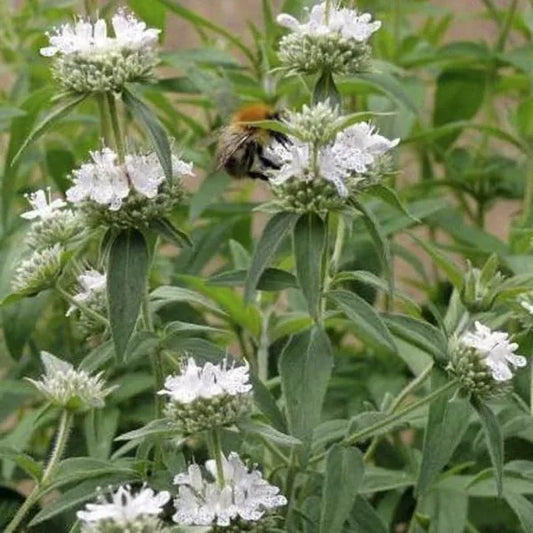
Meadowsweet - Filipendula ulmaria

€2,50 EUR
Save {price}%
€6.250,00 EUR kg
Price plus shipping
Delivery time: 1-2 business days (PT – international may vary)
reicht für ca. 2 m²

In stock

Historic, traditional and unchanged wild form. Genetically stable & open-pollinated - 100% free from hybrid breeding, GMOs, and synthetic fertilizers. Organically propagated - preserved in its original form.

Local pickup at Benjis Seeds

Bohnensamen2

Harvest year:

2024

Seed viability:

3 years (species-specific)
Detailed information on germination capacity

Description

Cultivation & Characteristics

Tips & Reviews

Meadowsweet – traditional aromatic medicinal and fragrance plant with a sweet‑spicy honey‑almond scent. 

Perennial wild herb with a characteristic sweet, almond‑like aroma and a natural content of phenolic compounds, including salicylates. It grows robustly, is very hardy and is suitable for open ground, wet habitats and naturalistic gardens. It germinates reliably after a cold period and forms long‑lived, persistent clumps. Ideal for self‑sufficiency, wildlife gardens and ecological medicinal‑herb cultivation.


  Origin & History

Meadowsweet has been valued as a medicinal and aromatic plant for centuries. Its natural range extends across Europe, Western Asia and parts of Siberia. The name “meadowsweet” derives from the Middle High German met for honey wine and refers to the traditional use of the flowers to flavour mead. Botanically, the species belongs to the rose family (Rosaceae), the subfamily Rosoideae and the genus Filipendula.

Meadowsweet was already known in antiquity and was collected and cultivated in various regions of Europe. Archaeobotanical finds from Bronze Age and Iron Age settlements attest to its use in ritual contexts. Celtic and Germanic cultures revered the plant as a sacred herb and used it both ceremonially and medicinally. In the Middle Ages, Meadowsweet served as a fragrant strewing herb in living spaces and banquet halls, as its dried flowers release an intense honey‑almond scent. Herbals of the Renaissance and early modern period describe it as a remedy for fever, pain and digestive complaints.

In the 19th century, salicylic acid was first isolated from its flowers – a milestone that later led to the development of acetylsalicylic acid and gave the plant international scientific significance. Over the centuries, Meadowsweet spread far beyond its original range and became naturalised throughout Europe and parts of North America. It secured a firm place in wet meadows, monastic gardens and traditional cottage gardens and is still regarded as one of Europe’s most important historical medicinal and aromatic plants – a symbolic species of moist meadow landscapes and a lasting element of European herbal culture.


 Appearance & Characteristics

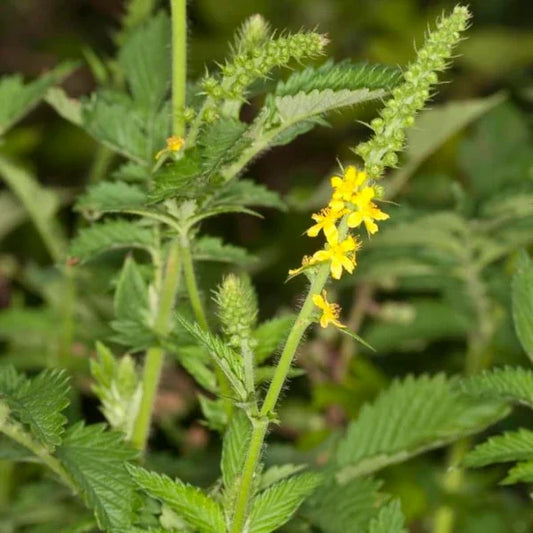
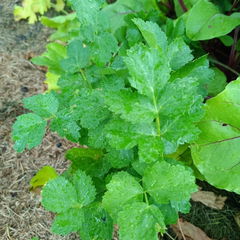
The plant is perennial and herbaceous, producing upright, branched stems with imparipinnate leaves that are dark green above and lighter to slightly downy beneath. The numerous cream‑white flowers appear from June to August in loose, paniculate inflorescences and are highly attractive to pollinators. It forms a short, sturdy rhizome from which dense clumps arise. The species is hardy to around −30 °C and, once established, reliably withstands prolonged periods of frost.

Plant details:

  • Height: Tall, 100–180 cm

  • Form: Upright, bushy, loosely branched

  • Leaves: Pinnate, dark green, paler beneath

  • Flowers: Cream‑white, in loose panicles

  • Flavor: Sweet‑spicy, almond‑like, aromatic


 Usage & Cultivation Highlights

Meadowsweet is ideal for teas, refreshing drinks, syrups, desserts, fragrance blends and natural cosmetics. Its aromatic flowers contain essential oils and salicylates, traditionally used in herbal medicine. Externally, it is applied in folk medicine to soothe irritated skin. It refines jams, lemonades and light summer dishes and is a valuable fragrance plant. Meadowsweet has long been used to flavour mead, liqueurs and herbal wines, and is suitable for flower sugar, flower vinegar and syrup bases, as well as for use in scented sachets, potpourris and incense blends. The dried flowers retain their sweet, almond‑like aroma and can be used in many ways in the kitchen, herbal crafts and natural fragrance applications.

Meadowsweet grows reliably in open ground, along pond edges and in wet habitats. The plant is easy to care for, hardy and can be harvested over many years. Its flowers attract numerous beneficial insects such as bees, bumblebees and butterflies, supporting ecological balance in the garden. It grows strongly in moist to wet soils, regenerates well after pruning and forms long‑lived clumps. It prefers sunny to semi‑shaded sites and shows good tolerance to changing weather conditions. Meadowsweet also impresses with its high soil adaptability in humus‑rich, permanently moist substrates, its pronounced robustness against waterlogging and its ability to flower reliably even in cooler summers. The plant stabilises damp banks, contributes to biodiversity in naturalistic gardens and remains vigorous and productive for many years thanks to its strong rootstock.

Compared with other wild perennials, Meadowsweet is the classic traditional medicinal and aromatic plant with particularly fragrant flowers – ideal for anyone seeking robust, long‑lived herbs with high value for insects and wetland habitats.

Cultivation_Overview_-_Anbau_im_Uberblick_-_Visao_geral_do_cultivo_-_www

Origin & Cultivation at a Glance

First mention:

2000 BC

Origin:

Temperate regions of Europe and Western Asia

Breeder:

Wild form – taken into cultivation unchanged

Propagation site:

Lower Saxony – Germany

Suitable for:

Open field

Care requirements:

Low to medium - generally uncomplicated, manageable with some attention.

Overwintering:

Winter-hardy - suitable for outdoor cultivation.

Special features:

Perennial, Resilient, Low-maintenance, Sun-loving / sunny, Shade-tolerant / partial shade, Cold-hardy
Plant_Growing_Instructions_-_Pflanzen_Anbau-Anleitung_-_Instrucoes_de_cultivo_de_plantas_-_www

Cultivation guide for

<tc>Meadowsweet</tc>

Growing difficulty:

Light to medium
In subtropical climates, sow directly from September to February in partial shade – pre‑cultivation is not recommended.

Cultivation tips:

Direct sowing is recommended - young plants grow quickly and vigorously.
Thin out early so the plants have enough space.
Requires permanently very moist soil, up to standing or flowing water, to grow healthily and produce high‑quality yields.
Keep constantly moist – drought causes immediate growth cessation.
Good air circulation protects against aphids and fungal diseases.
Biochar and rock dust improve soil structure and enhance the retention of nutrients and water.

Storage instructions:

Store seeds in a cool, dry, dark, and airtight environment to maximize shelf life and germination.
Detailed information on seed storage
Plant_Profile_-_Pflanzen_Steckbrief_-_Ficha_da_planta_-_www

Plant Profile

Plant details

Botanical name:

<tc>Filipendula ulmaria (L.) Maxim.</tc>

Botanical family:

Rosaceae

Plant type:

Medicinal plant

Life cycle:

Perennial, long‑lived (8–12 years)

Cultivation period:

6-10 years

Growth habit:

Upright growth, Herbaceous, Clump-forming

Plant width:

90 cm

Plant height:

180 cm

Root type:

Shallow to moderately rooted

Hardy to:

-30 °C

Cultural meaning:

Historical, Traditional

Suitability for cultivation and use:

Peak season, Self-sufficiency, Biodiversity, Variety conservation, Educational projects / School garden, Processing

Propagation method:

Generative propagation by seed, Vegetative propagation, Rhizome-forming, Division possible in spring, Self-seeding

Propagation:

This variety is cross‑pollinated by insects and belongs to the species Filipendula ulmaria.
For seed production, a minimum distance of 200-300 m from other varieties of the same species is recommended, as cross‑pollination is possible.
The plant is perennial – after flowering it produces numerous small, well‑ripening seeds in dry aggregate achenes.
The seeds are ready for harvest once the seed heads have fully dried and become slightly brittle.

Sowing & Planting

Germination type:

Light germinator, Cold germinator

Sowing depth:

0-0,5 cm

Germination temperature:

15–20 °C, stratification at 0–5 °C (2–4 weeks)

Germination time:

30–40 days

Pot culture:

Not recommended – better grown in garden beds.

Row spacing for baby leaf:

Not suitable for baby-leaf cultivation.

Plant spacing:

60 cm

Row spacing:

80 cm

Pricking out / thinning out:

No thinning required – direct sowing recommended.

Planting time:

Transplanting not required - direct sowing is recommended.

Soil

Soil type:

Water‑saturated, humus‑rich, nutrient‑rich loam soil

Soil pH:

6.0-7.5 – slightly acidic to alkaline

Nutrient requirements:

Moderate to heavy feeder

Soil moisture:

Evenly moist, Moisture-loving

Soil preparation:

Loosen soil before sowing, Apply compost before planting., Prepare soil weed-free and with a fine crumb structure., Mulch layer for moisture regulation

Companion planting, Crop rotation & Harvest

Companion plants:

Moisture‑loving plants

Incompatible plants:

Drought‑tolerant perennials, Mediterranean herbs, Rhizomatous, spreading plants

Crop rotation guidelines:

Perennial – remains in the same location for several years.
After cultivation, allow at least 3 years before replanting related wet‑meadow herbs.
Avoid planting directly after heavy-feeding crops – allow the soil to recover and replenish nutrients first.

Harvest time:

Spring, Summer, Autumn

Sowing to harvest:

3-6 months

Harvested parts:

Leaves, Shoot tips, Inflorescences

Suitable for consumption:

Yes – exclusively in processed form, as tea and for medicinal applications.

Intended use:

Culinary herb, Tea, Drying / Dehydrating, Preserving, Fragrant plant, Pollinator plant, Wild perennial, Natural garden, Decoration

Care & Cultivation practices

Water requirements:

High

Plant care techniques:

Thin out after germination when sown directly, Water regularly - even during dry periods, Loosen and hoe, Fertilize, Maintain weed-free

Plant protection:

No protection required

Cultivation notes:

Proven and easy to cultivate Susceptible to slugs and snails in early development. At a later stage, the hardier leaves are less vulnerable. Growth stops under drought – consistent water supply required. Loss of quality in heat – prefer cool locations. Root rot may occur in compacted soil – keep the soil loose and well‑drained.

Other names

EN - English names:

MeadowsweetQueen of the MeadowMeadwortBridewort

DE - German names:

Echtes MädesüßGroßes MädesüßMetkrautGeißbartWiesenkönigin

PT - Portuguese names:

UlmáriaErva das abelhas

ES - Spanish names:

UlmariaUlmaria olorosa

FR - French names:

Reine‑des‑présUlmaire
Practical_Planting_and_Care_Tips_-_Praktische_Aussaat-_und_Pflegetipps_-_Dicas_praticas_de_sementeira_e_cuidados_-_www

Practical sowing and care tips

Saattiefe - Bedingt Keimverhalten und Gesundheit

Sowing depth - Determines germination and health

Germination rate too low or plants bending over? Decisive factors for sowing depth. In this article from my gardening handbook,...
Read more here
Aussaat-Arten - Direktsaat und Vorkultivierung

Sowing methods - direct sowing and pre-cultivation

How do I sow seeds: direct sowing or pre-cultivation? In this article, we'll explain the background of both methods, along...
Read more here
Keimarten und Umgebungsfaktoren - Wie Samen keimen

Germination types and environmental factors - How seeds germinate

Which germination types are relevant, and what should you consider when germinating seeds? In this article, we've compiled a simple,...
Read more here
Mulch - Wasser sparen und Wachstum fördern

Mulching - save water and promote growth

Nature as a model - mulching has numerous advantages that benefit the health of soil life and plants. In this...
Read more here

Customer Reviews

Be the first to write a review
0%
(0)
0%
(0)
0%
(0)
0%
(0)
0%
(0)

Further recommendations for you

100% open-pollinated & reproducible