Pumpkins
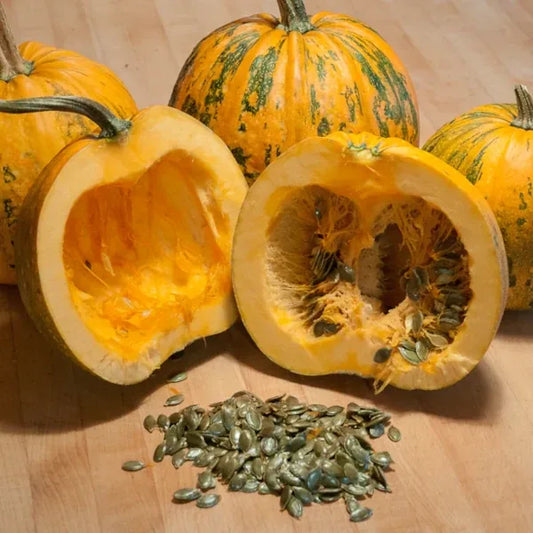
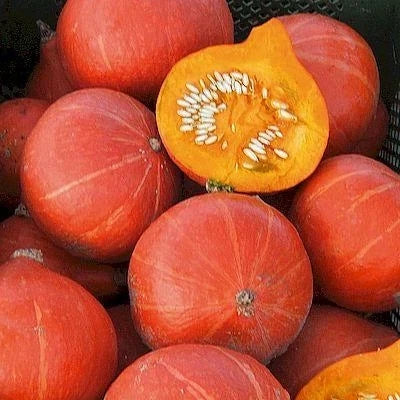
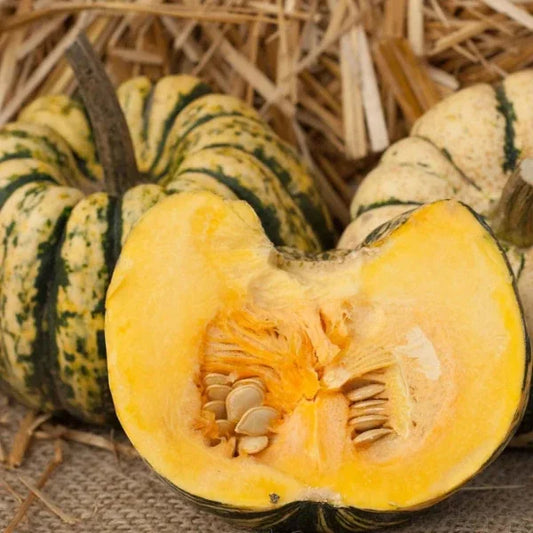
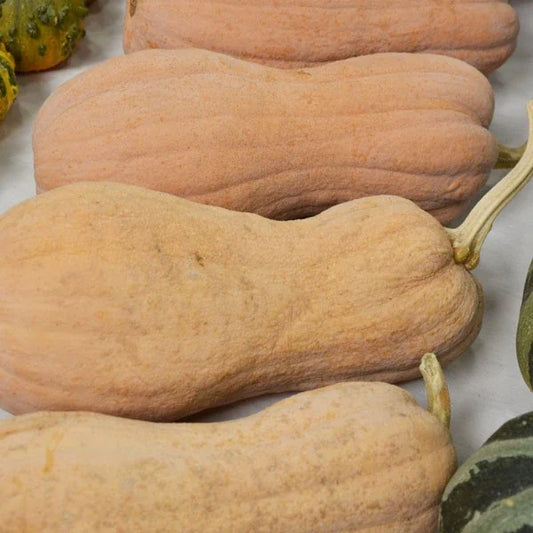
Pumpkins have their origin in the warm regions of Central and South America, where early forms emerged from wild cucurbits and were already used by Indigenous cultures. As they spread along trade routes, they reached Europe and other world regions, where numerous types developed over time. Among pumpkin species are Cucurbita pepo, C. maxima, C. moschata, C. argyrosperma and C. ficifolia; these are genetically distinct and not cross‑compatible. Their diversity includes oil‑rich types with edible seeds, as well as large‑fruited, small‑fruited, round, ribbed, flower‑shaped or elongated forms, plus colour variations from deep green to yellow, orange, white or patterned.
In subtropical climates, pumpkins thrive especially well during the warm seasons, benefiting from long growing periods and consistently warm temperatures. In temperate regions, many of our traditional and historically preserved open‑pollinated varieties also perform reliably, forming strong plants and uniform fruits even with lower temperatures. Pumpkins show pronounced ecological adaptability and can be grown successfully in many climate zones when planted at the right time.