Dyer Chamomile - Cota tinctoria

€2,50 EUR
€5.000,00 EUR kg
Price plus shipping
Delivery time: 1-2 business days (PT – international may vary)
reicht für ca. 1 m²

In stock

Historic, traditional and unchanged wild form. Genetically stable & open-pollinated - 100% free from hybrid breeding, GMOs, and synthetic fertilizers. Organically propagated - preserved in its original form.
Bohnensamen2

Harvest year:

2023

Seed viability:

Up to 4 years (species-specific)
Detailed information on germination capacity

Description

Cultivation & Characteristics

Dyer Chamomile traditional wild perennial with bright yellow blooms. 

Perennial, short‑lived dye and aromatic plant with intensely golden‑yellow blooms and a chamomile‑like scent. Grows robustly, tolerates heat and drought, and thrives in open ground, containers and naturalistic gardens. Germinates reliably and self‑seeds in suitable locations. Ideal for home use, natural dyeing and ecological herb cultivation.


  Origin & History

Dyer’s chamomile is a wild plant native to Europe, the Mediterranean region and Western Asia. It belongs to the Asteraceae family (subfamily Asteroideae) and the genus Cota (formerly Anthemis). It has been valued for centuries as an important dye plant. The species name tinctoria derives from the Latin tingere (“to dye”), referring to its traditional use for producing yellow textile dyes.

By the Middle Ages, it already played a notable role in monastic gardens and artisanal dyeing. Its flowers provided one of Europe’s most significant natural yellow dyes and were widely appreciated across many regions. Over the centuries, it remained a central element of traditional dye craft.

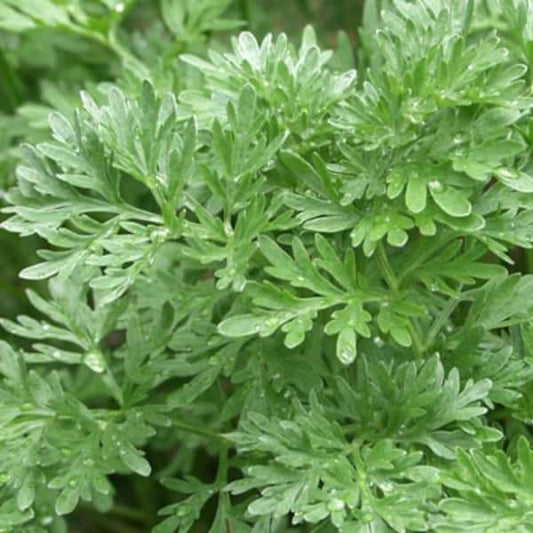
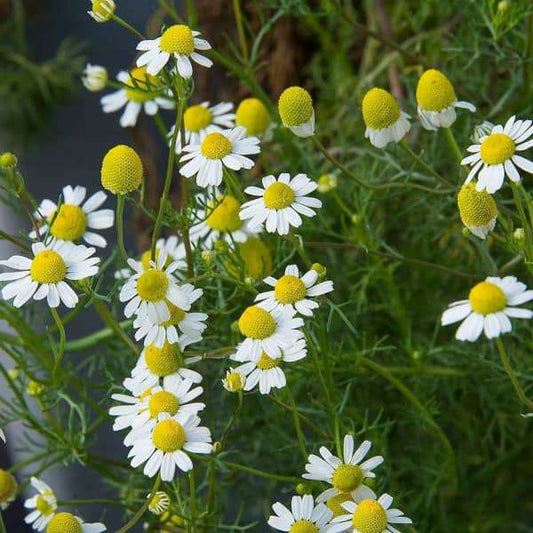
Characteristic features of the species include its bright golden‑yellow flower heads with yellow ray and disc florets. The leaves are finely divided, grey‑green and slightly hairy on the underside. Owing to its long history of use and its high content of dye compounds, it is still regarded as one of the most important European dye plants.


 Appearance & Characteristics

The plant is a perennial herb forming upright, branching stems with finely divided, grey‑green leaves. Its golden‑yellow flower heads sit in 2–4 cm capitula and release a mild, aromatic scent. It attracts numerous insects and is sufficiently hardy to maintain itself through self‑seeding.

Plant details:

  • Height: Upright, 40–70 cm

  • Form: Bushy, richly branched

  • Leaves: Finely divided, grey‑green, underside slightly hairy

  • Flowers: Golden yellow, 2–4 cm across

  • Flavor: Mildly aromatic, chamomile‑like


 Usage & Cultivation Highlights

Dyer’s chamomile is ideal for dyeing wool, silk and cotton in vivid yellow tones. The flowers contain natural pigments that produce shades from pale yellow to golden yellow depending on the mordant. It is also used for aromatic herbal teas. Dried flower heads are excellent for dried arrangements, scent blends and decorative uses. As a bee plant, it attracts numerous pollinators and enriches naturalistic gardens. The flowers can also be used for scented herb cushions, potpourris and light aromatic applications in the kitchen and home apothecary. In ecological gardening it is valued for supporting beneficial insects and for providing structure and colour as a robust companion perennial in lean, sunny plantings.

Dyer’s chamomile grows reliably both in open ground and in containers. It prefers sunny sites and well‑drained soils that are lean to moderately fertile. It is heat‑ and drought‑tolerant, easy to care for and flowers over many weeks. The plants attract beneficial insects such as bees, hoverflies and butterflies, supporting ecological balance. Thanks to self‑seeding, it reappears annually in suitable locations. Cutting back after flowering encourages vigorous regrowth. With its strong adaptability to sandy, stony or nutrient‑poor soils, it remains vital even in dry summers. It is sturdy, wind‑tolerant and shows notable resilience to disease as long as the soil is well drained. In extensive plantings, prairie beds and naturalistic perennial mixes, it proves to be a long‑lived, colour‑rich structural plant that flowers reliably even under challenging conditions.

Compared with other chamomile species, dyer’s chamomile is the classic dye plant with bright golden‑yellow blooms – ideal for anyone seeking a low‑maintenance, perennial aromatic and dye plant with abundant flowers for pollinators.

Cultivation_Overview_-_Anbau_im_Uberblick_-_Visao_geral_do_cultivo_-_www

Origin & Cultivation at a Glance

First mention:

16th century

Origin:

Southeastern Europe and Western Asia

Breeder:

Wild form – taken into cultivation unchanged

Propagation site:

Lower Saxony – Germany

Suitable for:

Open field, Raised bed, Balcony / pot, Urban gardening, Rock garden

Care requirements:

Low – easy to care for, ideal for beginners.

Overwintering:

Hardy – suitable for perennial cultivation outdoors.

Special features:

Quickly usable, Fast-growing, Resilient, Low-maintenance, Sun-loving / sunny, Shade-tolerant / partial shade, Heat-tolerant, Drought-tolerant, Cold-hardy, Bolt-resistant
Plant_Growing_Instructions_-_Pflanzen_Anbau-Anleitung_-_Instrucoes_de_cultivo_de_plantas_-_www

Cultivation guide for

<tc>Dyer’s Chamomile</tc>

Growing difficulty:

Easy
In subtropical climates, sow in full sun from March to May – pre‑cultivation not recommended.
In temperate regions, direct sowing from March to April in full sun – pre‑cultivation not recommended.
Sowing in well‑drained soil, sandy to low‑humus and up to moderately fertile. Light‑dependent germinator – do not cover with soil. Spacing: 30 × 40 cm.

Cultivation tips:

Direct sowing is recommended – young plants grow stable and vigorous.
Thin out early so the plants have enough space.
Ideal for prairie plantings and dry gardens; can be combined with Mediterranean herbs.
Good air circulation protects against aphids and fungal diseases.

Storage instructions:

Store seeds in a cool, dry, dark, and airtight environment to maximize shelf life and germination.
Detailed information on seed storage
Plant_Profile_-_Pflanzen_Steckbrief_-_Ficha_da_planta_-_www

Plant Profile

Plant details

Botanical name:

<tc>Cota tinctoria (L.) J.Gay ex Guss.</tc>

Botanical family:

Asteraceae

Plant type:

Dye plant, Medicinal plant

Growth habit:

Upright growth, Bushy, Herbaceous, Clump-forming

Plant width:

40 cm

Plant height:

70 cm

Root type:

Shallow to moderately rooted

Hardy to:

-20 °C

Cultivation period:

24–36 months

Life cycle:

Biennial to short‑lived perennial (2–4 years)

Propagation method:

Generative propagation by seed, Division possible, Self-seeding

Propagation:

The plant is cross‑pollinated by insects and belongs to the species Cota tinctoria.
For seed production, a minimum isolation distance of 500 m from other varieties of the same species is recommended to prevent cross-pollination.
The plant is perennial – each year it forms branched inflorescences with numerous small, well‑ripening seeds.
The seeds are ready for harvest once the seed heads have completely dried and become straw‑like and brittle.

Sowing & Planting

Germination type:

Light germinator, Temperate germinator

Sowing depth:

0 cm

Germination temperature:

15-22 °C

Germination time:

7-21 days

Pot culture:

Requires a minimum container size of 5 liters.

Row spacing for baby leaf:

Not suitable for baby-leaf cultivation.

Plant spacing:

30 cm

Row spacing:

40 cm

Pricking out / thinning out:

No thinning required – direct sowing recommended.

Planting time:

Transplanting not required - direct sowing is recommended.

Soil

Soil type:

Well‑drained, sandy‑gravelly and low‑nutrient loamy soil

Soil pH:

6.0-7.0 - slightly acidic to neutral

Nutrient requirements:

Light feeder

Soil moisture:

Moderately moist for germination and establishment, Drought-tolerant, Adaptable, Sensitive to waterlogging

Soil preparation:

Loosen soil before sowing, Prepare soil weed-free and with a fine crumb structure.

Companion planting, Crop rotation & Harvest

Companion plants:

Thyme, Oregano, Sage, Lavender, Hyssop, Steppe sage / prairie sage, Rosemary, Yarrow, Catmint

Incompatible plants:

Other Asteraceae, Heavy feeder, Moisture‑loving plants, Large‑leaved, strongly spreading species

Crop rotation guidelines:

Should not follow other Asteraceae crops – a 3-year rotation is advised.
Perennial – remains in the same location for several years.
Prefers lean soils – avoid follow‑up planting on heavily fertilised sites.

Harvest time:

Spring, Summer, Autumn, Winter

Sowing to harvest:

1.5-2.5 months

Harvested parts:

Leaves, Flowers, Young shoots

Suitable for consumption:

Yes – only in small amounts and more as a seasoning herb.

Intended use:

Culinary herb, Tea, Drying / Dehydrating, Pollinator plant, Fragrant plant, Wild perennial, Companion perennial, Natural garden, Decoration

Care & Cultivation practices

Water requirements:

Low

Plant care techniques:

Thin out after germination when sown directly, Irrigate occasionally, Loosen and hoe, Maintain weed-free, Inspect regularly for pest infestation

Plant protection:

Slug protection recommended, Well-ventilated location and good drainage recommended., Check early for aphids.

Cultivation notes:

Proven and easy to cultivate Susceptible to slugs and snails in early development. At a later stage, the hardier leaves are less vulnerable. Can be infested by aphids - occasional monitoring recommended. Sensitive to waterlogging – use well-drained soil.

Other names

EN - English names:

Dyer’s ChamomileOxeye ChamomileYellow ChamomileGolden MargueriteDyer’s Daisy

DE - German names:

Färber-HundskamilleFärberkamilleAnthemis tinctoria

PT - Portuguese names:

Margarida douradaCamomila‑dos‑tintureiros

ES - Spanish names:

Manzanilla de tintesManzanilla amarillaCamomila amarillaAnthemis tinctoria

FR - French names:

Camomille des teinturiersCamomille jauneAnthemis tinctoria

Customer Reviews

Be the first to write a review
0%
(0)
0%
(0)
0%
(0)
0%
(0)
0%
(0)

Further recommendations for you

100% open-pollinated & reproducible