'Gniff' Carrot – traditional purple‑and‑white storage carrot from Ticino.
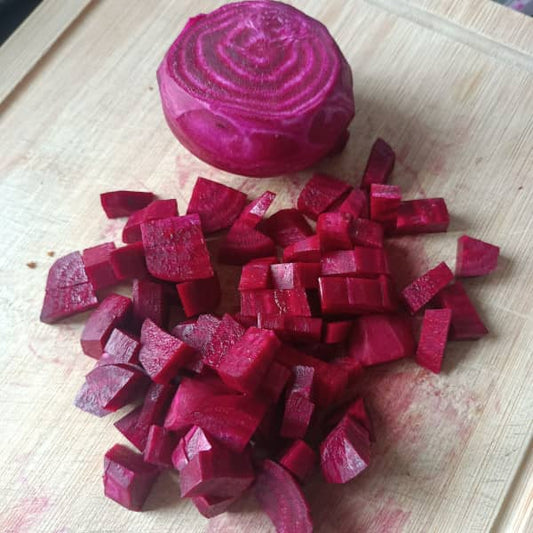
This variety is a robust, late‑maturing carrot with characteristic dark‑purple, conical and rather short roots whose interior remains white. Its flavor is subtly sweet and slightly spicy – typical of older purple carrot types. The plants develop firm flesh and are well suited for open‑field cultivation. Open‑pollinated, good for storage, and traditionally used for self‑sufficiency and regional cultivation.
 Origin & History
‘Gniff’ is an open‑pollinated landrace from Switzerland, originating in the canton of Ticino. Documented since the 19th century, it belongs to the historical purple‑and‑white carrot types of the region. Botanically, it is part of the family Apiaceae, the subfamily Apioideae, and the genus Daucus within the species Daucus carota. Over many generations, it was cultivated in the mountain areas of Ticino and is considered the only indigenous purple‑and‑white carrot of the region.
The name ‘Gniff’ comes from the Ticinese dialect and referred, depending on the area, either to carrots in general or specifically to this purple form. The variety was widespread in several valleys and was sold on local markets until the 20th century. Its dark‑purple exterior and white interior reflect old European carrot types that were common before orange varieties became widespread.
‘Gniff’ was valued for its good storability and its combination of mildly sweet and subtly spicy flavors. Traditionally, it was cooked, peeled and preserved in vinegar or oil with herbs – a typical preparation in the mountain regions of Ticino. To this day, the variety is cultivated and preserved due to its regional importance, genetic distinctiveness and striking appearance.
 Appearance & Characteristics
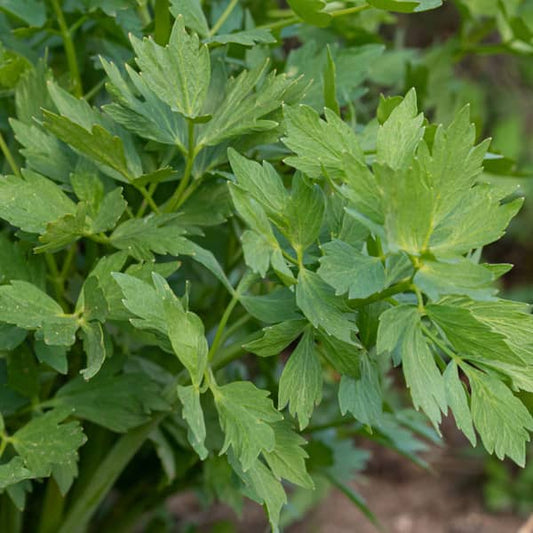
In the first year, the plants form a vigorous leaf rosette with foliage reaching about 30–40 cm in length. The roots are dark purple on the outside, white on the inside, conical, and typically 10–15 cm long. When cooked, the purple color fades slightly. The variety is sensitive to excessive moisture and frost‑hardy down to –6 °C.
Root details:
Size: Medium, with roots 10–15 cm long
Shape: Conical, compact
Color: Dark purple on the outside, white on the inside
Texture: Firm, juicy
Flavor: Aromatic, slightly spicy, subtly sweet
 Usage & Cultivation Highlights
The roots of ‘Gniff’ are well suited for cooked and steamed dishes and were traditionally boiled, peeled, sliced, and preserved in vinegar or olive oil with garlic and parsley. It stores well and retains its aroma over time. The roots can be fermented, dried, juiced, or used as a mild component in soups and vegetable dishes. With its less sweet, slightly spicy flavor, the variety is particularly suitable for hearty preparations such as braised dishes, strong broths, and rustic vegetable pans. Finely grated, it serves as a base for savory patties, fillings, or spreads. Cut into thin strips, it works well for roasted vegetables, sautéed side dishes, or as a colorful element in salads, though it is used more sparingly when raw. It also performs well when pickled, turned into chutneys, or used as an aromatic component in winter stews.
‘Gniff’ is a slow‑growing storage carrot that delivers reliable yields in open‑field cultivation. The variety matures late and forms short, well‑shaped roots. It shows good tolerance to cooler weather phases. Thanks to its strong root system, it is comparatively drought‑resistant. The variety is slow to bolt, shows good foliage health, and is well suited for organic farming and mixed cropping. Its compact growth habit allows for easy hoeing and maintenance, and its uniform development ensures a stable stand. Even at higher altitudes, it forms roots reliably and remains remarkably consistent in shape and color. Overall, ‘Gniff’ is considered a robust, low‑maintenance variety that performs particularly well in cooler regions and on lighter soils.
Compared to other carrot varieties, ‘Gniff’ stands out for its rare purple‑and‑white coloration, its distinctive flavor, and its good storability – ideal for anyone who appreciates historical varieties with a unique appearance and strong regional tradition.