Dandelion – a versatile wild and medicinal plant with strong vitality and traditional significance.
Perennial with a strong taproot, rich in bitter compounds and known for its bright yellow blooms and deeply cut leaves. Grows robustly, regenerates reliably and thrives in full sun to partial shade. Ideal for natural gardens, edible wild‑plant beds, tea preparations and ecological self‑sufficiency.
 Origin & History
Dandelion (Taraxacum officinale) is a wild plant widespread across Europe and now found in almost all temperate regions of the Northern Hemisphere. Its preferred habitats include meadows, roadsides, pastures, gardens and open, nutrient‑rich sites. Since antiquity it has been valued as a medicinal and useful plant; leaves, roots and flowers were considered digestive‑stimulating, cleansing and strengthening. Botanically, it belongs to the family Asteraceae, subfamily Cichorioideae, and the genus Taraxacum.**
The earliest known mention appears in 10th‑century Arabic medical writings, where Tarakhshaqūn is described as a plant supporting liver and digestion. In the 11th century it appears in European herbal manuscripts, and in the 12th century Hildegard of Bingen notes its strengthening properties. In the early modern period, dandelion is listed in herbals as a versatile wild herb whose roots, leaves and flowers were used for “purifying the blood”, “strengthening digestion” and “stimulating metabolism”.
Traditionally, the young leaves served as a vitamin‑rich spring green, the flowers for syrups, teas and mild herbal preparations, while the root was roasted as a coffee substitute or used for extracts. In some regions, the blossoms were also used to produce a golden herbal wine.
Today, dandelion is considered a valuable wild plant for natural gardens, edible landscapes and ecological plantings. It is one of the most important early food sources for wild bees and numerous insect species.
 Appearance & Characteristics
Dandelion is a perennial, herbaceous plant with a strong, deep taproot and a basal rosette of deeply lobed, toothed leaves. The bright yellow flower heads appear from spring into autumn and develop into the characteristic spherical seed heads (blowballs). Hardy down to about –30 °C.
Plant details:
Height: Low, 10–40 cm
Form: Rosette‑forming, perennial, herbaceous
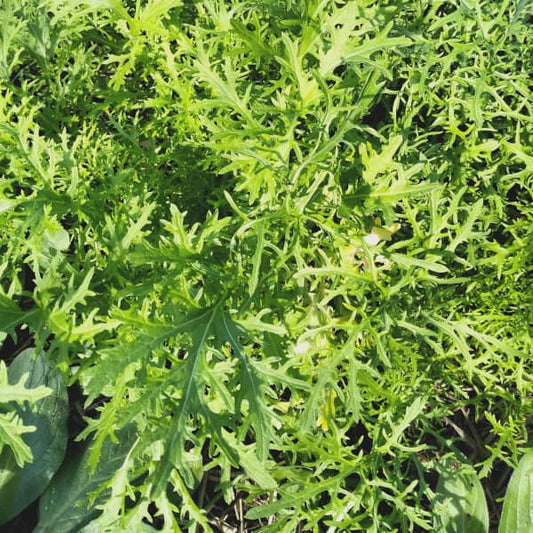
Leaves: Deeply lobed, toothed, fresh green
Flowers: Bright yellow, basket‑shaped, rich in nectar
Flavor: Bitter‑spicy, fresh, slightly nutty (leaves); mild‑floral (flowers)
 Usage & Cultivation Highlights
The young dandelion leaves are suitable for salads, herb oils, teas and spring tonics, while older leaves, cooked or steamed, make an aromatic wild vegetable. The flowers can be used for syrup, teas, herbal wines and gentle skin‑care blends. The root is traditionally used for extracts, tinctures, roasted as a coffee substitute or as part of cleansing herbal applications. Dried plant parts retain their quality well and are suitable for storage blends.
In the garden, dandelion impresses with exceptional robustness, regenerative strength and its ability to thrive reliably even in compacted or nutrient‑poor soils. The deep taproot loosens the soil, promotes humus formation and makes the plant a valuable component of natural plantings. It is one of the most important early flowering plants for pollinators, fully hardy, easy to care for and establishes quickly and permanently. Even in difficult locations it remains vigorous and contributes to the ecological stability of the garden.
Compared to many other wild and medicinal plants, dandelion is particularly versatile in use, ecologically valuable and deeply rooted in cultural history – ideal for anyone seeking a robust, productive and traditionally significant wild perennial for wild salads.