Celeriac 'Monarch' - Apium graveolens var. rapaceum

€3,00 EUR
€12.000,00 EUR 1kg
Price plus shipping
Delivery time: 1-2 business days (PT – international may vary)
reicht für ca. 220 plants

In stock

Traditional cultivar. Open-pollinated & non-hybrid – 100% free from genetic engineering & synthetic fertilisers. Ecologically propagated – non‑proprietary variety.
Bohnensamen2

Harvest year:

2026

Seed viability:

Up to 4 years (species-specific)
Detailed information on germination capacity

Description

Cultivation & Characteristics

Celeriac ‘Monarch’ – traditional storage variety with large, white-fleshed roots.

This open-pollinated celeriac variety produces large, heavy roots with firm, white flesh and a pleasantly mild, slightly nutty celery flavour. The flesh retains its light colour when cooked and is equally suitable for delicate raw salads, flavoursome soups, purées and fried celeriac slices. Its good storage qualities provide a versatile supply of vegetables for the colder months. In addition to the roots, the aromatic leaves can also be used to add flavour to stocks and vegetable dishes. With a reliable water supply, the variety is suitable for Mediterranean regions as well as for the long outdoor growing season in Central European climates.

  Origin & History

‘Monarch’ was bred by Walter Hild in Marbach am Neckar, Germany, and has been known since the 1970s. The variety became established in European commercial vegetable production and was grown both for the fresh market and for processing. Its large roots, high proportion of light-coloured flesh and mild flavour were particularly valued. These characteristics made it suitable for the production of dried and pickled celeriac products as well as for the sale of fresh roots. By the end of the 1990s, ‘Monarch’ already accounted for more than half of the European celeriac market.

As the variety became more widespread, milder, pale-fleshed celeriac gained importance compared with older, more strongly flavoured types. Around the turn of the millennium, ‘Monarch’ was also among the standard varieties used in German variety trials. The variety therefore combines a long history of use in professional vegetable production with characteristics that are also valued in home gardens. Its substantial roots and good suitability for storage have earned it an established place among proven autumn and storage celeriac varieties. To this day, it continues to be maintained as an open-pollinated variety alongside newer cultivars and propagated in organic vegetable production.

  Appearance & Characteristics

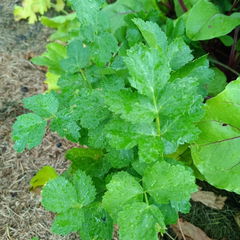
The plants develop a vigorous rosette of upright to slightly spreading, dark green, distinctly divided leaves. While grown for its root, the foliage usually reaches around 40–60 cm in height. The pale roots sit partly above the soil surface and develop numerous lateral roots on their underside. In the second year, overwintered plants can produce branched flower stalks up to around 150 cm tall, bearing small, whitish flowers in umbels. Mature plants tolerate light frost, but the roots should be harvested or protected before severe or prolonged frost. Young plants are sensitive to prolonged cold, which can trigger premature flowering.

Root details:

  • Size: Very large, around 10–15 cm in diameter

  • Shape: Rounded to trapezoidal, sometimes slightly flattened

  • Colour: Pale beige to grey-brown skin and white flesh

  • Texture: Firm and juicy, crisp when raw and tender when cooked

  • Flavour: Mild, slightly nutty and pleasantly aromatic with a characteristic celery flavour

 Usage & Cultivation Highlights

The roots can be finely grated for raw salads and classic celeriac remoulade. Cooked, they add flavour to soups, stews and stocks, can be made into a creamy purée or sliced, fried and breaded. Their mild, nutty flavour also works well in roasted vegetable dishes and gratins. The aromatic leaves can be used sparingly to flavour vegetable stocks. For longer-term storage, the roots can be stored in cool, humid conditions, while prepared pieces can be blanched and frozen or thinly sliced and dried.

The high individual yield of its large roots makes ‘Monarch’ particularly suitable for self-sufficiency and autumn harvesting. The roots can be harvested while still smaller or left to develop further for a larger yield. This gives the variety flexibility between earlier use and fully mature roots for storage. Its good keeping quality extends the supply well beyond the main gardening season. The pale flesh, which has little tendency to discolour, also remains well suited to a range of preparation methods.

Compared with other celeriac varieties, ‘Monarch’ stands out for its large, heavy roots, mild, slightly nutty flavour and pale flesh that retains its light colour when cooked. Its good storage qualities make it particularly suitable for autumn harvesting and for maintaining a supply of fresh vegetables through winter.

Cultivation_Overview_-_Anbau_im_Uberblick_-_Visao_geral_do_cultivo_-_www

Origin & Cultivation at a Glance

First mention:

1970s

Origin:

Germany

Breeder:

Walter Hild

Propagation site:

Hesse - Germany

Suitable for:

Open field, Raised bed

Overwintering:

Possible outdoors in mild winters, protect from severe frost.

Special features:

High-yielding
benjis-seeds-plant-growing-instructions-icon

Cultivation guide for

Celeriac 'Monarch'

Growing difficulty:

Medium

Care requirements:

Medium – requires some attention.
This variety grows best in deep, humus-rich and well-drained sandy loam with good water-holding capacity. Before planting, loosen the soil thoroughly and incorporate well-rotted compost. Avoid soil compaction and waterlogging.

For sowing under cover, fill small trays with seed compost and moisten it. Sow the seeds thinly on the surface, firm gently and, as they require light to germinate, do not cover them with soil. Keep evenly moist at 18–22 °C without washing the seeds away. Germination usually takes 14–21 days. Around 4–6 weeks after sowing, once the first true leaves have developed, prick out individually into small pots or module trays. Continue growing in a bright position at around 15–18 °C and avoid prolonged periods of cold.

Plant out well-rooted young plants around 10–12 weeks after sowing, once the weather is sufficiently mild. Leave 40 cm between plants within the row and 40–50 cm between rows. Plant no deeper than they were growing previously, keeping the centre of the plant at soil level. Water thoroughly, continue watering regularly and apply additional organic fertiliser as needed during vigorous growth. Remove weeds and loosen only the surface of the soil. A layer of mulch helps to retain moisture, but keep the developing celeriac exposed. Harvest the roots when they reach the desired size, lifting roots intended for storage as carefully as possible to avoid damage.

Mediterranes Klima

In Mediterranean climates, we recommend sowing under cover in small trays from January to March in a bright, sufficiently warm position. Plant the young plants outdoors from April to June in a sunny to lightly shaded, airy position with soil that retains moisture well. Avoid prolonged periods of cold while raising the young plants. During hot summer periods, light shade, a layer of mulch and reliable watering are particularly important, as drought stress can adversely affect growth and celeriac quality. Depending on the sowing time and desired celeriac size, harvesting takes place from late summer into winter. In areas with mild winters, mature celeriac can remain in the bed for longer, provided the soil does not become waterlogged and severe frost is not expected.

Mitteleuropäisches Klima

In Central European climates, we recommend sowing under cover in small trays from February to March in a bright, sufficiently warm position. Plant the young plants outdoors from mid-May to June after the last frosts in a sunny, airy position with soil that retains moisture well. Delay planting if the weather remains cool, as prolonged periods of cold can encourage premature bolting in young plants. Water regularly during dry summer periods and maintain consistent soil moisture, particularly while the celeriac is developing. Depending on the sowing time and desired celeriac size, harvest from September to November, lifting celeriac intended for storage before severe frost.

Cultivation tips:

• Do not plant young plants raised under cover any deeper than they were growing previously; keep the developing celeriac above soil level.
• Keep evenly moist while the celeriac is developing.
• A layer of mulch keeps the soil evenly moist and suppresses weeds.
• Keep healthy leaves intact as much as possible while the celeriac is developing.
• Loosen only the surface of the soil to avoid damaging the roots.
• Harvest celeriac intended for storage before severe frost and avoid damaging it when lifting.

Storage instructions:

Store seeds in a cool, dry, dark, and airtight environment to maximize shelf life and germination.
Detailed information on seed storage
Plant_Profile_-_Pflanzen_Steckbrief_-_Ficha_da_planta_-_www

Plant Profile

Celeriac 'Monarch'

Plant details

Botanical name:
Apium graveolens L. 'Monarch'
Botanical family:
Apiaceae - carrot family
Plant type:
Root & tuber vegetables
Growth habit:
Herbaceous, Forms a rosette
Plant width:
30–50 cm
Plant height:
40–60 cm
Root type:
Shallow-rooted, Taprooted
Hardy to:
-5 °C - possible for short periods in mature plants.
Cultivation period:
6–9 months
Life cycle:
Biennial

Sowing & Planting

Germination type:
Light germinator
Sowing depth:
0 cm
Germination temperature:
18-22 °C
Germination time:
14-21 days
Pot culture:
Not recommended - better grown in garden beds or raised beds.
Row spacing for baby leaf:
Not suitable for baby-leaf cultivation.
Plant spacing:
40 cm
Row spacing:
40–50 cm
Pricking out / thinning out:
4–6 weeks, prick out once the first pairs of true leaves have developed.
Planting time:
Young plants raised under cover can be planted out around 10–12 weeks after sowing. Plant only in consistently warm weather – ideally after the last frosts, when both daytime and nighttime temperatures are mild.

Soil

Soil type:
Well-drained, humus-rich sandy loam soil
Soil pH:
6.5-7.5 - slightly acidic to alkaline
Nutrient requirements:
Moderate to heavy feeder
Soil moisture:
Evenly moist, Sensitive to waterlogging
Soil preparation:
Loosen the soil deeply before planting, Apply compost before planting., Prepare soil weed-free and with a fine crumb structure., Mulch layer for moisture regulation

Companion planting, Crop rotation & Harvest

Companion plants:
Spinach, Brassicas, Leek, Dwarf beans, Cucumber, Tomato, Radish varieties, Chamomile
Incompatible plants:
Carrot, Parsley
Crop rotation guidelines:
• Don't plant after other umbellifers – a minimum interval of 3 years is recommended.
Sowing to harvest:
6–8 months
Harvested parts:
Tubers, Leaves
Suitable for consumption:
Yes - edible raw.
Intended use:
Culinary herb, Raw consumption, Salad, Steaming, Cooking, Roasting, Baking, Pickling, To purée, Freezing, Drying / Dehydrating

Care & Cultivation practices

Water requirements:
High
Plant care techniques:
Water regularly - even during dry periods, Loosen and hoe, Fertilize, Maintain weed-free
Plant protection:
Slug protection recommended, Well-ventilated location and good drainage recommended., Frost protection is recommended during severe or prolonged frost
Cultivation notes:
Cold conditions while raising young plants can trigger premature bolting. Sensitive to waterlogging – use well-drained soil. Susceptible to leaf spot diseases – an airy position and dry foliage are recommended. Growth stops under drought – consistent water supply required.
Propagation method:
Generative propagation by seed
Propagation:
• This variety is pollinated by insects and belongs to the species Apium graveolens.
• For seed production, a minimum isolation distance of 150 m from other varieties of the same species is recommended.
• For seed saving, collect seeds from at least 60 healthy, true-to-type plants.
• Overwinter selected plants and allow them to flower in the second year.
• The seeds are ready to harvest once the umbels turn grey-brown and the seeds can be easily removed.
• Allow harvested umbels to finish drying in a well-ventilated place, rub out the seeds, clean them and dry them thoroughly.

Other names

EN - English names:

• Celeriac • Celery root • Knob celery

DE - German names:

• Knollensellerie • Wurzelsellerie • Knollenzeller • Zeller

PT - Portuguese names:

• Aipo rábano • Aipo de raiz

ES - Spanish names:

• Apionabo • Apio de raíz

FR - French names:

• Céleri-rave

Customer Reviews

Be the first to write a review
0%
(0)
0%
(0)
0%
(0)
0%
(0)
0%
(0)

Reviews in Other Languages

Further recommendations for you

Open-pollinated and reproducible
Es gibt noch keine Produkte!