Clary Sage – fragrant aromatic perennial with tall pastel‑violet flower spikes and strong attraction for pollinators.
Biennial, robust fragrant and wild perennial with a large basal rosette and branched flower stems up to 150 cm tall. It grows upright with a rosette habit, is drought‑tolerant, and is ideal for open ground, naturalistic gardens, prairie plantings, and sunny, nutrient‑poor sites. It germinates reliably, forms a strong taproot, and develops long‑lived single rosettes. Excellent for fragrance gardens, pollinator support, incense use, and decorative perennial plantings.
 Origin & History
Clary sage is a traditional fragrant, ritual and medicinal plant native to the warm, dry regions of south‑eastern Europe, Asia Minor and the eastern Mediterranean. In the wild it inhabits rocky slopes, open dry grasslands and light scrub. As a classic monastic and medicinal herb it was cultivated early in European herb and cottage gardens, valued for its aromatic oils and its importance for pollinators. Botanically it belongs to the mint family (Lamiaceae), the subfamily Nepetoideae and the genus Salvia.
Its earliest documented mention dates to the 13th century: in De proprietatibus rerum (c. 1230–1240), Bartholomaeus Anglicus describes clary sage, making it one of the earliest recorded fragrant and medicinal plants of medieval Europe. From the High Middle Ages to the early modern period it played a notable role in perfumery, wine and liqueur refinement, women’s herbal medicine, respiratory and digestive applications, and monastic healing traditions. Its colourful bracts were used in herb bundles, protective house blessings and incense rituals, symbolising purification, protection and mental clarity. In Mediterranean folk medicine it appeared in salves, tinctures, skincare and aromatic oils.
In the 18th century it spread through botanical gardens and herbals across Central Europe and became a cherished plant of fragrance and cottage gardens. Its essential oils served as a base note in early European perfumery and continue to shape traditional fragrance and incense recipes today. Today, clary sage is regarded as a characterful, drought‑tolerant perennial for naturalistic plantings, fragrance gardens and biodiversity‑oriented designs. Its nectar‑rich flowers and aromatic growth habit carry its long cultural history into the present.
 Appearance & Characteristics
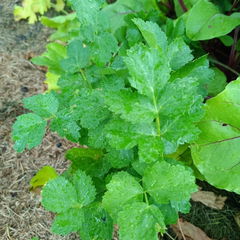
Biennial plant forming a strong basal rosette in the first year and producing tall, upright, branched flower stems in the second year. The leaves are large, softly hairy and grey‑green. The flowers appear in pastel violet, pink or white, accompanied by colourful bracts, and are intensely visited by bumblebees and wild bees. Clary sage develops a deep taproot, is heat‑ and drought‑tolerant, and hardy down to –15 °C.
Plant details:
Height: Tall, 80–150 cm
Form: Upright, herbaceous, rosette‑forming, clump‑forming
Leaves: Large, grey‑green, softly hairy
Flowers: Pastel violet to rosé, in tall, branched verticillasters
 Usage & Cultivation Highlights
Clary sage is ideal for naturalistic and fragrance gardens, prairie plantings and drought‑tolerant perennial schemes. Its tall flower spikes create architectural accents and provide pollinators with abundant nectar for many weeks. It thrives reliably in poor, dry soils, is low‑maintenance and self‑seeds well. Thanks to its heat and drought tolerance it is perfectly suited to full‑sun sites, slopes and stony areas. As an aromatic plant it is used for incense, hydrosols, tinctures and essential oils. The decorative flower spikes are suitable for fresh and dried arrangements, while the strong basal rosette stabilises open ground. Additionally, clary sage is used in herb bundles, scented cushions, potpourri, natural room and linen scenting, as well as for soothing skin oils and floral compositions. As a long‑lived structural perennial it forms harmonious combinations with drought‑loving grasses and perennials.
Clary sage establishes quickly, shows stable development even during heat periods and benefits from minimal care – ideal for low‑maintenance, nature‑oriented planting concepts. It offers high drought tolerance, robust stability and strong resistance to nutrient‑poor soils. Its deep taproot ensures reliable growth even in stony, well‑drained substrates, while the broad rosette protects open soil and reduces weed pressure. The plant responds well to cutting, self‑seeds readily and remains structurally stable even in exposed, windy locations. With its long flowering period, intense fragrance and strong pollinator attraction, it is an excellent long‑term structural and accent plant for sunny, dry garden areas.
Compared to other fragrant and wild perennials, clary sage is particularly drought‑tolerant, impressive in stature and exceptionally pollinator‑friendly – ideal for anyone seeking a low‑maintenance, decorative, aromatic structural plant with strong ecological value.