'Red Kuri' Pumpkin Hokkaido – aromatic, chestnut‑nutty culinary squash with creamy flesh.
A warmth‑loving, robust squash plant with 1–3 kg, teardrop‑shaped, bright orange fruits. Its finely nutty, slightly chestnut‑like flesh is aromatic, creamy and highly versatile in the kitchen. The plants grow vigorously, with long trailing to far‑creeping vines, reliably producing 2–4 fruits per plant and performing excellently in warm open‑field locations, raised beds, polytunnels and sheltered plots. Open‑pollinated, reliable in fruit set and ideal for self‑sufficiency, direct marketing and ecological cultivation.
 Origin & History
‘Red Kuri’ originated in Japan from regional Cucurbita maxima landraces valued for their excellent storability, firm, aromatic flesh and reliable maturity. The name “Kuri” – Japanese for “chestnut” – refers to the characteristic flavour that has long defined this group of varieties. In Japan, the variety is traditionally known under the historical name “Uchiki Kuri”, which is still used today as the original designation for this aromatic Hokkaido type. It belongs to the classic Hokkaido types (Cucurbita maxima) within the family Cucurbitaceae, subfamily Cucurbitoideae and the genus Cucurbita.
The variety first appeared publicly in 1957, when a new Hokkaido type with bright orange skin, teardrop shape and a distinctly chestnut‑like aroma was described in Japan. From the 1970s onward, ‘Red Kuri’ spread internationally and quickly became one of the most popular culinary squashes in North America and Central Europe. Publications from Japan, the USA and Europe in the 1980s highlight its high yield stability, strong adaptability to different soils and its particularly aromatic, fine‑textured flesh. The variety gained early recognition for its edible skin, creamy texture and nutty‑chestnut‑like flavour – qualities that made it a staple of modern autumn and winter cuisine.
As an open‑pollinated variety, ‘Red Kuri’ combines traditional Japanese selection with modern practicality: robust plants, reliable fruit set, unique flavour and remarkable storability. An aromatic classic that today ranks among the world’s most popular culinary squashes.
 Appearance & Characteristics
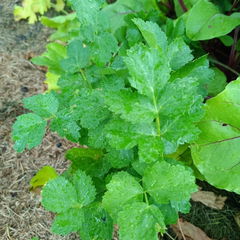
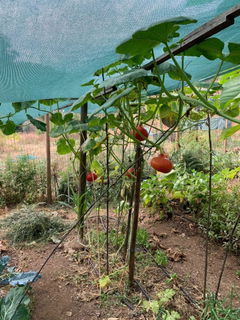
The plants are annual, develop vigorous, far‑reaching vines and spread 200–300 cm across the ground. Warm‑loving, minimum temperature for cultivation 12–14 °C.
Fruit details:
Size: Medium to large, fruits weighing 1–3 kg
Shape: Teardrop‑shaped to round‑oval
Color: Bright orange, smooth skin
- Flesh: Deep orange, fine‑textured, creamy
Skin: Thin and edible, fully edible when cooked
Flavor: Nutty‑sweet, slightly chestnut‑like, aromatic
 Usage & Cultivation Highlights
‘Red Kuri’ is a versatile culinary squash with excellent flavour. Its creamy, nutty‑chestnut‑like flesh is ideal for soups, curries, purées, baked dishes, gnocchi, pastries, fillings, desserts and both savoury and sweet preparations. The edible skin makes processing significantly easier. Thanks to its good storability, it remains aromatic and firm for many weeks. It is also well suited for fermentation, pickling, drying and freezing. In addition, ‘Red Kuri’ can be turned into aromatic spreads, creamy dips, refined pasta sauces and hearty vegetable roasts. Its fine‑textured flesh is equally suitable for risotto, rösti, quiches, tarts, pan dishes and warming stews. In sweet cuisine, it enriches cakes, muffins, puddings, ice cream and aromatic jams. Even in smoothies, juices or as a base for plant “milk”, it provides natural sweetness and a velvety texture.
The variety is robust, warm‑loving and delivers high, uniform yields in sunny open‑field conditions. ‘Red Kuri’ shows good tolerance to heat and variable summers, sets fruit reliably and benefits from humus‑rich, well‑drained soils. The plants are vigorous, strongly vining and well suited to organic cultivation systems, mixed cropping and self‑sufficiency. With their strong root development, they use soil moisture efficiently, respond positively to organic soil improvement and show remarkable yield stability even during dry periods. Under protected conditions, the variety ripens particularly evenly and develops an intense aroma. ‘Red Kuri’ also convinces with rapid juvenile growth, good recovery after weather stress, natural tolerance to soil‑borne issues and strong adaptability to different soil types. In addition, the variety maintains stable flowering and fruit set even during short temperature drops, ensures reliable pollination through its easily accessible flowers and produces uniform fruits even in limited space. Its vigorous vines quickly cover the soil, promote a balanced microclimate and support natural suppression of soil erosion.
Compared to other culinary squashes, ‘Red Kuri’ stands out with its edible skin, distinctive flavour, robust open‑pollinated quality and exceptional culinary versatility – ideal for anyone seeking an aromatic, productive and easy‑to‑grow Hokkaido‑type squash.