€3,00 EUR
€1.000,00 EUR 1kg
Price plus shipping
Delivery time: 1-2 business days (PT – international may vary)

In stock

Historic variety. Open-pollinated & non-hybrid – 100% free from genetic engineering & synthetic fertilisers. Ecologically propagated – non‑proprietary variety.
Bohnensamen2

Harvest year:

2026

Seed viability:

1 year (species-specific)
Detailed information on germination capacity

Description

Cultivation & Characteristics

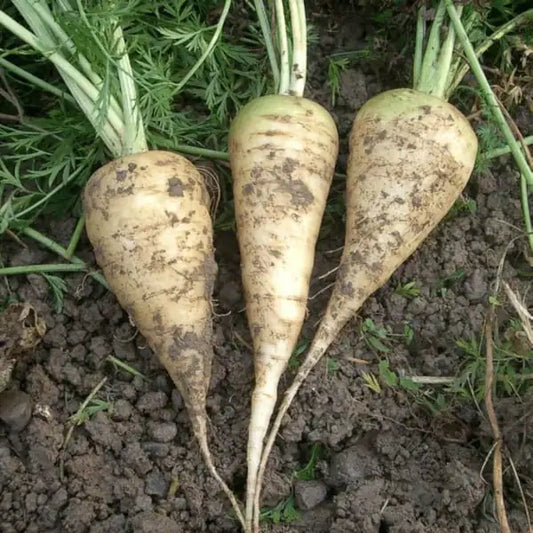
Parsnip ‘Halblange Turga’ – historic Swiss variety with aromatic, yellowish-white roots.

This open-pollinated parsnip produces robust, conical roots with yellowish-white flesh and a pleasantly sweet, nutty flavour. Its fine, firm flesh becomes tender and creamy when cooked. Its good winter hardiness allows for a long harvesting period from autumn into the following spring. After cool weather and the first frosts, its natural sweetness becomes particularly pronounced. With its productive roots and vigorous foliage, ‘Halblange Turga’ is suitable for growing in garden beds and raised beds, providing an aromatic winter vegetable throughout the colder months. The variety is suitable for the mild growing periods in Mediterranean climates and for cultivation in Central European regions.

  Origin & History

‘Halblange Turga’ has been known since 1973 from Ekkarthof in Lengwil, in the Swiss canton of Thurgau. The variety was bred by Ilmar Randuja and originates from the early biodynamic vegetable breeding movement in Switzerland. Its name combines its regional origin with its root shape: ‘Turga’ refers to the canton of Thurgau, while ‘Halblange’ denotes the variety type. In French-speaking regions, it is also known as ‘Demi-long Turga’, and in Italian as ‘Turga medio-lunga’.

The variety continues to be maintained in Rheinau today. ‘Halblange Turga’ is characterised by its uniform, creamy-coloured roots, vigorous foliage and good yield. In Swiss organic commercial cultivation, it has been recommended as a parsnip for autumn harvesting and storage. This open-pollinated variety continues to be maintained and propagated in organic seed production today.

  Appearance & Characteristics

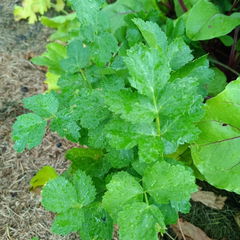
The plants develop a vigorous, upright rosette of large, pinnate leaves with coarsely toothed margins. In the first year, the foliage usually reaches around 40–60 cm in height. Beneath the foliage, broad roots develop, tapering evenly towards the tip. In the second year, plants left in the ground produce branched flower stalks around 100–150 cm tall, bearing yellow umbels. Roots left in the ground are winter-hardy and suitable for overwintering outdoors.

Root details:

  • Size: Medium-long to long, frequently around 20–30 cm in length

  • Shape: Conical, with broad shoulders and tapering to a pointed tip

  • Color: Cream to yellowish-white

  • Texture: Firm and fine, becoming tender and creamy when cooked

  • Flavor: Mild, sweet and slightly nutty, with a more pronounced sweetness after cool weather

 Usage & Cultivation Highlights

The roots are suitable for creamy soups, purées, stews and roasted vegetables. Steamed or braised, they become pleasantly tender, while roasting brings out their nutty flavour more strongly. They pair well with potatoes, carrots and other winter vegetables. Finely grated, young, tender roots can also be eaten raw. Thin slices are suitable for vegetable crisps, while their natural sweetness also works well in savoury and sweet baked dishes. For longer-term storage, prepared pieces of root can be blanched and frozen.

Its low maintenance requirements and robust growth make ‘Halblange Turga’ an uncomplicated variety for the home garden. After its slow early development, it is relatively low-maintenance. It is suitable both for harvesting fresh roots and for storage. It can also be grown in ridges, making heavier garden soils easier to use. The variety therefore offers several ways to grow aromatic root vegetables for the colder months.

Compared with other parsnip varieties, ‘Halblange Turga’ stands out for its vigorous foliage and uniform, medium-long, conical roots. Its winter hardiness and the possibility of harvesting into spring make it particularly useful for providing fresh root vegetables during the colder months.

Cultivation_Overview_-_Anbau_im_Uberblick_-_Visao_geral_do_cultivo_-_www

Origin & Cultivation at a Glance

First mention:

1973

Origin:

Switzerland

Breeder:

Ilmar Randuja

Propagation site:

Zurich – Switzerland

Suitable for:

Open field, Raised bed

Overwintering:

Possible outdoors – mulch protection is recommended during prolonged frost.

Special features:

Cold-hardy, High-yielding, Resilient, Low-maintenance
benjis-seeds-plant-growing-instructions-icon

Cultivation guide for

Parsnip 'Halblange Turga'

Growing difficulty:

Light to medium

Care requirements:

Low – easy to care for, ideal for beginners.
This variety grows best in deep, loose and well-drained soil. Humus-rich, sandy loam is particularly suitable. Before sowing, loosen the soil thoroughly, remove larger stones and, if necessary, incorporate well-rotted compost. Avoid fresh manure. On heavy soils, growing in ridges is recommended. Finally, prepare the surface to a fine tilth.

For sowing, make seed drills 2 cm deep and leave 30 cm between rows. Sow the seeds thinly, cover with fine soil, firm gently and water carefully. During germination, which usually takes 14–28 days, keep the seedbed evenly moist and prevent a hard soil crust from forming.

Once the first pairs of true leaves have developed, thin the seedlings to 5–10 cm apart within the row. During the seedlings’ slow development, remove weeds regularly and hoe carefully and shallowly between the rows. Water sufficiently during dry periods and avoid large fluctuations in soil moisture so that the roots grow evenly and do not split.

Mediterranes Klima

In Mediterranean climates, we recommend direct sowing from September to October or from February to April in a sunny to lightly shaded, airy position with good drainage. Sowing under cover is not recommended. Make spring sowings as early as possible within this period, as prolonged summer heat can adversely affect growth and root quality. As temperatures rise, a layer of mulch between the emerged plants helps to keep the soil moist and cooler. Spring sowings are harvested from late summer into winter, while autumn sowings are harvested the following spring.

Mitteleuropäisches Klima

In Central European climates, we recommend direct sowing from March to June in a sunny, airy position with good drainage. Sowing under cover is not recommended. For early sowings, wait until the soil has dried sufficiently and is easy to work. Cold, wet soils delay germination, while temporary covering with fleece can help to warm the seedbed. Harvesting begins in late summer or autumn and can continue, provided the ground is not frozen, until growth resumes the following spring.

Cultivation tips:

• Thin out early so the plants have enough space.
• Keep the seedbed evenly moist throughout the longer germination period.
• Don't apply fresh organic fertilizer, as it can lead to forked and deformed roots.
• On heavy soils, growing in ridges is recommended.
• Harvest the roots before flowering begins in spring.

Storage instructions:

Store seeds in a cool, dry, dark, and airtight environment to maximize shelf life and germination.
Detailed information on seed storage
Plant_Profile_-_Pflanzen_Steckbrief_-_Ficha_da_planta_-_www

Plant Profile

Parsnip 'Halblange Turga'

Plant details

Botanical name:
Pastinaca sativa L. 'Halblange Turga'
Botanical family:
Apiaceae - carrot family
Plant type:
Root & tuber vegetables
Growth habit:
Upright growth, Herbaceous, Forms a rosette
Plant width:
30–50 cm
Plant height:
40–60 cm
Root type:
Deep-rooted, Taprooted
Hardy to:
–15 °C
Cultivation period:
6-12 months
Life cycle:
Biennial

Sowing & Planting

Germination type:
Light-independent germinator
Sowing depth:
2 cm
Germination temperature:
13–18 °C
Germination time:
14-28 days
Pot culture:
Not recommended - better grown in garden beds or raised beds.
Row spacing for baby leaf:
Not suitable for baby-leaf cultivation.
Plant spacing:
5-10 cm
Row spacing:
30-40 cm
Pricking out / thinning out:
Thin out seedlings within 2 weeks after the formation of the first true leaf pairs.
Planting time:
Transplanting not required - direct sowing is recommended.

Soil

Soil type:
Deep, well-drained, humus-rich to sandy loam
Soil pH:
6.0-7.0 - slightly acidic to neutral
Nutrient requirements:
Medium feeder
Soil moisture:
Evenly moist, Sensitive to waterlogging
Soil preparation:
Loosen soil deeply before sowing, Preparing stony or nutrient-poor soil, Prepare soil weed-free and with a fine crumb structure., Mulch layer for moisture regulation

Companion planting, Crop rotation & Harvest

Companion plants:
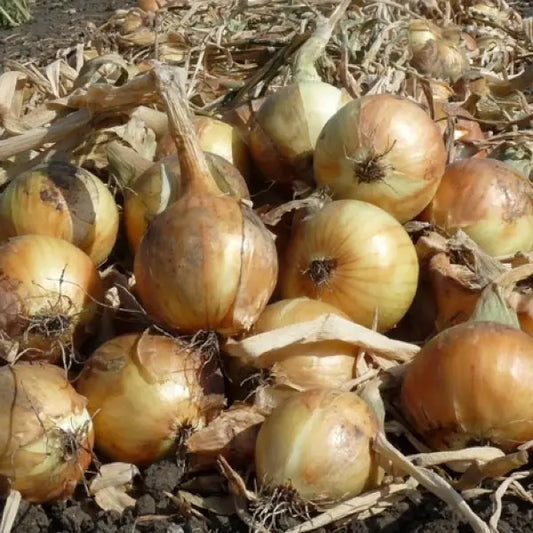
Radish, Lettuce, Onion, Garlic, Leek, Bean, Pea
Incompatible plants:
Carrot, Fennel, Celery
Crop rotation guidelines:
• Don't plant after other umbellifers – a minimum interval of 3 years is recommended.
Sowing to harvest:
5-6 months
Harvested parts:
Roots
Suitable for consumption:
Yes - edible raw.
Intended use:
Raw consumption, Salad, Steaming, Cooking, Roasting, Grilling, Baking, Deep-frying, To purée, Freezing

Care & Cultivation practices

Water requirements:
Moderate
Plant care techniques:
Thin out after germination when sown directly, Water regularly - even during dry periods, Maintain weed-free, Check for mouse damage
Plant protection:
Well-ventilated location and good drainage recommended., Mulching recommended, Frost protection is recommended during prolonged frost.
Cultivation notes:
If plants are spaced too far apart within the row, the roots can become spongy. Feeding damage from mice is possible. Sensitive to waterlogging – use well-drained soil.
Propagation method:
Generative propagation by seed
Propagation:
• This variety is pollinated by insects and belongs to the species Pastinaca sativa.
• For seed production, a minimum isolation distance of 100 m from other flowering populations of the same species is recommended, as cross-pollination can occur readily.
• For seed saving, collect seeds from at least 60 healthy, true-to-type plants.
• Overwinter selected plants and allow them to flower in the second year.
• The seeds are ready to harvest once they turn brown and can be easily removed from the umbels.
• Allow harvested umbels to finish drying in a well-ventilated place, remove the seeds, clean them and dry them thoroughly.

Other names

EN - English names:

• Parsnip

DE - German names:

• Pastinake • Pastinak • Gartenpastinak • Hammelmöhre • Moorwurzel • Hirschmöhre • Pasterna

PT - Portuguese names:

• Pastinaca • Pastinaga • Cherovia

ES - Spanish names:

• Pastinaca • Chirivía

FR - French names:

• Panais • Panais cultivé

Customer Reviews

Be the first to write a review
0%
(0)
0%
(0)
0%
(0)
0%
(0)
0%
(0)

Reviews in Other Languages

Further recommendations for you

Open-pollinated and reproducible