The annual bush bean 'Purple Teepee' is a robust, medium-early and attractive variety with blue pods, also known as the magic bean. Aromatic taste, very productive and easy to harvest. Ideal for direct sowing, pot cultivation possible, sowing spring-summer-autumn, good for mixed culture, harvesting the pods.
Description
The bush bean 'Purple Teepee' is an annual, medium-early variety and magic bean. As early as 6000 BC, beans came in a large number of different colors and patterns, which are only now being rediscovered. This variety has thick, fleshy, stringless, up to 15 cm long, straight, blue-violet pods with brown seeds. Easy to harvest because the beans grow over the leaves that hang diagonally downwards (the hen type). This makes the pods easy to pick and they stay healthy because they always dry quickly. The blue pods turn green when cooked, which is why they are also called magic beans. The taste of the high-yielding variety is very aromatic and the beans stay tender for a long time. Easily preserved. Tolerant to bean mosaic virus (BCMV) and resistant to the most common soil diseases.
General information
Plant family: Fabaceae
Life cycle: Annual
Days to harvest: 90 days
Plant height approx.: 50 cm
Root type: Heart rooter
Nutrient requirements: Low
Water requirements: Medium
Winter hardiness: Up to 5°C
Location: Sunny until semi shady
Soil: Permeable, humus-rich loamy soil
pH value: 5.5 to 6.5
Sowing and planting information
Germination type: Dark germinator
Sowing depth: 1-3 cm
Optimal germination temperature: 12-18 °C
Germination time: 10-20 days
Plant and row spacing: 15x40 cm
Germination ability of seeds: 3-4 years
Mixed culture
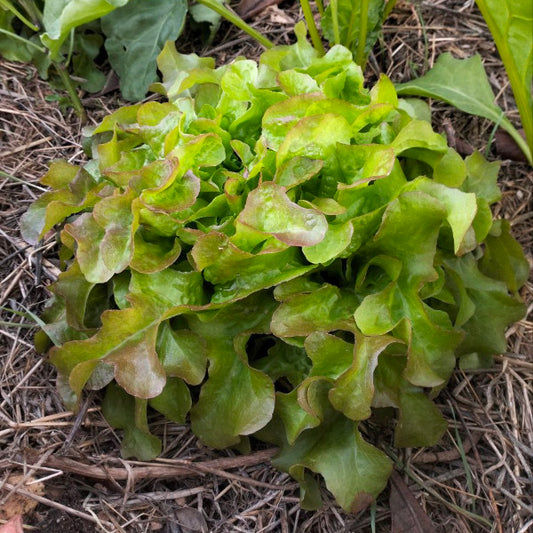
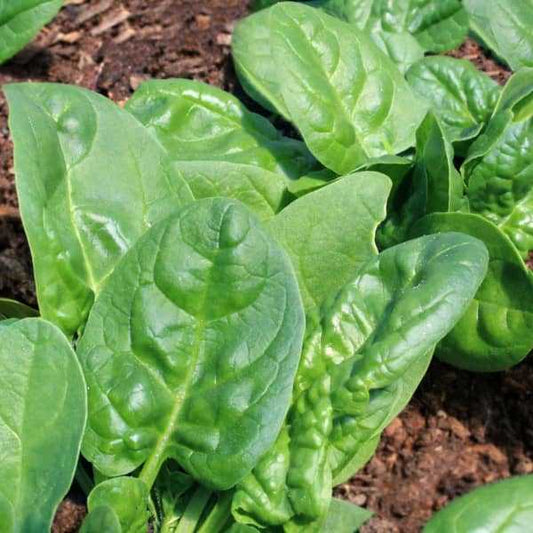
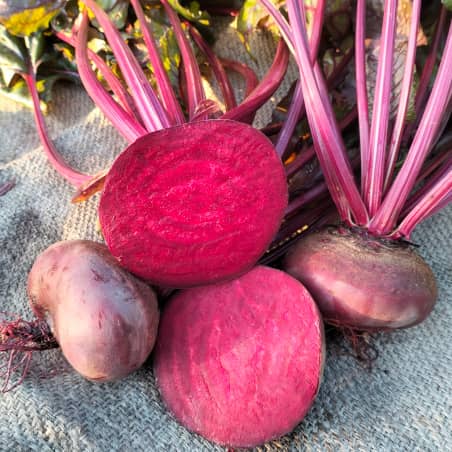
Optimal mixed culture: Eggplant, Cucumber, Pumpkin, Radish, Beetroot, Lettuce, Cabbage, Celery, Corn, Horseradish, Marigold
Unfavorable mixed culture: Pea
Sowing by climate zone
Subtropic climate (Mediterranean) (e. g. B. Portugal, Spain, Italy)
We recommend direct sowing from March to June and in autumn from September to October. The plants are ideally located in a sheltered location and in a sunny to partially shaded area.
Moderate climate (e. g. B. Germany, Switzerland, Poland)
Direct sowing from mid-May to July is recommended. The plants should ideally be located in a sunny spot and protected from the wind.
General recommendations
Direct sowing in rows or in clumps is recommended. When planting in clumps, five to six seeds are sown together in one hole, with a distance between the holes of about 40 cm and a row spacing of about 100 cm. Beans need warmth and need at least 10°C to thrive, with 18-25°C being optimal.
Bush bean 'Purple Teepee' prefers a permeable, nutrient-poor, moist and humus-rich loamy soil. Doesn't tolerate waterlogging.
Additional tips
Don't sow seeds deeper than 3 cm. Bush beans are more robust than pole beans and can tolerate a little moisture or dryness. As the soil is supplied with nitrogen via the roots, these should be cut off after harvest and left in the soil. Due to the nitrogen excreted on the roots of the beans, planting in mixed culture promotes surrounding plants. All "Phaseolus vulgaris" beans are poisonous when uncooked because they contain phasin. In order to quickly obtain a fine, crumbly and permeable soil with good nutrient and water retention capacity, additional incorporation of biochar and primary rock flour is recommended.
Type of propagation
Propagation occurs via seeds.
Plant care
Occasional weeding helps the young plants develop. Loose and moist soil is sufficient. No fertilization necessary.
Other names
Botanical names: Phaseolus vulgaris
English names: Common bean, Garden bean, Green bean, Bush bean
German names: Fisole, Gartenbohne, Buschbohne, Strankerl
Portuguese names: Feijão, Feijão verde, Arbusto de feijão
Spanish names: Alubias, Fabas, Fesol, Fréjol, Fríjol, Habichuelas, Judías, Porotos
French names: Haricot, Haricot nain
Origin
Country: Portugal




![Anise [Pimpinella anisum]](http://www.benjis.net/cdn/shop/files/Anise_-_Pimpinella_anisum_-_www.benjis.net.jpg?v=1738942704&width=533)
![Artischoke Imperial Star [Cynara cardunculus var. scolymus]](http://www.benjis.net/cdn/shop/files/ArtischockeImperialStar-Artichoke-Alcachofra-Cynaracardunculusvar.scolymus-www.benjis.net.jpg?v=1705194551&width=533)