'Violina' Pumpkin - Cucurbita moschata

€3,00 EUR
Price plus shipping
Delivery time: 1-2 business days (PT – international may vary)
reicht für ca. 12 Pflanzen

In stock

Traditional cultivated variety & regionally adapted landrace. Genetically stable & open-pollinated - 100% free from hybrid breeding, GMOs, and synthetic fertilizers. Organically propagated - Non-proprietary variety.
Bohnensamen2

Harvest year:

2022

Seed viability:

5 years (species-specific)
Detailed information on germination capacity

Description

Cultivation & Characteristics

'Violina' Pumpkin – sweet‑nutty, aromatic moschata squash with dense, creamy flesh. 

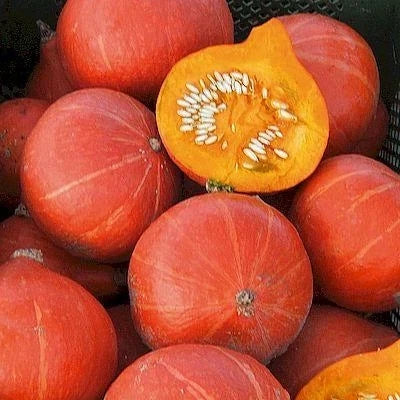
A warmth‑loving, robust moschata squash with 1–3 kg, pear‑shaped, deeply ribbed, beige‑ochre fruits. Its sweet‑nutty, slightly chestnut‑like flesh is dense, creamy and aromatic, making it excellent for a wide range of culinary uses. The plants grow vigorously, strongly vining to far‑creeping, reliably producing 2–5 heavy fruits per plant and thriving particularly well in sunny open‑field locations, raised beds and sheltered plots. Open‑pollinated, high‑yielding and ideal for self‑sufficiency, direct marketing and ecological cultivation.


  Origin & History

‘Violina’ is a regional landrace from the Emilia‑Romagna region of Italy. In the 1970s, this variety emerged from traditional Italian Cucurbita moschata types valued for their sweet, aromatic flesh. The name “Violina” refers to its distinctive, violin‑like fruit shape, reminiscent of the classic Italian “zucca a violino” types. Botanically, the variety belongs to the family Cucurbitaceae, subfamily Cucurbitoideae, genus Cucurbita.

In regional horticultural and market descriptions of Emilia‑Romagna, ‘Violina’ was referred to as “zucca violina” – a designation under which the now well‑known pear‑shaped landrace was first clearly described. Italian selection combines sweet, fine‑textured flesh, excellent keeping quality and robust plants with a fruit shape that has been appreciated for decades in both cuisine and direct marketing. Since the late 20th century, ‘Violina’ has been grown widely in Europe and North America and is regarded as an aromatic, good‑keeping and high‑yielding moschata squash. As an open‑pollinated landrace, it offers strong vigour, reliable fruit set and remarkable adaptability to different growing conditions.

Moschata squashes have traditionally been valued for their good digestibility, and their oil‑rich seeds have played an important role in folk medicine for centuries. They support urinary and prostate health, promote gentle digestion and provide valuable carotenoids with pronounced antioxidant effects. This combination of nutritional benefits and aromatic flesh also makes ‘Violina’ a variety that convinces both culinarily and nutritionally.


  Appearance & Characteristics

The plants are annual, develop vigorous, strongly vining to far‑creeping shoots and reach a ground spread of 250–400 cm. Warm‑loving, minimum temperature for cultivation 12–14 °C.

Fruit details:

  • Size: Medium to large, 1–3 kg fruits

  • Shape: Pear‑shaped, deeply ribbed

  • Color: Beige to ochre, occasionally lightly netted

  • Flesh: Deep orange, dense, creamy
  • Skin: Hard, excellent keeping quality, not edible

  • Flavor: Sweet‑nutty, slightly chestnut‑like, aromatic


 Usage & Cultivation Highlights

‘Violina’ is a versatile moschata squash with an intensely sweet‑nutty aroma and creamy, dense flesh. It is excellent for oven dishes, soups, curries, purées, gnocchi doughs, stuffed squash halves, baked dishes and both sweet and savoury creations. Its aromatic flesh is also ideal for risottos, pasta sauces, bread and pastry doughs, chutneys and fine spreads. The variety provides an excellent base for baby food, smoothies and creamy desserts. Thanks to its outstanding keeping quality, the fruits retain their flavour and firmness for many months. In addition, ‘Violina’ can be easily frozen, dried, pickled or used for decorative autumn and winter arrangements.

The variety is robust, productive and delivers high, uniform yields in sunny open‑field conditions. ‘Violina’ shows very good heat tolerance, stable fruit set and benefits from humus‑rich, warm, well‑drained soils. The plants grow vigorously, cover the soil quickly and promote a balanced microclimate. Under protected conditions, the variety ripens particularly evenly and develops an intense aroma. ‘Violina’ also convinces with rapid juvenile growth, good recovery after weather stress and natural tolerance to soil‑borne issues. Even during late‑summer temperature fluctuations and in cooler summers, fruit development remains stable and growth reliably maintained. The variety responds positively to organic fertilisation and shows high tolerance to short periods of drought, making it particularly attractive for self‑sufficiency gardens and ecological cultivation systems.

Compared to other squashes, ‘Violina’ stands out with its characteristic shape, sweet‑nutty aroma, long keeping quality, robust open‑pollinated nature and broad culinary versatility – ideal for anyone seeking an aromatic, productive and highly adaptable culinary squash.

Cultivation_Overview_-_Anbau_im_Uberblick_-_Visao_geral_do_cultivo_-_www

Origin & Cultivation at a Glance

First mention:

1970s

Origin:

Italy

Breeder:

Nicht bekannt – regionale Landsorte

Propagation site:

Alentejo - Portugal

Suitable for:

Open field, Polytunnel, Raised bed

Care requirements:

Low – easy to care for, ideal for beginners.

Overwintering:

Not winter-hardy – can be cultivated outdoors as an annual.

Special features:

High-yielding, Resilient, Low-maintenance, Sun-loving / sunny, Shade-tolerant / partial shade, Heat-tolerant
Plant_Growing_Instructions_-_Pflanzen_Anbau-Anleitung_-_Instrucoes_de_cultivo_de_plantas_-_www

Cultivation guide for

<tc>Violina</tc>

Growing difficulty:

Easy
• Im subtropischen Klima von März bis Juli sonnig bis halbschattig aussäen – Vorkultur ab Februar möglich.
In temperate regions, direct sowing from April to June after the last frost in full sun – starting indoors from March is advisable.
• Aussaat in tiefgründigen, durchlässigen, sandig-humusreichen und nährstoffreichen Lehmboden – 2–3 cm tief. Pflanzabstand: 150 × 200 cm.

Cultivation tips:

At temperatures below 15 °C, plant growth slows significantly – cold stress inhibits development.
Good air circulation protects against aphids and fungal diseases.
Consistent watering enhances fruit quality and promotes healthy plant growth.
Biochar and rock dust improve soil structure and enhance the retention of nutrients and water.

Storage instructions:

Store seeds in a cool, dry, dark, and airtight environment to maximize shelf life and germination.
Detailed information on seed storage
Plant_Profile_-_Pflanzen_Steckbrief_-_Ficha_da_planta_-_www

Plant Profile

Plant details

Botanical name:

<tc>Cucurbita moschata Duchesne ex Lam. ‘Violina’</tc>

Botanical family:

Cucurbitaceae

Plant type:

Fruit vegetables

Growth habit:

Herbaceous, Creeping, Climbing

Plant width:

250–400 cm - ausläuferbildend

Plant height:

60 cm

Root type:

Moderately to deep rooted, Taprooted

Hardy to:

Not winter‑hardy - sensitive to cold. Growth is impaired below 10 °C, frost‑sensitive.

Cultivation period:

5-6 months

Life cycle:

Annual

Propagation method:

Generative propagation by seed

Propagation:

• Diese Sorte ist fremdbefruchtend durch Insektenbestäubung und gehört zur Art Cucurbita moschata.
For seed production, a minimum isolation distance of 800–1000 m from other varieties of the same species is recommended, as cross-pollination is easily possible.
The plant is annual – after flowering it forms large, well‑maturing seeds inside fully ripened, hard‑rinded fruits.
The seeds are ready for harvest once the fruits are fully mature, firm and the rind has developed a corky, hardened texture; the seeds inside will then be hard, dry and beige.

Sowing & Planting

Germination type:

Dark germinator, Warm germinator

Sowing depth:

2-3 cm

Germination temperature:

22-28 °C

Germination time:

6-10 days

Pot culture:

Not recommended – better grown in garden beds.

Row spacing for baby leaf:

Not suitable for baby-leaf cultivation.

Plant spacing:

150 cm

Row spacing:

200 cm

Pricking out / thinning out:

Sow directly into pots and transplant later with a fully rooted soil ball.

Planting time:

Young transplants can be planted outdoors about 4 weeks after sowing.

Soil

Soil type:

Deep, well-drained, humus-rich to sandy loam

Soil pH:

6.0-7.0 - slightly acidic to neutral

Nutrient requirements:

Heavy feeder

Soil moisture:

Evenly moist, Adaptable, Sensitive to waterlogging

Soil preparation:

Loosen soil deeply before sowing, Apply compost before planting., Prepare soil weed-free and with a fine crumb structure., Mulch layer for moisture regulation

Companion planting, Crop rotation & Harvest

Companion plants:

Corn, Bean, Pea, Onion crops, Calendula, Tagetes, Borage, Nasturtium, Coriander

Incompatible plants:

Cucurbits, Potato, Tomato, Pepper / Chili pepper, Eggplant, Celery, Fennel

Crop rotation guidelines:

Do not plant after other cucurbits – a minimum interval of 3 years is recommended.
Crop rotation with low-nutrient-demanding plants is recommended to prevent soil fatigue and maintain healthy growing conditions.
Ideal previous crops include legumes, onions, root vegetables, and green manure – rotating crops supports healthy soil.

Harvest time:

Summer, Autumn

Sowing to harvest:

3,5–4,5 Monate

Harvested parts:

Fruits

Suitable for consumption:

Yes - edible raw or cooked.

Intended use:

Diet cuisine, Low Carb, Steaming, Cooking, Roasting, Grilling, Baking, Deep-frying, Stuffing, To purée, Pickling, Freezing, Preserving, Fermentation, Drying / Dehydrating

Care & Cultivation practices

Water requirements:

Moderate to high

Plant care techniques:

Thin out after germination when sown directly, Water regularly - even during dry periods, Fertilize, Maintain weed-free, Thin out fruit sets

Plant protection:

Slug protection recommended, Well-ventilated location and good drainage recommended., Mulching recommended

Cultivation notes:

Susceptible to slugs and snails in early development. At a later stage, the hardier leaves are less vulnerable. May develop mildew in damp weather – an airy location is recommended. Sensitive to waterlogging – use well-drained soil.

Other names

EN - English names:

• Pumpkin

DE - German names:

Kürbis

PT - Portuguese names:

Abóbora

ES - Spanish names:

Calabaza

FR - French names:

Courge

Customer Reviews

Be the first to write a review
0%
(0)
0%
(0)
0%
(0)
0%
(0)
0%
(0)

Further recommendations for you

100% open-pollinated & reproducible