Borage – aromatic, blue‑flowering culinary herb with edible leaves and flowers.
Annual, herbaceous plant with a fresh, cucumber‑like aroma. It grows robustly, is productive and suitable for open ground, container cultivation and naturalistic gardens. It germinates reliably and is an easy‑care, fast‑growing species. Ideal for self‑sufficiency, herb gardens and ecological plantings.
 Origin & History
Borage has been used as a culinary and garden plant for centuries. Its original range lies in the western and central Mediterranean region, from where it spread early across Europe and later worldwide. The name “Borago” is derived either from the Latin burra (“rough, woolly”) – a reference to its dense hairiness – or from the Arabic abu rach (“father of sweat”). Botanically, it belongs to the family Boraginaceae, the subfamily Boraginoideae and the genus Borago.
Borage was deliberately cultivated in antiquity and described by ancient authors such as Pliny and Dioscorides as a useful garden and culinary plant. In the Middle Ages, it was widespread in monastic gardens and valued for its star‑shaped flowers and fresh aroma. With the expansion of herb cultivation, the plant reached central and northern Europe, where it quickly established itself thanks to its robustness and ability to self‑seed.
Over the course of the modern era, borage became naturalised in many regions and developed into a classic garden plant of traditional European herb and cottage gardens. Owing to these characteristics and its high attractiveness to pollinators, it continues to be cultivated worldwide today.
 Appearance & Characteristics
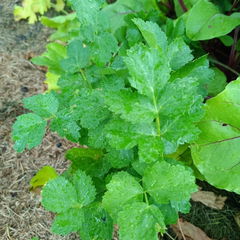
The plant is annual and herbaceous, forming upright, branched stems with rough, bristly‑haired leaves. The bright blue, star‑shaped flowers appear from early summer to autumn and are heavily visited by bees and bumblebees. Borage is sensitive to frost but generally shows good tolerance to drought and fluctuating weather conditions.
Plant details:
Height: Medium, 60–100 cm
Form: Upright, bushy, strongly branched
Leaves: Elongated‑ovate, rough‑haired, aromatic
Flowers: Bright blue, star‑shaped
Flavor: Cucumber‑fresh, aromatic, mild
 Usage & Cultivation Highlights
Borage is ideal for summer salads, refreshing drinks, herb quark, edible flower decoration and light summer dishes. The leaves and flowers have a fresh, cucumber‑like aroma and are used in many ways in the kitchen. The seeds are used industrially for the production of borage oil, and young leaves refine cold soups, herb butter, dips and spreads, while in warm dishes they can be briefly steamed or used in fillings and herb pancakes. The flowers are suitable for candying, for coloured ice cubes, desserts and flavoured vinegars. In the garden, borage acts as a valuable companion and structural plant, attracting numerous pollinators and enriching naturalistic beds and cottage gardens with its decorative blossoms.
Borage grows reliably in open ground, polytunnels and pots. The plant is easy to care for, fast‑growing and can be harvested throughout the entire season. Its flowers attract numerous pollinators such as bees and bumblebees and support ecological balance in the garden. Thanks to its robust nature, it continues to grow steadily even in less ideal soils, regenerates through self‑seeding and can be harvested multiple times. It is excellent for herb spirals, flower strips, cottage gardens and naturalistic gardens. It also shows overall tolerance to dry periods and fluctuating weather conditions. With its deep taproot, it loosens the soil, improves soil structure and can serve as a living mulch and structural plant. Its rapid juvenile growth suppresses weeds. The plant harmonises well with many vegetable crops, making it a proven companion plant in mixed‑cultivation systems.
Compared to other members of the borage family, borage is a classic annual culinary and garden plant with particularly decorative edible flowers – ideal for people who appreciate low‑maintenance herbs with high value for insects.