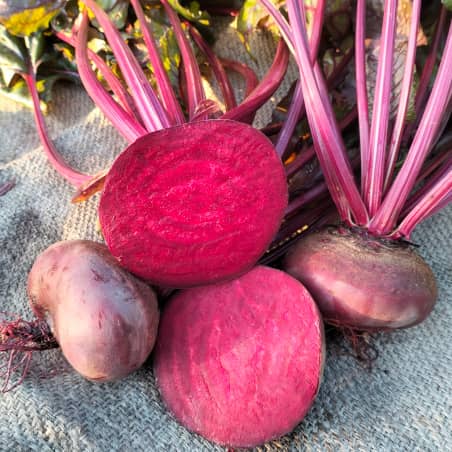
The biennial Red Maca is a root vegetable, medicinal plant and a former source of strength for the Incas. This type of cress thrives particularly well at high altitudes. Firm and tender flesh with a slightly nutty taste. Has many medicinal uses. Ideal for pre-cultivation, pot culture possible, sowing spring-summer, good for mixed culture, harvesting the leaves and roots.
Description
Red Maca is a very old biennial root vegetable and medicinal plant from the high altitudes of the Peruvian Andes and was cultivated by the Chinchay culture over 2000 years ago. The Incas considered it a source of strength and a fertility agent. Like ginseng, it is said to have strengthening (adaptogenic) properties, and today it is considered a valued dietary supplement with many health benefits. The robust species grows particularly well at altitudes above 2000m in dry climates, but also thrives at lower altitudes. The tubers taste slightly nutty with firm and tender flesh. Red Maca is considered the most nutrient-rich of all Maca varieties and is therefore used to treat hair loss, depression and exhaustion. Promotes blood formation, lowers blood pressure, supports libido and fertility.
General information
Plant family: Brassicaceae
Life cycle: Biennial
Days to harvest: 270 days
Plant height approx.: 20 cm
Root type: Deep rooter
Nutrient requirements: Medium
Water requirements: Medium
Winter hardiness: Up to -10°C
Location: Sunny
Soil: Permeable, humus-rich loamy soil
pH value: 5.5 to 7
Sowing and planting information
Germination type: Light germinator
Sowing depth: 0 cm
Optimal germination temperature: 12-18 °C
Germination time: 3-10 days
Plant and row spacing: 10x30 cm
Germination ability of seeds: 2-3 years
Mixed culture
Optimal mixed culture: -
Unfavorable mixed culture: -
Sowing by climate zone
Subtropic climate (Mediterranean) (e. g. B. Portugal, Spain, Italy)
Pre-cultivation from January to March or in autumn from October to December is recommended. The plants should ideally be placed in a sunny location.
Moderate climate (e. g. B. Germany, Switzerland, Poland)
Pre-cultivation from March to May is recommended. The plants should ideally be placed in a sunny location.
General recommendations
Direct sowing is possible. For pre-cultivation, sow the seeds in a small bowl and let the seedlings grow until the first visible maca leaves appear, then transplant them into the desired containers. After transplanting, let the seedlings grow at moderate temperatures until they are planted out as seedlings. Plant the seedlings in the bed from the second pair of leaves after the cotyledons.
Red Maca prefers a permeable, nutrient-rich, moist and humus-rich loamy soil. Doesn't tolerate waterlogging.
Additional tips
In very hot summers, Peruvian cress does not thrive so well, flowers quickly and only forms very small tubers. The plants are very robust; in their native habitat they are exposed to alternating strong UV radiation, strong wind and temperature fluctuations. In order to quickly obtain a fine, crumbly and permeable soil with good nutrient and water retention capacity, it is recommended to additionally incorporate biochar and primary rock flour.
Type of propagation
Propagation occurs via seeds.
Plant care
Regular watering is necessary for stable growth, avoid drying out. No fertilization necessary.
Other names
Botanical names: Lepidium meyenii
English names: Maca, peruvian cress
German names: Maca, Peruianische Kresse, Peru Ginseng
Portuguese names: Maca, Agrião peruano
Spanish names: Maca, Berro peruano
French names: Maca, Cresson du Pérou
Origin
Country: Portugal