The correct sowing depth is one of the most important requirements for successful sowing. If a seed is sown too deeply, the seedling may use up its stored reserves before reaching the soil surface. If it is sown too shallowly, it may dry out, be washed away or become exposed.
Optimal sowing depth: the key to strong plants

Share
How deeply seeds should be sown depends mainly on the plant species, seed size and light requirements. Soil structure and moisture also play a role. This article shows how to determine the appropriate sowing depth based on these factors and which mistakes can make seedling emergence more difficult.
Why sowing depth is important for successful sowing
A seed needs water, oxygen and a suitable temperature for germination to begin. Some species also require light, while other seeds must be covered with soil in order to germinate. Sowing depth affects the seed’s immediate surroundings and therefore its starting conditions.
Seeds sown too shallowly often have insufficient contact with moist soil and dry out more easily. If they lie exposed on the bed, wind and heavy rain can move them. Animals can also reach the seed more easily: birds may peck at the seeds, and some ant species carry them away.
The appropriate sowing depth therefore increases the likelihood that seeds will germinate evenly and seedlings will emerge successfully. However, it is only one part of successful sowing: seed quality, soil temperature, moisture and subsequent care must also be right.
How the seedling reaches the soil surface
Once germination begins, the radicle first emerges from the seed and grows into the soil. The young shoot then grows upwards through the soil layer. The deeper the seed lies, the longer this distance is.
Until its leaves can carry out sufficient photosynthesis in the light, the seedling uses the food reserves stored in the seed. Depending on the plant species, these reserves are found in the cotyledons – the first leaves of the young plant – or in nutrient-storage tissue. This supply is limited. If the seed is sown too deeply, it may be used up before the shoot reaches the surface.

Larger seeds often contain more food reserves and, in many species, can tolerate a thicker layer of soil. Seed size therefore provides an initial guide to sowing depth. The sowing recommendations for the particular plant species and its light requirements remain decisive.
How environmental conditions control the start of germination is explained in the article Environmental factors in seed germination: water, oxygen, temperature and light.
Germination and seedling emergence: an important distinction
Germination and seedling emergence are not the same thing. Germination begins inside the seed as soon as it takes up water and the first seedling structures begin to develop. Seedling emergence refers to the point when the young shoot breaks through the soil surface and becomes visible.

A seed sown too deeply can therefore germinate without the seedling subsequently emerging. For practical sowing, both the germination rate – the proportion of seeds that germinate – and the emergence rate are important. The latter refers to the proportion of sown seeds that develop into visible young plants above the soil surface.
A consistent sowing depth helps seedlings in a crop emerge at a similar rate. Even so, they do not always appear at exactly the same time, because differences in temperature, uneven moisture and the natural characteristics of the seeds also affect their development.
Sowing light- and dark-germinating seeds correctly
When choosing the sowing depth, the seed’s light requirements must be taken into account:
- Light-germinating seeds require light as a signal for germination. They are scattered onto the moist growing medium, gently pressed down and, depending on the species, either left uncovered or covered only very lightly. Examples include many lettuce varieties, as well as celery, thyme and oregano.
- Dark-germinating seeds are completely covered with soil. How thick the covering layer should be depends on the plant species and the size of the seed.
- Species without a strong dependence on light can also be covered lightly. Here, the main priorities are even moisture and good contact between the seed and the soil.
Not every small seed is light-germinating. The sowing instructions for the particular species or variety are what matter.
How light-, dark- and cold-germinating seeds differ is explained in the article Germination types and environmental factors: light, dark and cold germinators.
How soil structure affects sowing depth
A well-prepared seedbed helps maintain the recommended sowing depth. Large clods of soil, air pockets and compacted areas can cause seeds to lie deeper or more unevenly than intended.
A fine, crumbly and loose soil surface is ideal. It provides good seed-to-soil contact – meaning direct contact between the seed and the soil. This contact is important so that the seed can take up water. The soil should then be pressed down gently, but not compacted heavily.
Soil type also affects the practical sowing depth:
- In heavy, clay-rich or very wet soils, seeds are generally sown slightly more shallowly within the recommended range. When wet, these soils contain fewer air-filled pores and can form a crust at the surface.
- In light, sandy soils, seeds can be sown slightly deeper within the range recommended for the species because the upper soil layers dry out more quickly.
However, sowing depth does not compensate for unsuitable soil conditions. Wet soil should be allowed to dry before sowing; compaction can be loosened when soil moisture is suitable. If the soil is still too cold for the particular plant species, sowing should be postponed.

Practical guidance based on seed size
The information on the seed packet or in the variety description takes precedence. If no such information is available, seed size can be used as a rough guide:
- Very fine seeds: sow close to the surface and, depending on their light requirements, either press them down gently or cover them only very lightly.
- Small seeds: often sow only a few millimetres to about 1 cm deep.
- Medium-sized seeds: depending on the species, usually sow about 1–2 cm deep.
- Large seeds: often sow about 2–5 cm deep.
As a rule of thumb, seeds that need to be covered with soil can be sown at a depth roughly two to three times their thickness. This refers to the depth of soil covering the seed. This rule does not apply to light-germinating seeds or to species with special germination requirements.
Some typical guideline values are:
- Lettuce, celery, thyme and oregano: depending on the species or variety, either press down gently or cover very lightly.
- Tomatoes, peppers and aubergines: when sowing under cover, about 0.5–1 cm deep.
- Carrots: about 1 cm deep.
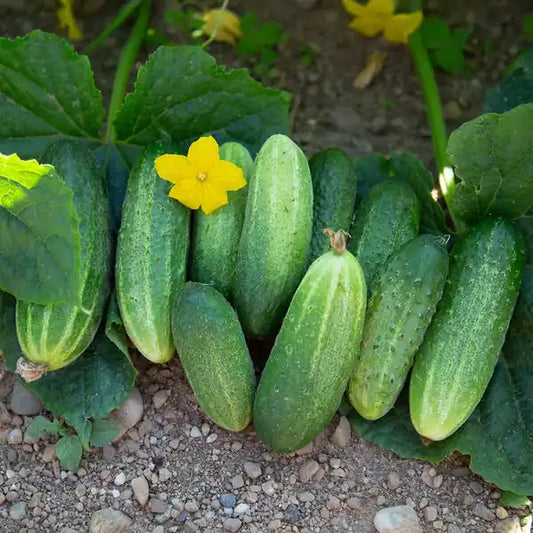
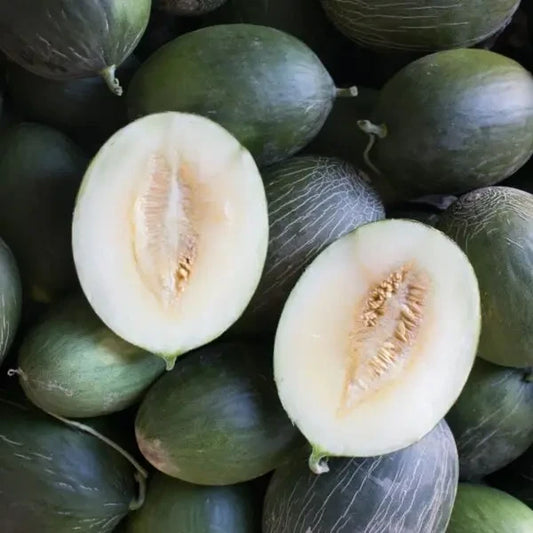
- Brassicas, radishes, cucumbers and melons: often about 1–2 cm deep.
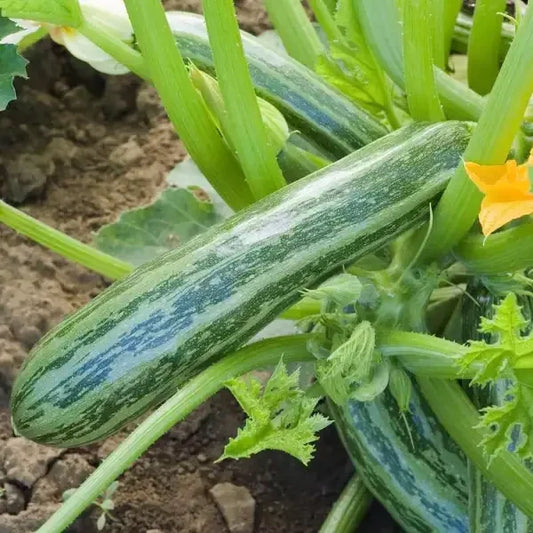
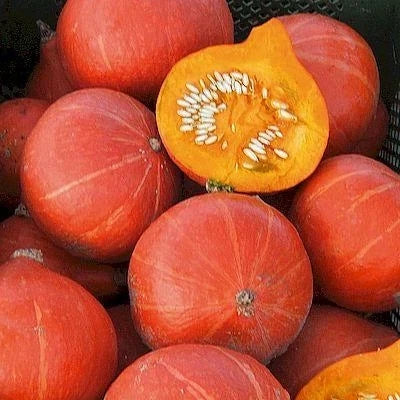
- Pumpkins, courgettes and watermelons: about 1–2 cm deep in pots when sowing under cover, and usually about 2–3 cm deep when sown directly in the bed.
- Spinach, chard and beetroot: usually about 2–3 cm deep.
- Beans and peas: often about 3–5 cm deep.
The ranges given are guidelines. Soil type, sowing time and variety may require adjustments. More precise information can be found in the individual variety descriptions in the seed catalogue.
How sowing depth affects root development
The radicle grows from the position of the sown seed down into the soil. Sowing depth therefore determines its starting point, but not the depth or shape of the later root system. How the roots spread further depends mainly on the plant species and variety, soil structure and compaction, as well as the availability of water, oxygen and nutrients.
Sowing more deeply is therefore not a way to produce stronger or deeper roots. Likewise, shallow sowing does not necessarily result in shallow roots. What matters initially is a sowing depth from which the seedling can emerge. The root system then continues to develop according to the conditions at the growing site.

Step by step to the correct sowing depth
- Aussaatangaben prüfen: Zuerst gelten die Hinweise auf der Saatgutverpackung oder in der Sortenbeschreibung. Besonders wichtig ist, ob die Art zum Keimen Licht benötigt.
- Saatbett vorbereiten: Beikräuter und größere Steine entfernen, die Oberfläche lockern und grobe Erdklumpen zerkleinern.
- Saatrille oder Pflanzloch anlegen: Die empfohlene Tiefe möglichst gleichmäßig abmessen. Ein Stab, Lineal oder Pflanzholz erleichtert die Orientierung.
- Samen ablegen: Die Samen im empfohlenen Abstand verteilen. Der Pflanzabstand beschreibt den seitlichen Abstand, die Aussaattiefe die Lage im Boden.
- Entsprechend dem Lichtbedarf bedecken: Samen, die eine Erdschicht benötigen, mit feiner Erde bedecken und vorsichtig andrücken. Lichtkeimer je nach Art nur andrücken oder hauchdünn bedecken.
- Behutsam angießen: Eine feine Brause oder Sprühflasche befeuchtet das Saatbett, ohne die Samen wegzuspülen.
- Gleichmäßig feucht halten: Das Saatbett sollte bis zum Auflaufen nicht vollständig austrocknen, aber auch nicht dauerhaft nass sein.
The same principles apply when sowing in pots or seed trays. A loose, well-draining seed compost makes it easier to sow seeds at an even depth. Because small containers dry out more quickly, their moisture levels need to be checked more frequently.
Whether seeds are sown directly in the bed or first in pots is covered in the article Sowing methods: direct sowing vs sowing under cover.
Common problems when sowing
Even when the sowing depth is appropriate, water, the soil surface and uneven seed placement can make emergence more difficult. The following observations can help narrow down the cause.
Very fine seeds fail to emerge
Sowing too deeply: Light-dependent seeds do not receive the necessary germination trigger beneath a layer of soil. In other fine seeds, the stored reserves may be too limited for the seedling to push through a thick layer of soil.
→ Solution: Sow fine seeds close to the surface. Depending on their light requirements, either press the seeds down gently or cover them with a very thin layer of growing medium.
Exposed or unevenly distributed seeds
Watering too heavily: A strong stream of water can wash seeds out of the soil, move them or collect them together in certain areas. This results in uneven spacing and different sowing depths.
→ Solution: Moisten the sown area slowly and evenly with a fine rose or spray bottle so that the seeds and soil remain in place.
Delayed or uneven germination
Seedbed drying out: Seeds that have already swollen and begun to germinate are sensitive to a lack of water. If the seedbed dries out in the meantime, further development can be impaired.
→ Solution: Keep the seedbed evenly moist until emergence, without causing waterlogging. In dry or warm weather, check the moisture regularly.
Seedlings struggle to break through the soil surface
Wet or compacted soil: A lack of oxygen, surface sealing and a hardened soil surface can impair germination and make it more difficult for seedlings to emerge.
→ Solution: Sow into loose, fine, crumbly soil that has dried sufficiently. Avoid compaction and carefully loosen any crusted surface without damaging the seedlings.
Seedlings developing at different rates or emerging unevenly
Uneven sowing depth: In a coarse or uneven seedbed, some seeds lie deeper than others. As a result, the seedlings take different lengths of time to reach the soil surface.
→ Solution: Prepare the seedbed so that it is fine, crumbly and level. Make the seed drills to an even depth and cover the seeds with as uniform a layer of soil as possible.
In summary
Sowing depth affects whether a seed receives enough moisture and whether the seedling can reach the soil surface using its stored reserves. Sowing too deeply makes emergence more difficult. Seeds sown too shallowly dry out more quickly or become exposed.
The sowing instructions for the particular species or variety are the main guide. If these are not available, light requirements and seed size provide an initial indication. For seeds that are covered with soil, a depth of around two to three times the seed’s thickness can be used as a rough rule of thumb. Within the recommended range, soil type influences whether seeds should be sown slightly more shallowly or more deeply. A fine, crumbly seedbed and consistent moisture support both germination and seedling emergence.
Discover traditional diversity
Plants that carry stories