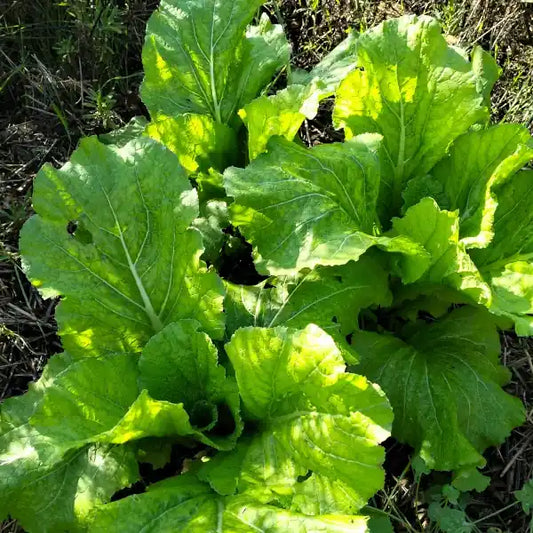
Fenugreek – ancient, versatile spice and medicinal herb with uniquely aromatic seeds, also valuable as a green‑manure crop.
Annual, warmth‑loving legume with fine, aromatic leaves and spicy seeds valued in many cuisines around the world. The plants grow upright and bushy, 30–60 cm tall, are sturdy and ideal for sunny, warm locations. They thrive reliably in open ground, raised beds and pots, with low water requirements and high resilience. The variety is easy to grow, drought‑tolerant and open‑pollinated – perfect for self‑sufficiency, companion planting and ecological cultivation.
 Origin & History
Fenugreek (Trigonella foenum‑graecum) is one of the oldest cultivated plants of humankind and was already used in Ancient Egypt, Mesopotamia and classical Greece. Historical sources describe it as a medicinal, spice and fodder plant, and it was an integral part of Mediterranean and Near Eastern agriculture. Its seeds have been found in Roman military camps, and in the Middle Ages it was considered an important medicinal plant in monastic gardens. Botanically, fenugreek belongs to the family Fabaceae, subfamily Faboideae, genus Trigonella.
The plant has been cultivated for thousands of years in India, North Africa and southern Europe and adapted to a wide range of climates. In the traditional cuisines of India, Ethiopia and the Near East, both leaves and seeds remain indispensable to this day. Beyond its role as a spice, the young leaves are used as a tender leafy vegetable, while sprouts and microgreens add fresh, slightly nutty flavours to salads and warm dishes. The roasted seeds form the basis of aromatic spice blends such as curry powder, berbere or panch phoron. In traditional herbal medicine, seeds and leaves are used for teas, tinctures and poultices, for example to support digestion or for external applications. Fenugreek also played a historical role in animal husbandry, as the plant was valued as a protein‑rich forage crop.
Traditionally, fenugreek was grown in smallholder gardens, where it was appreciated for its short cultivation period, drought tolerance and intense aroma. The plant was considered a reliable choice in hot summers and was often grown in mixed culture with vegetables, herbs and cereals. Its ability to grow well even in poor soils made it a popular plant for self‑sufficient households and traditional agriculture. To this day, it is valued for its versatile uses, uncomplicated cultivation and reliable yields.
 Appearance & Characteristics
Fenugreek is annual and herbaceous, forming upright, slightly bushy plants with fresh green, trifoliate leaves. The delicate, creamy‑white flowers appear from early summer. After flowering, slender, straw‑yellow pods develop, containing numerous hard‑shelled, aromatic seeds. The root system is tap‑rooted and reaches a medium depth. The plant is sensitive to waterlogging but thrives exceptionally well in loose, sandy‑humus soils. Grown as an annual, not winter hardy.
Plant details:
Height: Small to medium, 30–60 cm
Form: Upright, bushy, herbaceous
Leaves: Fresh green, trifoliate
Flowers: White to cream‑coloured
- Pods: Slender, straw‑yellow, with numerous aromatic seeds
 Usage & Cultivation Highlights
Fenugreek is excellent for seasoning curries, masalas, bread, vegetable dishes, teas, sprouts and microgreens. The leaves can be used raw, steamed or cooked; the seeds are roasted, ground or infused as a tea. Its warm‑spicy aroma makes it highly versatile – from Indian cuisine to Middle Eastern dishes and modern vegetable and herb recipes. Young leaves pair well with spinach, coriander, cumin and garlic; roasted seeds enhance breads, dips, spice blends and stews. Sprouts are ideal for salads, bowls and light summer dishes, while dried seeds are used for spice mixes, teas and traditional remedies. The aromatic seeds enrich Ethiopian and Arabic spice pastes, while the leaves are used as a mild leafy vegetable in Ayurvedic cooking. In modern plant‑based cuisine they are used in vegan cheese alternatives, herb butters and fermented spice pastes. The seeds can also be pickled in vinegar or oil to create aromatic bases for dressings and marinades; in traditional herbal practice they are used for soothing poultices, strengthening tonics and calming herbal baths.
Fenugreek is extremely reliable in cultivation: it prefers sunny, warm locations, thrives even in dry summers and remains sturdy thanks to its compact growth – ideal for small gardens, raised beds and pots. Even moisture supports germination; later the plant tolerates drought well, while waterlogging should be avoided. It is low‑maintenance, resistant to most diseases and grows reliably even in poor soils. As a legume, it improves soil fertility through nitrogen fixation. Fenugreek also develops an early, dense stand that suppresses weeds, benefits from wide spacing for good airflow and remains vigorous during longer dry periods thanks to its taproot. The crop integrates easily into rotations, is well suited to light or sandy soils and produces stable yields even in small containers. Its short vegetation period ensures a reliable harvest in regions with shorter summers.
Compared to other spice and leafy plants, fenugreek stands out for its intense aroma, versatile uses and high yield reliability – ideal for self‑sufficiency, herb gardens, companion planting and ecological cultivation.