'Alberello Di Sarzana' Courgette - Cucurbita pepo

€3,00 EUR
Price plus shipping
Delivery time: 1-2 business days (PT – international may vary)
reicht für ca. 9 plants

In stock

Traditional cultivation method & heirloom variety. Regionally adapted landrace. Genetically stable & open-pollinated - 100% free from hybrid breeding, GMOs, and synthetic fertilizers. Organically propagated - Non-proprietary variety.
Bohnensamen2

Harvest year:

2023

Seed viability:

5 years (species-specific)
Detailed information on germination capacity

Description

Cultivation & Characteristics

'Alberello Di Sarzana' Courgette – traditional Ligurian fine zucchini with tender flesh, early maturity and a compact growth habit. 

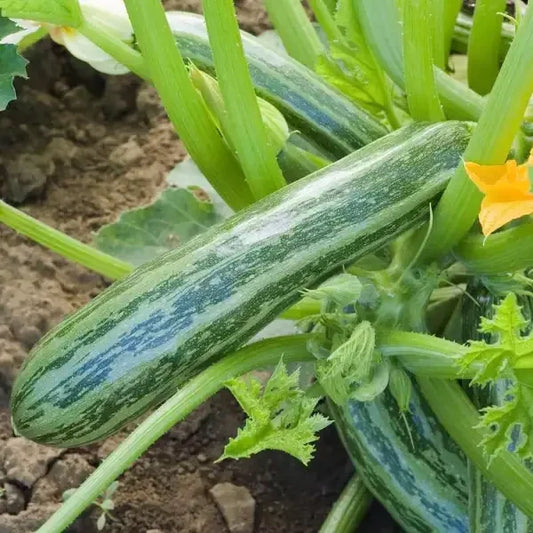
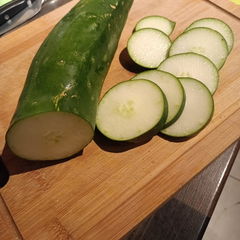
Heat‑loving, robust zucchini with slender fruits, light to medium green in colour and 15–20 cm long, of particularly fine quality. Its flesh is tender, mildly nutty and pleasantly sweet with an elegant vegetable aroma. The plants grow compact, bushy and space‑efficient, reliably producing numerous fruits and performing excellently in warm open‑field conditions, raised beds, greenhouses, polytunnels and protected beds. Open‑pollinated, early‑bearing and ideal for self‑sufficiency, direct marketing and organic cultivation.


  Origin & History

‘Alberello di Sarzana’ is a traditional, open‑pollinated zucchini landrace from the Ligurian region of north‑western Italy. It arose through local farmer selection in the Sarzana area and forms part of the historical Mediterranean garden culture of the 20th century. The variety is notably tender, early and aromatic, and was highly valued in Ligurian households for its fine, young fruits. It belongs to the family Cucurbitaceae, subfamily Cucurbitoideae, genus Cucurbita, species C. pepo.

The earliest documented written reference to this historical variety appears in an Italian horticultural directory from the early 1950s. However, oral traditions from Liguria suggest that the type was already cultivated in family gardens before the Second World War, without a fixed varietal name being recorded.

As a compact, reliably productive fine zucchini, ‘Alberello di Sarzana’ quickly established itself in Italian home gardens and later in European and North American conservation collections. Its seed‑true nature, natural robustness and dependable fruit set make it a popular choice for traditional and organic growing systems to this day. In Ligurian summer cuisine, the young 15–20 cm fruits were considered especially digestible and were used for light vegetable dishes, pan preparations and fresh summer fare. The variety endured for decades because it convinces with flavour, is easy to grow and delivers consistently high yields even in smaller gardens.


  Appearance & Characteristics

The plants are annual, grow compact, bushy and reach a diameter of 80–120 cm. Warm‑loving; minimum temperature for cultivation is 12–14 °C.

Fruit details:

  • Size: Medium, fruits 15–20 cm long

  • Shape: Slender‑cylindrical, slightly club‑shaped

  • Color: Light to medium green, sometimes finely mottled

  • Texture: Very tender, fine, juicy

  • Flavor: Mildly nutty, slightly sweet, aromatic


 Usage & Cultivation Highlights

The fruits of ‘Alberello di Sarzana’ are excellent for raw use, salads, pan dishes, grilling, roasting, steaming, baking and frying. Their tender skin makes them ideal for stuffed zucchini, Mediterranean vegetable sautés, pasta dishes and fine vegetable purées. When harvested young, they are especially aromatic and well suited for pickling, fermenting and antipasti. Thanks to their compact shape, they are easy to slice, spiralise or arrange decoratively. The variety also shows its strengths in soups, purées, vegetable chips, oven dishes, quiches, wok dishes and summery recipes. It further enriches ratatouille, curries, gratins, fritter batters, terrines, spreads and galettes. Thinly shaved, it shines in carpaccio, vegetable wraps and sandwiches, and lends risotto, polenta and mild stews a fine sweet‑nutty note.

‘Alberello di Sarzana’ is robust, early and delivers high, consistent yields in open ground, raised beds and protected cultivation. The variety tolerates heat and fluctuating conditions well, sets fruit reliably and thrives especially in sunny, airy locations. Its compact, easy‑to‑manage growth habit is ideal for mixed cropping, urban gardens and organic systems. Early maturity ensures a dependable summer harvest even in shorter growing seasons, while the strong root system uses soil moisture efficiently and provides stable yields even in changeable summers. Under protection it ripens with notable uniformity and develops a fine aroma. The variety also benefits from rapid juvenile growth, reliable pollination and a steady sequence of fruit set that facilitates continuous harvesting. Its open plant structure ensures good airflow and reduces disease pressure, while the compact spread allows efficient use of space. Thanks to its natural vigour, it remains productive for a long time.

Compared with many modern hybrids, ‘Alberello di Sarzana’ stands out for its mild‑nutty flavour, seed‑true quality, compact growth habit and generous productivity – ideal for anyone seeking a tender, aromatic and versatile fine zucchini for garden, kitchen and direct marketing.

Cultivation_Overview_-_Anbau_im_Uberblick_-_Visao_geral_do_cultivo_-_www

Origin & Cultivation at a Glance

First mention:

1950s – already widespread earlier

Origin:

Italy

Breeder:

Unknown – heritage variety

Propagation site:

Alentejo - Portugal

Suitable for:

Open field, Greenhouse, Polytunnel, Raised bed, Balcony / pot, Urban gardening

Care requirements:

Low – easy to care for, ideal for beginners.

Overwintering:

Not winter-hardy – can be cultivated outdoors as an annual.

Special features:

Annual variety / Fast-growing, Fast-growing, High-yielding, Resilient, Low-maintenance, Sun-loving / sunny, Shade-tolerant / partial shade, Heat-tolerant, Drought-tolerant
Plant_Growing_Instructions_-_Pflanzen_Anbau-Anleitung_-_Instrucoes_de_cultivo_de_plantas_-_www

Cultivation guide for

<tc>Alberello Di Sarzana</tc>

Growing difficulty:

Easy
In subtropical climates, sow from March to July in full sun – early sowing from February is possible.
In temperate regions, direct sowing is done from May to June after the last frost in full sun – early sowing from April is useful, with transplanting from mid‑May once frost‑free.
Sow in deep, well‑drained, sandy‑humus‑rich and nutrient‑rich loam soil – 2–3 cm deep. Plant spacing: 80 × 120 cm.

Cultivation tips:

At temperatures below 15 °C, plant growth slows significantly – cold stress inhibits development.
For an extended harvest period, several sowings throughout the year are recommended.
Good air circulation protects against aphids and fungal diseases.
Biochar and rock dust improve soil structure and enhance the retention of nutrients and water.

Storage instructions:

Store seeds in a cool, dry, dark, and airtight environment to maximize shelf life and germination.
Detailed information on seed storage
Plant_Profile_-_Pflanzen_Steckbrief_-_Ficha_da_planta_-_www

Plant Profile

Plant details

Botanical name:

<tc>Cucurbita pepo L. ‘Alberello di Sarzana’</tc>

Botanical family:

Cucurbitaceae

Plant type:

Fruit vegetables

Growth habit:

Upright growth, Herbaceous, Bushy, Compact

Plant width:

120 cm

Plant height:

70 cm

Root type:

Moderately to deep rooted

Hardy to:

5 °C – prolonged temperatures below 10 °C severely slow growth.

Cultivation period:

4-6 months

Life cycle:

Annual

Propagation method:

Generative propagation by seed

Propagation:

This variety is cross‑pollinating via insect pollination and belongs to the species Cucurbita pepo.
For seed production, a minimum isolation distance of 800–1000 m from other varieties of the same species is recommended, as cross-pollination is easily possible.
The plant is annual – after flowering it forms large, well‑maturing seeds inside fully ripened, hard‑rinded fruits.
The seeds are ready for harvest once the fruits are fully mature, firm and the rind has developed a corky, hardened texture; the seeds inside will then be hard, dry and beige.

Sowing & Planting

Germination type:

Dark germinator, Warm germinator

Sowing depth:

2-3 cm

Germination temperature:

20-28 °C

Germination time:

6-12 days

Pot culture:

Requires a minimum container size of 20-30 liters.

Row spacing for baby leaf:

Not suitable for baby-leaf cultivation.

Plant spacing:

80 cm

Row spacing:

120 cm

Pricking out / thinning out:

Roots are sensitive – it is best to sow directly into pots and later transplant with a fully rooted soil ball.

Planting time:

Young transplants can be planted outdoors about 3 weeks after sowing.

Soil

Soil type:

Deep, well-drained, humus-rich to sandy loam

Soil pH:

6.0-7.0 - slightly acidic to neutral

Nutrient requirements:

Heavy feeder

Soil moisture:

Evenly moist, Adaptable, Sensitive to waterlogging

Soil preparation:

Loosen soil deeply before sowing, Apply compost before planting., Prepare soil weed-free and with a fine crumb structure., Preparing stony or nutrient-poor soil, Mulch layer for moisture regulation

Companion planting, Crop rotation & Harvest

Companion plants:

Lettuce, Bean, Onion crops, Radish, Calendula, Nasturtium, Tagetes, Borage, Dill

Incompatible plants:

Cucurbits, Potato, Tomato, Pepper / Chili pepper, Eggplant, Fennel, Walnut

Crop rotation guidelines:

Do not plant after other cucurbits – a minimum interval of 3 years is recommended.
Avoid planting directly after heavy-feeding crops – allow the soil to recover and replenish nutrients first.
Ideal previous crops include legumes, onions, root vegetables, and green manure – rotating crops supports healthy soil.

Harvest time:

Summer, Autumn

Sowing to harvest:

2-3 months

Harvested parts:

Fruits

Suitable for consumption:

Yes - edible raw or cooked.

Intended use:

Diet cuisine, Low Carb, Raw consumption, Salad, Steaming, Cooking, Roasting, Grilling, Baking, Deep-frying, Stuffing, Pickling, Fermentation, To purée, Freezing, Preserving, Drying / Dehydrating

Care & Cultivation practices

Water requirements:

Moderate to high

Plant care techniques:

Thin out after germination when sown directly, Water regularly - even during dry periods, Loosen and hoe, Fertilize, Maintain weed-free

Plant protection:

Slug protection recommended, Well-ventilated location and good drainage recommended., Mulching recommended

Cultivation notes:

Susceptible to slugs and snails in early development. At a later stage, the hardier leaves are less vulnerable. May develop mildew in damp weather – an airy location is recommended. Sensitive to waterlogging – use well-drained soil.

Other names

EN - English names:

CourgetteZucchini

DE - German names:

Zucchini

PT - Portuguese names:

Curgete

ES - Spanish names:

Calabacín

FR - French names:

Courgette

Customer Reviews

Be the first to write a review
0%
(0)
0%
(0)
0%
(0)
0%
(0)
0%
(0)

Further recommendations for you

100% open-pollinated & reproducible