Caraway – a traditional culinary and medicinal herb with aromatic seeds.
Biennial spice and medicinal plant with a warm, spicy, slightly sweet‑bitter aroma and a high content of essential oils such as carvone and limonene. It grows robustly, is easy to care for, and is suitable for open fields and nature‑oriented gardens. In the first year, the plants form a strong basal rosette; in the second year, they develop tall, branched inflorescences with well‑ripening seeds measuring 2–4 mm. Caraway germinates reliably, is winter‑hardy, and readily self‑seeds. Ideal for self‑sufficiency, spice gardens, and ecological herb cultivation.
 Origin & History
Caraway is an ancient Central European wild and cultivated plant whose natural distribution extends across almost all of Europe, West and Central Asia, and parts of North Africa. Caraway was already used in the Neolithic period, as archaeological finds from pile‑dwelling settlements show. The oldest confirmed evidence comes from the Neolithic settlement of Twann on Lake Biel (ca. 3000 BC), where caraway seeds were discovered in storage pits. The first written reference appears in the “Ebers Papyrus” (ca. 1550 BC), an ancient Egyptian medical compendium in which caraway is described as a remedy for digestive complaints. It was also known in antiquity and valued by Greeks and Romans as both a spice and a medicinal plant. Caraway belongs to the family Apiaceae, within the subfamily Apioideae and the genus Carum.
In the Middle Ages, true caraway played an important role in monastic medicine and European folk healing. It was considered digestive, antispasmodic, and warming, and was used in bread, cheese, cabbage dishes, and spirits. Its characteristic aroma, shaped primarily by carvone, made it one of the most important traditional spices of Central Europe. Medieval herbals such as the “Capitulare de villis” (8th century) and later the “Gart der Gesundheit” (1485) list caraway as a valuable medicinal and culinary herb. Over the centuries, it remained a staple of rural cuisine, monastic herbalism, and regional food culture. To this day, true caraway is an indispensable component of many traditional dishes and a valuable medicinal herb with a long cultural history.
 Appearance & Characteristics
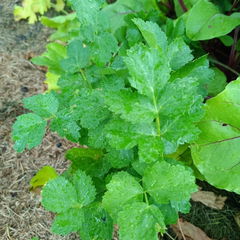
The plant is biennial and herbaceous, forming a basal rosette of finely divided, light‑green leaves in its first year. In the second year, it develops upright, branched stems reaching 60–100 cm, topped with white umbels that attract numerous pollinators. The ripe fruits are 2–4 mm long, aromatic, and rich in essential oils. Caraway is fully winter‑hardy and can maintain itself at suitable sites through self‑seeding.
Plant details:
Height: Medium, 60–100 cm
Form: Basal rosette in the 1st year; upright and branched in the 2nd year
Leaves: Finely divided, aromatic
Flowers: White, in umbels
Flavor: Aromatic‑spicy, slightly sweet‑bitter
 Usage & Cultivation Highlights
Caraway is ideal for seasoning bread, cabbage dishes, cheese, roasts, soups, spirits, ferments, and pickling recipes. The fruits contain essential oils with digestive, antispasmodic, and calming properties. Traditionally, caraway is used for bloating, fullness, and gastrointestinal discomfort and is incorporated into teas, tinctures, oil infusions, and salves. Its intense aroma also makes it a valuable ingredient in herb blends and natural cuisine. In traditional herbal medicine, caraway is additionally used to support the respiratory system, promote milk production during breastfeeding, and ease cramp‑like complaints. The seeds are suitable for herbal liqueurs, digestifs, and aromatic oil extracts, while the young leaves can be used fresh in salads or herb butter.
Caraway grows reliably outdoors. It prefers sunny locations, well‑drained and rather nutrient‑poor soils, and tolerates dry conditions well. As a biennial, winter‑hardy, and low‑maintenance plant, it produces abundant flowers and seeds in its second year. The plants attract numerous beneficial insects such as wild bees, hoverflies, and honeybees, supporting ecological balance in the garden. Thanks to its natural self‑seeding, it reappears annually at suitable sites and is excellent for nature‑oriented, low‑maintenance herb and cottage gardens. Its taproot loosens the soil sustainably, improves soil structure, and makes the plant particularly resilient during heat periods. Caraway is also remarkably sturdy, requires minimal care, and maintains high yield stability even on poor, dry soils. With its early flowering in the second year, it provides pollinators with an important food source at the beginning of the season, enhancing biodiversity in the garden.
Compared to other umbellifers, caraway is one of the oldest European culinary and medicinal herbs – ideal for anyone who values robust, aromatic, and versatile plants with high usefulness for cooking, health, and natural gardening.