Common Buckwheat - Fagopyrum esculentum

€2,50 EUR
€50,00 EUR kg
Price plus shipping
Delivery time: 1-2 business days (PT – international may vary)
reicht für ca. 8 m²

In stock

Historic, traditional and unchanged wild form. Genetically stable & open-pollinated - 100% free from hybrid breeding, GMOs, and synthetic fertilizers. Organically propagated - preserved in its original form.

Local pickup at Benjis Seeds

Bohnensamen2

Harvest year:

2025

Seed viability:

Up to 4 years (species-specific)
Detailed information on germination capacity

Description

Cultivation & Characteristics

Buckwheat – a versatile pseudocereal for green manuring, with tender leaves and nutty seeds. 

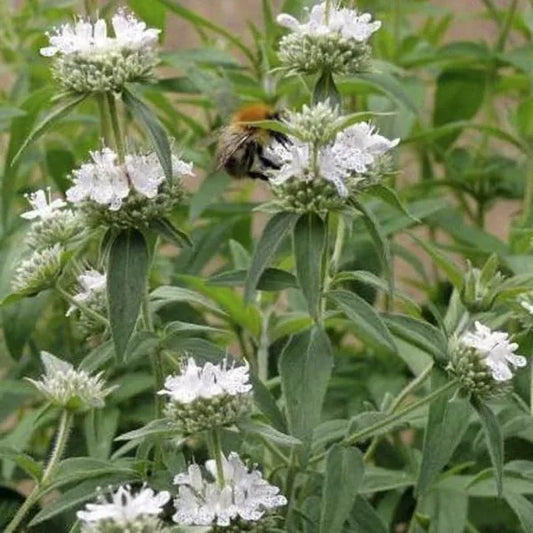
An annual pseudocereal with a mild, nutty aroma and high ecological value. The plants grow quickly, are easy to manage and are suitable for open ground, beds and naturalistic gardens. They reach 60–120 cm in height, branch loosely and flower abundantly with white to pinkish clusters that attract numerous pollinators. Buckwheat germinates reliably, covers the soil rapidly and provides edible leaves and flowers as well as well‑ripening grains. Ideal for self‑sufficiency, cooking, tea, green manuring and biodiversity.


  Origin & History

Buckwheat is one of the oldest cultivated plants of Eurasia and was grown more than 4,000 years ago in the mountain regions of central and southern China. The earliest documented written reference dates to 659 CE in the Chinese medicinal and herbal compendium Xin Xiu Ben Cao of the Tang dynasty, where buckwheat is described as both a food and a healing plant. From its centre of origin in southwest China, it spread along trade routes to northern China, Korea and Japan, and later via the Silk Road to Central Asia, Eastern Europe and eventually Central Europe, where it became known as “heath grain” and served as an essential staple in poor, sandy and high‑altitude regions. Botanically, buckwheat belongs to the family Polygonaceae, subfamily Polygonoideae, genus Fagopyrum, making it more closely related to rhubarb and sorrel than to the true cereals of the grass family.

In traditional agricultural systems, buckwheat was valued for its low demands, rapid development and strong attractiveness to pollinators. It provided a reliable source of protein, served as an important bee plant and remained productive even in years with unfavourable weather. In East Asian and Eastern European cuisine, it held a central role for centuries — as groats, flour, noodles or roasted grains. In traditional herbal medicine, buckwheat was used for its high content of rutin, flavonoids and easily digestible proteins: to strengthen blood vessels, support circulation, ease inflammation and aid digestion. Leaves and flowers were used for teas considered vascular‑strengthening and calming.

Today, buckwheat remains a staple of Eastern European, Asian and increasingly modern gluten‑free cooking. Its flowers are among the most valuable nectar sources of summer, and its use as a green manure improves soil structure, biodiversity and ecological stability. Buckwheat thus unites a millennia‑old cultural tradition with significant culinary, agronomic and ecological importance.


   Appearance & Characteristics

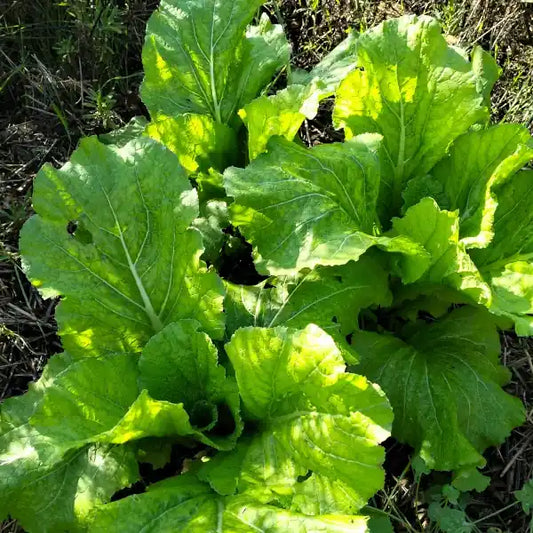
Buckwheat grows herbaceous, upright and loosely branched. The plants develop slender, angular stems and heart‑shaped leaves. Depending on site conditions, they reach 60–120 cm in height. The numerous white to pinkish flowers are borne in loose panicles and are highly nectar‑rich. The mature seeds are three‑sided, dark‑brown nutlets with a nutty aroma. Buckwheat is not winter hardy, but it grows quickly and covers the soil reliably.

Plant details:

  • Height: Medium to tall, 60–120 cm

  • Form: Upright, herbaceous, loosely branched

  • Leaves: Heart‑shaped, tender, mildly nutty

  • Flowers: White to pinkish, profuse, very nectar‑rich

  • Flavor: Three‑sided nutlets, aromatic


 Usage & Cultivation Highlights

Buckwheat is excellent in the kitchen: the grains can be cooked, roasted or used for groats, pancakes, noodles or flour. Young leaves and flowers are edible and suit salads, teas, smoothies and decorative uses. The grains can be prepared as porridge, breakfast bowls or savoury dishes, or roasted and sprinkled over vegetable dishes and yoghurt. The flour produces gluten‑free baked goods, crêpes and noodle doughs; the grains also work well in veggie patties, stuffed vegetables and savoury pan dishes. Sprouting grains provide shoots for raw dishes, while leaves and flowers can be used fresh or dried for tea, infused water and edible decoration. Buckwheat is also suitable for pestos, vegan spreads, soups and as a cereal alternative in modern gluten‑free cooking. The flowers provide valuable nectar for bees and other pollinators.

Buckwheat is easy to grow: it prefers sunny sites, poor to medium soils and even moisture during early growth. It develops quickly, suppresses weeds and is ideal as a green manure or catch crop. The plants are robust, competitive and remain stable even in changeable weather. Thanks to its short cultivation period, it integrates flexibly into crop rotations and can be sown successively into autumn. It thrives reliably on poor, sandy soils, closes stands rapidly and protects the soil from erosion. Its fine taproot improves soil structure, while its self‑compatibility allows several sowings per year. With high nectar production, buckwheat supports pollinators and remains remarkably resilient even in dry summers.

Compared with true cereals, buckwheat is particularly fast‑growing, low‑maintenance, versatile and naturally gluten‑free – ideal for green manuring, self‑sufficiency, naturalistic gardens and pollinator support.

Cultivation_Overview_-_Anbau_im_Uberblick_-_Visao_geral_do_cultivo_-_www

Origin & Cultivation at a Glance

First mention:

1st century AD

Origin:

Central and southern China

Breeder:

Wild form – taken into cultivation unchanged

Propagation site:

Hesse - Germany

Suitable for:

Open field, Cold frame, Polytunnel, Raised bed, Balcony / pot, Urban gardening

Care requirements:

Low – easy to care for, ideal for beginners.

Overwintering:

Not winter-hardy – can be cultivated outdoors as an annual.

Special features:

Quickly usable, Fast-growing, High-yielding, Resilient, Low-maintenance, Sun-loving / sunny, Shade-tolerant / partial shade, Heat-tolerant, Drought-tolerant
Plant_Growing_Instructions_-_Pflanzen_Anbau-Anleitung_-_Instrucoes_de_cultivo_de_plantas_-_www

Cultivation guide for

Echter Buchweizen

Growing difficulty:

Easy
Sowing in subtropical climates from March to September in a sunny location - pre‑cultivation is not recommended.
In temperate regions, direct sowing from April to July after the last frost in full sun – pre‑cultivation is not recommended.
Sowing in well‑drained, sandy‑stony to sandy‑humus‑poor and nutrient‑poor soils – 1–2 cm deep. Plant spacing: 10 × 20 cm.
For baby leaf, sow densely with row spacing of 10-15 cm.

Cultivation tips:

Direct sowing is recommended - young plants grow quickly and vigorously.
Thin out early so the plants have enough space.
Good air circulation protects against aphids and fungal diseases.

Storage instructions:

Store seeds in a cool, dry, dark, and airtight environment to maximize shelf life and germination.
Detailed information on seed storage
Plant_Profile_-_Pflanzen_Steckbrief_-_Ficha_da_planta_-_www

Plant Profile

Plant details

Botanical name:

Fagopyrum esculentum Moench

Botanical family:

Polygonaceae

Plant type:

Pseudocereal

Growth habit:

Upright growth, Herbaceous, Loosely branched

Plant width:

30 cm

Plant height:

60–120 cm

Root type:

Shallow to moderately rooted, Taprooted

Hardy to:

0 °C - tolerable for a short time, but not winter-hardy.

Cultivation period:

2,5-3 months

Life cycle:

Annual

Propagation method:

Generative propagation by seed, Self-seeding

Propagation:

This species is cross‑pollinated by insects and belongs to the species Fagopyrum esculentum.
A minimum distance of 500–800 m from other varieties of the same species is recommended for seed production, as cross‑pollination is possible.
The plant is annual – after flowering it produces small, branched inflorescences with numerous, small, well‑ripening seeds.
The seeds are ready for harvest once the seed heads have completely dried and become straw‑like and brittle.

Sowing & Planting

Germination type:

Dark germinator, Warm germinator

Sowing depth:

1-2 cm

Germination temperature:

18-25 °C

Germination time:

7-12 days

Pot culture:

Not recommended – better grown in garden beds.

Row spacing for baby leaf:

10-15 cm

Plant spacing:

10 cm

Row spacing:

20 cm

Pricking out / thinning out:

No thinning required – direct sowing recommended.

Planting time:

Transplanting not required - direct sowing is recommended.

Soil

Soil type:

Well‑drained, sandy‑stony, low‑nutrient loam soil

Soil pH:

5.5–7.0 – distinctly acidic to neutral

Nutrient requirements:

Light feeder

Soil moisture:

Moderately moist, Drought-tolerant, Adaptable, Sensitive to waterlogging

Soil preparation:

Loosen soil before sowing, Prepare soil weed-free and with a fine crumb structure., Mulch layer for moisture regulation

Companion planting, Crop rotation & Harvest

Companion plants:

Lettuce, Spinach, Bean, Pea, Onion crops, Dill, Coriander

Incompatible plants:

Brassicas, Cucurbits, Nightshade family, Corn

Crop rotation guidelines:

Do not grow on the same plot for several consecutive years – a break of 2–3 years is recommended.
Suitable as a cover crop and green manure before heavy feeders – crop rotation supports soil health.

Harvest time:

Summer, Autumn

Sowing to harvest:

2.5-3 months

Harvested parts:

Leaves, Stems, Flowers, Ripe seeds

Suitable for consumption:

Yes - edible raw or cooked.

Intended use:

Diet cuisine, Low Carb, Raw consumption, Salad, Cooking, Roasting, Baking, To purée, Tea, Drying / Dehydrating, Pollinator plant, Natural garden

Care & Cultivation practices

Water requirements:

Low to moderate

Plant care techniques:

Thin out after germination when sown directly, Irrigate occasionally, Loosen and hoe, Maintain weed-free

Plant protection:

Well-ventilated location and good drainage recommended.

Cultivation notes:

Proven and easy to cultivate Sensitive to waterlogging – use well-drained soil.

Other names

EN - English names:

Common Buckwheat

DE - German names:

Echter BuchweizenGemeiner BuchweizenHeidenkornSchwarzes Welschkorn

PT - Portuguese names:

Trigo sarracenoTrigo mourisco

ES - Spanish names:

AlforfónTrigo sarraceno

FR - French names:

SarrasinBlé noir

Customer Reviews

Be the first to write a review
0%
(0)
0%
(0)
0%
(0)
0%
(0)
0%
(0)

Further recommendations for you

100% open-pollinated & reproducible