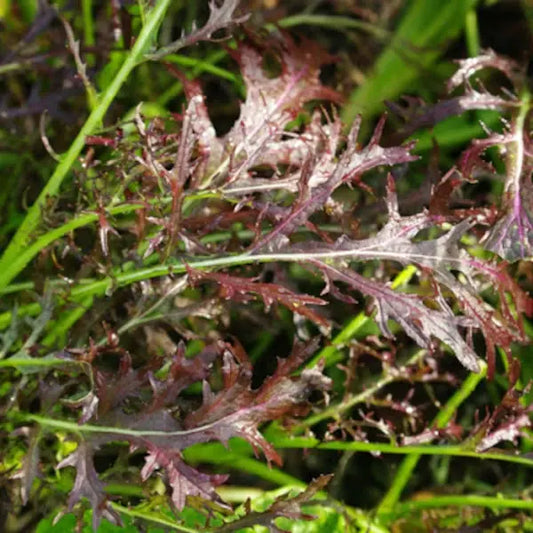
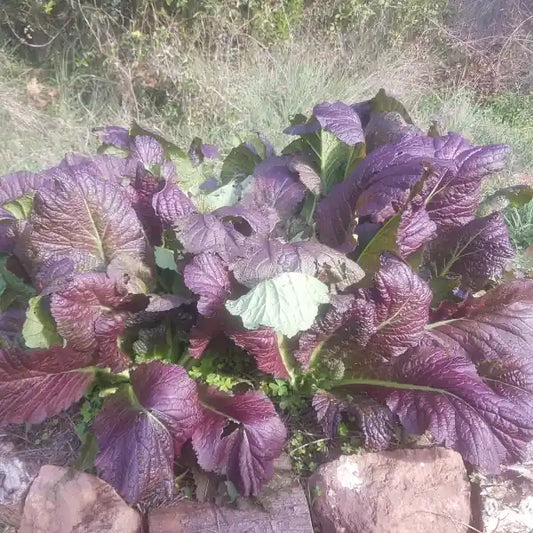
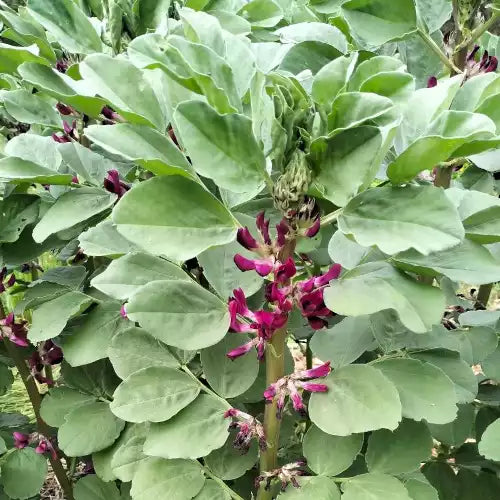
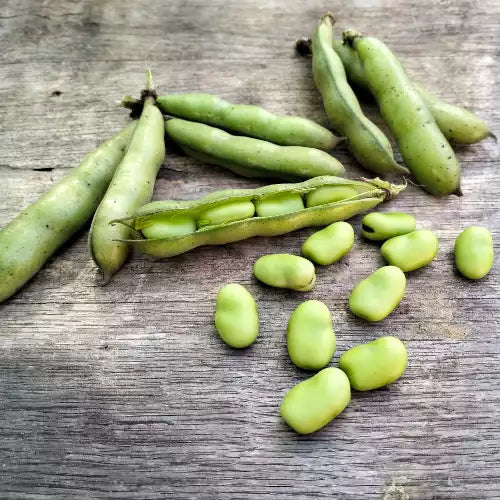
The biennial crimson clover is a wild forage and green manure plant that is suitable for cut flowers and also for seed production for sprouts and microgreens. It improves soil structure and fertility and is a nutritious bee pasture. Ideal for direct sowing, pot culture possible, sowing spring-summer-autumn, good for mixed culture, harvesting sprouts and seeds.
Description
Crimson clover is a biennial wild forage and green manure plant with very decorative flowers, which is suitable for cut flowers and also for seed production for sprouts and microgreens. This undemanding clover species originates from southern Europe and the western Mediterranean and can now be found growing wild in meadows, pastures, and along roadsides worldwide. In agriculture, crimson clover is primarily cultivated as an animal fodder plant and as a summer and winter cover crop. Due to its ability to fix nitrogen, protect against erosion, and improve soil structure and fertility, this plant is often used in winter cover crops and as a green manure. The fast-growing plant is ideal for promoting biodiversity, providing high biomass, suppressing weeds, and stabilizing the soil through the deep penetration of its roots. Since it is related to only a few native vegetable species, it integrates easily into crop rotations. The leaves and flowers are edible and can be used in the kitchen as sprouts or microgreens in salads, or as edible garnish. They have a mild, slightly nutty flavor and are rich in nutrients. Clover is an excellent bee pasture, providing flower-rich sources of nectar that attract numerous insects such as honeybees and bumblebees.
25g is sufficient for approx. 5 m²
General information
Plant family: Fabaceae
Life cycle: Biennial
Days to harvest: 120 days
Plant height approx.: 60 cm
Root type: Deep rooter
Nutrient requirements: Low
Water requirements: Low
Winter hardiness: Up to -5°C
Location: Sunny
Soil: Permeable, humus-rich loamy soil
pH value: 5.5 to 8
Sowing and planting information
Germination type: Light germinator
Sowing depth: 0-0.5 cm
Optimal germination temperature: 10-20 °C
Germination time: 7-20 days
Plant and row spacing: 20x20 cm
Germination ability of seeds: 2-3 years
Mixed culture
Optimal mixed culture: Corn, Grain
Unfavorable mixed culture: Bean, Pea
Sowing by climate zone
Subtropic climate (Mediterranean) (e. g. B. Portugal, Spain, Italy)
Direct sowing is recommended from March to November. The ideal location for the plants is sunny.
Moderate climate (e. g. B. Germany, Switzerland, Poland)
Direct sowing is recommended from April to October. The ideal location for the plants is sunny.
General recommendations
A wide-spread direct sowing method is recommended. Then, lightly rake the seeds into the soil and press firmly. After germination, thin out any plants that are too close together to the specified plant spacing.
Crimson clover grows best on light to medium-heavy, neutral, or calcareous loam soils; light sandy soils are unsuitable. It requires relatively dry soil; overly moist conditions are not conducive to development. Doesn't tolerate waterlogging.
Additional tips
Too low a temperature leads to a delay in germination, making the plants more susceptible to diseases and pests. In order to quickly obtain a fine, crumbly and permeable soil with good nutrient and water retention capacity, additional incorporation of biochar and primary rock flour is recommended.
Type of propagation
Propagation occurs via seeds.
Plant care
Rose trefoil tolerates drought well and requires little maintenance. It should only be watered sufficiently during the growth phase, and care should be taken to ensure the topsoil does not dry out. During the cultivation period, water only moderately. No fertilization is necessary.
Other names
Botanical names: Trifolium incarnatum
English names: Crimson clover, Italian clover
German names: Inkarnatklee, Blutklee, Rotklee, Rosenklee, Italienischer Klee, Krimsklee
Portuguese names: Trevo encarnado, Trevo vermelho, Erva do amor
Spanish names: Trébol encarnado, Trébol rojo
French names: Trèfle incarnat
Origin
Country: Germany