'Gochsheimer Gelbe' Yellow Carrot - Daucus carota

€3,00 EUR
€1.714,29 EUR kg
Price plus shipping
Delivery time: 1-2 business days (PT – international may vary)
reicht für ca. 10 m²

In stock

Traditional cultivation method & heirloom variety. Regionally adapted landrace. Genetically stable & open-pollinated - 100% free from hybrid breeding, GMOs, and synthetic fertilizers. Organically propagated - Non-proprietary variety.
Bohnensamen2

Harvest year:

2024

Seed viability:

Up to 6 years (species-specific)
Detailed information on germination capacity

Description

Cultivation & Characteristics

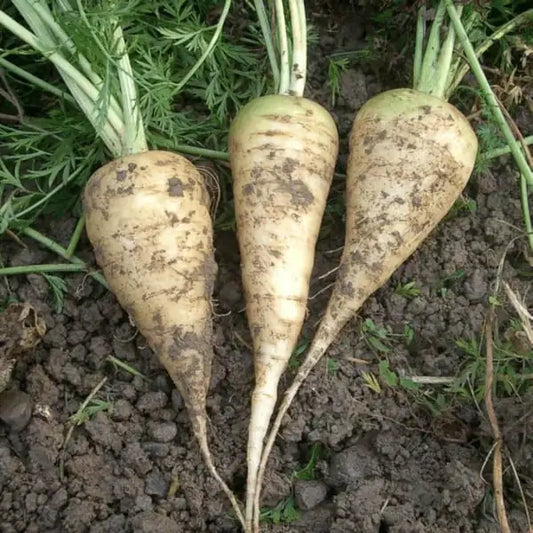
'Gochsheimer Gelbe' Yellow Carrot traditional German landrace with yellow, aromatic roots. 

A robust, mid‑late to late‑maturing carrot with characteristic yellow, conical, and sometimes sharply tapering roots. Its flavour is pleasantly aromatic and mildly sweet. The plants grow reliably, form firm flesh, and are ideal for open‑ground cultivation. Open‑pollinated, excellent for storage, and traditionally used for self‑sufficiency and organic production.


  Origin & History

'Gochsheimer Gelbe' is an open‑pollinated landrace documented since the 19th century and belonging to the traditional yellow carrot types of Central Europe. Botanically, it is part of the family Apiaceae, the subfamily Apioideae, and the genus Daucus within the species Daucus carota. Traditional yellow carrot forms were widespread in many regions of Europe before orange varieties became dominant and served as everyday root vegetables.

The name 'Gochsheimer Gelbe' refers to the historical use of yellow carrots in Franconian growing regions and to the regional anchoring of such yellow carrot types. The variety was valued for its reliable yields, healthy foliage and pronounced storability, which made it a dependable choice even under variable conditions.

To this day, 'Gochsheimer Gelbe' is cultivated and preserved due to its regional significance, genetic stability and pleasantly aromatic, mildly sweet flavor. It is one of the traditional yellow carrot types of Central Europe that have remained in cultivation over the long term thanks to their robustness and characteristic color.


  Appearance & Characteristics

In the first year, the plants form a vigorous leaf rosette with foliage reaching about 30–40 cm in length. The roots are yellow, conical to slightly tapering, and typically reach 18–22 cm in length. Frost‑tolerant down to –6 °C.

Root details:

  • Size: Medium to large, with roots 18–22 cm long

  • Shape: Conical, partly tapering

  • Color: Deep yellow to light yellow, typically a sunny yellow

  • Texture: Firm, juicy

  • Flavor: Slightly sweet, pleasantly aromatic


 Usage & Cultivation Highlights

'Gochsheimer Gelbe' is extremely versatile in the kitchen. It can be used raw, cooked or steamed, and was traditionally shaved, pickled or added to hearty stews. Thanks to its excellent storability, it remains aromatic for a long time and retains its firm texture. When cooked, it develops a pleasant, mildly sweet note that makes it ideal for roasted vegetables, braised dishes, soups and creamy preparations. Finely grated, it provides a good base for patties, fillings and spreadable pastes. It can also be fermented, dried or juiced, and serves as a mild, color‑giving component in stocks, smoothies and baby food.

'Gochsheimer Gelbe' is robust, adaptable and delivers reliable yields in open‑field cultivation. The variety matures mid‑season and forms long, well‑shaped roots. It shows high tolerance to varying weather conditions, develops stable roots even in less favorable summers and benefits from deep, loose soils. Thanks to its strong root system, it is comparatively drought‑resistant, while its uniform root development makes harvesting easier. The variety is also slow to bolt, shows good foliage health and is well suited for organic farming and mixed cropping. Its stable leaf structure allows for easy hoeing and maintenance, and its even development ensures a harmonious stand. Even in somewhat heavier soils, it roots reliably and remains remarkably consistent in shape. Overall, it is considered an uncomplicated, low‑maintenance variety that provides dependable results in both home gardens and professional cultivation.

Compared to other carrot varieties, 'Gochsheimer Gelbe' stands out for its robustness and its traditional, mildly sweet flavor – ideal for anyone who appreciates historical yellow carrot types with reliable growth and characteristic sunny‑yellow roots.

Cultivation_Overview_-_Anbau_im_Uberblick_-_Visao_geral_do_cultivo_-_www

Origin & Cultivation at a Glance

First mention:

19th century

Origin:

Germany

Breeder:

Unknown – heritage variety

Propagation site:

Alentejo - Portugal

Suitable for:

Open field, Polytunnel, Cold frame, Raised bed, Urban gardening

Care requirements:

Low – easy to care for, ideal for beginners.

Overwintering:

Conditionally winter‑hardy – tolerates short periods of light frost down to about –6 °C in open ground.

Special features:

Resilient, Low-maintenance, High-yielding, Sun-loving / sunny, Shade-tolerant / partial shade, Cold-hardy, Bolt-resistant
Plant_Growing_Instructions_-_Pflanzen_Anbau-Anleitung_-_Instrucoes_de_cultivo_de_plantas_-_www

Cultivation guide for

<tc>Gochsheimer Gelbe</tc>

Growing difficulty:

Light to medium
In subtropical climates, sow from March to October in full sun or partial shade – pre‑cultivation not recommended.
In temperate regions, direct sowing from March to July after the last frost in full sun – pre‑cultivation not recommended.
Sow in deep, well‑drained, sandy‑humus‑rich and nutrient‑rich loam, 1–2 cm deep. Spacing: 4 × 30 cm.
For baby leaf, sow densely with row spacing of 10-15 cm.

Cultivation tips:

Direct sowing is recommended – young plants grow stable and vigorous.
Thin out early so the plants have enough space.
Good air circulation protects against aphids and fungal diseases.
Don't apply fresh organic fertilizer, as it can lead to forked and deformed roots.
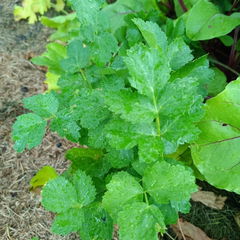
Consistent watering enhances fruit quality and promotes healthy plant growth.
For a staggered harvest, it’s recommended to sow seeds in intervals of 4 weeks.
Biochar and rock dust improve soil structure and enhance the retention of nutrients and water.

Storage instructions:

Store seeds in a cool, dry, dark, and airtight environment to maximize shelf life and germination.
Detailed information on seed storage
Plant_Profile_-_Pflanzen_Steckbrief_-_Ficha_da_planta_-_www

Plant Profile

Plant details

Botanical name:

<tc>Daucus carota subsp. sativus (Hoffm.) Schübl. & G. Martens ‘Gochsheimer Gelbe’</tc>

Botanical family:

Apiaceae

Plant type:

Root & tuber vegetables

Growth habit:

Forms a rosette, Herbaceous

Plant width:

20 cm

Plant height:

40 cm

Root type:

Moderately rooted, Taprooted

Hardy to:

–6 °C frost‑hardy.

Cultivation period:

2,5-4 months

Life cycle:

Biennial (grown as an annual)

Propagation method:

Generative propagation by seed

Propagation:

This variety is cross‑pollinated by insects and belongs to the species Daucus carota.
The plant is biennial – in the second year it produces tall, branched umbel inflorescences with numerous small, well‑ripening seeds.
For seed production, a minimum isolation distance of 800–1000 m from other varieties of the same species is recommended, as cross-pollination is easily possible.
The seeds are ready for harvest once the seed heads have completely dried and become straw‑like and brittle.

Sowing & Planting

Germination type:

Dark germinator, Temperate germinator

Sowing depth:

1-2 cm

Germination temperature:

15-20 °C

Germination time:

7-21 days

Pot culture:

Not recommended - better grown in garden beds or raised beds.

Row spacing for baby leaf:

10-15 cm

Plant spacing:

4 cm

Row spacing:

30 cm

Pricking out / thinning out:

No thinning required – direct sowing recommended.

Planting time:

Transplanting not required - direct sowing is recommended.

Soil

Soil type:

Deep, well-drained, humus-rich to sandy loam

Soil pH:

6.0-7.0 - slightly acidic to neutral

Nutrient requirements:

Medium feeder

Soil moisture:

Evenly moist, Moderately moist, Sensitive to waterlogging

Soil preparation:

Loosen soil deeply before sowing, Preparing stony or nutrient-poor soil, Apply compost before planting., Prepare soil weed-free and with a fine crumb structure., Consistent moisture and neutral pH soil promote root development., Mulch layer for moisture regulation

Companion planting, Crop rotation & Harvest

Companion plants:

Lettuce, Tomato, Bean, Pea, Broad bean, Radish, Onion crops, Calendula, Tagetes

Incompatible plants:

Fennel, Chard, Celery, Brassicas, Cucurbits, Root vegetable, Corn, Parsley

Crop rotation guidelines:

Don't plant after other umbellifers – a minimum interval of 3 years is recommended.
Repeated cultivation at the same site increases disease pressure, leads to nutrient depletion, and impairs soil structure.
Avoid planting directly after heavy-feeding crops – allow the soil to recover and replenish nutrients first.
Crop rotation with low-nutrient-demanding plants is recommended to prevent soil fatigue and maintain healthy growing conditions.

Harvest time:

Summer, Autumn, Winter

Sowing to harvest:

2-3 months

Harvested parts:

Roots

Suitable for consumption:

Yes - edible raw or cooked.

Intended use:

Diet cuisine, Low Carb, Raw consumption, Salad, Steaming, Cooking, Roasting, Grilling, Baking, To purée, Pickling, Fermentation, Juice / juicing, Smoothies, Freezing, Preserving, Drying / Dehydrating

Care & Cultivation practices

Water requirements:

Moderate

Plant care techniques:

Thin out after germination when sown directly, Water regularly - even during dry periods, Loosen and hoe, Maintain weed-free, Inspect regularly for pest infestation

Plant protection:

Well-ventilated location and good drainage recommended., Vegetable protection net advisable., Check early for aphids., Mulching recommended

Cultivation notes:

Proven and easy to cultivate Susceptible to slugs and snails in early development. At a later stage, the hardier leaves are less vulnerable. Can be infested by aphids - occasional monitoring recommended. Sensitive to waterlogging – use well-drained soil.

Other names

EN - English names:

Carrot

DE - German names:

Möhre

PT - Portuguese names:

Cenoura

ES - Spanish names:

Zanahoria

FR - French names:

Carotte

Customer Reviews

Be the first to write a review
0%
(0)
0%
(0)
0%
(0)
0%
(0)
0%
(0)

Further recommendations for you

100% open-pollinated & reproducible