Rusty Foxglove – a decorative wild perennial with bronze‑coloured flowers and strong attractiveness to pollinators.
A perennial, robust wild perennial with narrow, dark‑green leaves and tall, bronze‑brown flower spikes. It grows upright with a basal rosette, is winter hardy and suitable for open ground, naturalistic gardens, prairie plantings and dry sites. It germinates reliably and forms long‑lived single rosettes. Ideal for natural gardens, pollinator support and decorative perennial plantings.
 Origin & History
Rusty foxglove is an ornamental wild perennial originating from the warm, dry regions of south‑eastern Europe and western Asia, where it inhabits open woodlands, rocky slopes and stony, nutrient‑poor sites. As part of the traditional European wild flora, it was integrated early into naturalistic and perennial plantings. Botanically, it belongs to the plantain family (Plantaginaceae), subfamily Digitalidoideae, and the genus Digitalis.
The first formal description of Digitalis ferruginea was published in 1753, when Carl Linnaeus included the species in Species Plantarum, providing its earliest clear documentation. This early mention firmly anchors rusty foxglove in the flora of south‑eastern Europe and marks its entry into European botanical literature. In the 18th and 19th centuries, it spread through botanical gardens into Central European natural and landscape plantings, where its tall, sturdy flower spikes were valued as striking structural elements. In many regions, the flowers were used in herbal bundles and household charms and were regarded as symbols of protection and natural strength.
In historical herbal medicine, Digitalis ferruginea played a role as a source of cardiotonic cardenolides, which were intensively studied in the 19th century. However, the plant remained a regional medicinal and ritual herb and was never cultivated as a standardised medicinal species; due to its toxicity, domestic use is excluded. Today, rusty foxglove is considered a valuable species for drought‑tolerant plantings, prairie borders and biodiversity‑oriented designs. Its nectar‑rich flowers are highly important for wild bees and bumblebees, while its robust nature makes it a long‑lived, low‑maintenance wild perennial with a remarkable botanical history.
 Appearance & Characteristics
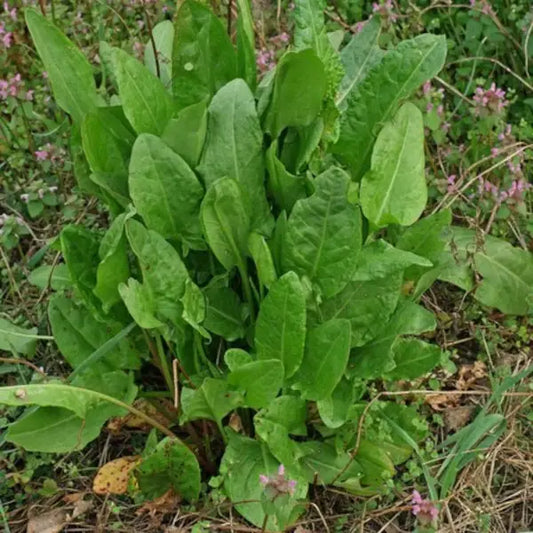
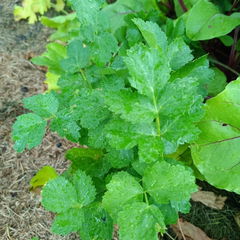
The plant is perennial, forming a strong basal rosette from which it produces a tall, upright flower stem. The leaves are narrow, dark green and slightly leathery. The bronze‑brown, bell‑shaped flowers appear in midsummer in long, densely packed racemes and are highly attractive to bumblebees. Rusty foxglove develops a deep taproot and is winter hardy to at least −20 °C.
Plant details:
Height: Tall, 80–140 cm
Form: Upright, rosette‑forming
Leaves: Narrow, dark green, leathery
Flowers: Bronze‑brown, bell‑shaped, in long racemes
 Usage & Cultivation Highlights
Rusty foxglove is ideal for naturalistic gardens, prairie plantings, steppe designs and drought‑tolerant perennial borders. Its tall flower spikes create striking vertical accents and provide bumblebees and wild bees with abundant nectar for weeks. It thrives reliably in poor, dry soils, is low‑maintenance and regenerates well through self‑seeding. Thanks to its heat and drought tolerance, it performs excellently in full sun, on slopes and in stony, free‑draining sites. As a long‑lived structural and companion perennial, it forms harmonious plantings with drought‑loving grasses and perennials. Its decorative flower spikes suit natural cut and dried arrangements, while the dense rosette stabilises open areas and enriches the garden ecologically.
Rusty foxglove remains vigorous for many years, forms stable rosettes and shows strong resilience even in nutrient‑poor, exposed locations. It also stays well‑shaped and ornamental in large containers, making it ideal for sunny terraces and entrance areas. It offers pronounced drought tolerance, reliable performance in stony, permeable soils and excellent stem strength for cutting. It establishes quickly after planting, maintains stable growth even during heat periods and benefits from minimal care — ideal for low‑maintenance, nature‑oriented planting concepts.
Compared with other wild species, rusty foxglove is particularly drought‑tolerant and long‑lived — perfect for anyone seeking a low‑maintenance, perennial wildflower with strong pollinator value and a striking presence.