'Sonnenherz' Oxheart Tomato - Solanum lycopersicum

€3,00 EUR
Price plus shipping
Delivery time: 1-2 business days (PT – international may vary)
reicht für ca. 18 plants

In stock

Modern classic, further development. Genetically stable & open-pollinated - 100% free from hybrid breeding, GMOs, and synthetic fertilizers. Organically propagated - Non-proprietary variety.
Bohnensamen2

Harvest year:

2024

Seed viability:

9 years (species-specific)
Detailed information on germination capacity

Description

Cultivation & Characteristics

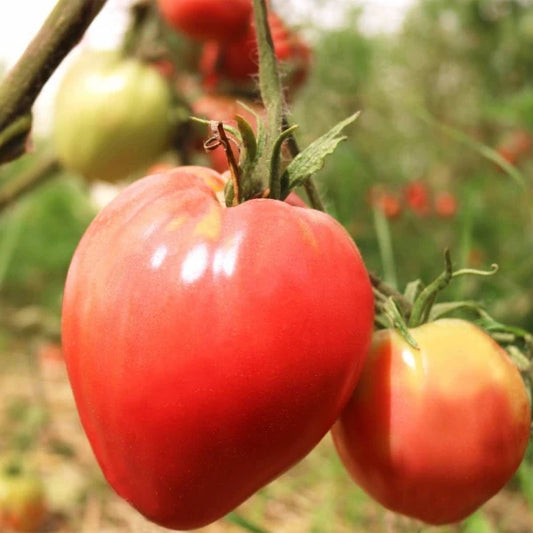
'Sonnenherz' Oxheart Tomato – early-ripening classic with multicolored, flame-patterned fruits. 

This variety is a large-fruited oxheart tomato with an exceptional sweet-fruity flavor and a high flesh content. It ripens early and is ideally suited for cultivation in greenhouses, protected outdoor beds, and large containers. Robust, very high-yielding, and perfect for self-sufficiency as well as organic cultivation.


  Origin & History

‘Sonnenherz’ is an open-pollinated oxheart tomato, developed in the late 1990s as part of the organic breeding movement. The aim was to create a robust, easy-to-grow, and early-ripening beefsteak tomato with a distinctive appearance and high flesh content.

Its hallmark is the multicolored fruit – ripening yellow-orange with red streaks in the flesh. Today it is considered a modern classic among oxheart tomatoes and is especially valued by lovers of open-pollinated varieties. Its unique flavor profile and spectacular appearance make it a true enrichment for any variety garden.


  Appearance & Characteristics

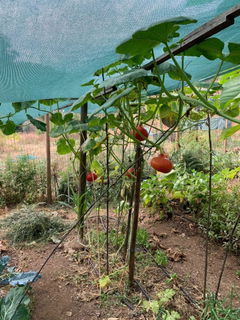
The plant grows indeterminately as a stake tomato and reaches a height of about 200–220 cm. It develops an airy yet robust growth habit with strong fruit clusters and bears dark green foliage.

Fruit details:

  • Size: Large, approx. 250–350 g per fruit

  • Shape: Heart-shaped, multi-locular

  • Color: Yellow-orange with red streaks – multicolored, flame-like pattern

  • Texture: Juicy, high flesh content, little gel mass

  • Flavor: Sweet, fruity, and aromatic – full-bodied and intense


 Usage & Cultivation Highlights

The fruits of the ‘Sonnenherz’ variety are excellent for fresh salads, as a flavorful topping on bread, and for decorative garnishing of dishes. With their spectacular multicolored appearance and sweet-fruity taste, they are a true highlight on the table.

Thanks to its robustness, this tomato variety thrives reliably in protected outdoor beds, greenhouses, and large containers. The early-ripening plants are easy to care for, with airy growth and very high yields. For outdoor cultivation in wetter and cooler regions, a rain cover is recommended.

Compared to other oxheart tomatoes, ‘Sonnenherz’ ripens particularly early and is visually striking – ideal for those who appreciate robust, open-pollinated tomatoes with impressive appearance.

Cultivation_Overview_-_Anbau_im_Uberblick_-_Visao_geral_do_cultivo_-_www

Origin & Cultivation at a Glance

First mention:

1990s

Origin:

Switzerland

Breeder:

Unknown – propagated through conservation initiatives

Propagation site:

Hesse - Germany

Suitable for:

Open field, Greenhouse, Polytunnel, Balcony / pot, Raised bed, Urban gardening, Vertical cultivation

Care requirements:

Low – easy to care for, ideal for beginners.

Overwintering:

Not winter-hardy – can be cultivated outdoors as an annual. Can be overwintered in a greenhouse in mild climates.

Special features:

High-yielding, Resilient, Low-maintenance, Sun-loving / sunny, Shade-tolerant / partial shade
Plant_Growing_Instructions_-_Pflanzen_Anbau-Anleitung_-_Instrucoes_de_cultivo_de_plantas_-_www

Cultivation guide for

<tc>Sonnenherz</tc>

Growing difficulty:

Easy
In subtropical climates, pre-cultivation is possible from January - transplant outdoors from March in full sun, once day and night temperatures remain consistently above 15 °C.
In temperate regions, start indoors from March – transplant outdoors in full sun from mid-May after the last frost.
Sow in deep, well-drained, humus-rich and nutrient-rich loamy soil - 0.5-1 cm deep. Plant spacing: 50 × 70 cm.

Cultivation tips:

Beefsteak tomatoes are typically grown with a single stem to promote better air circulation and fruit development.
In temperate climates, a rain cover is recommended – a simple roof or plastic tunnel is sufficient.
A sturdy support structure with tomato hooks provides secure hold for the stems, boosts yield, and makes plant care easier.
When transplanting seedlings, plant them deep into the soil up to the base of the seed leaves – this encourages strong root development and supports healthy growth.
Consistent watering enhances fruit quality and promotes healthy plant growth.
At temperatures below 5 °C, plant growth slows significantly - cold stress can hinder development.
Regular harvesting encourages new fruit set and increases overall yield.
Biochar and rock dust improve soil structure and enhance the retention of nutrients and water.

Storage instructions:

Store seeds in a cool, dry, dark, and airtight environment to maximize shelf life and germination.
Detailed information on seed storage
Plant_Profile_-_Pflanzen_Steckbrief_-_Ficha_da_planta_-_www

Plant Profile

Plant details

Botanical name:

<tc>Solanum lycopersicum L. 'Sonnenherz'</tc>

Botanical family:

Solanaceae

Plant type:

Fruit vegetables

Growth habit:

Upright growth, Indeterminate growth habit

Plant width:

50 cm

Plant height:

220 cm

Root type:

Deep-rooted, Taprooted

Hardy to:

3 °C – only suitable for overwintering indoors or in a greenhouse.

Cultivation period:

6-8 months

Life cycle:

Perennial (grown as an annual)

Propagation method:

Generative propagation by seed, Propagation by cuttings

Propagation:

This tomato variety is self-pollinating but can also cross-pollinate via insects. It belongs to the species Solanum lycopersicum and produces bisexual flowers.
A minimum distance of 20–50 m from other tomato varieties is recommended for seed production to avoid unwanted cross‑pollination by insects.
This tomato plant is perennial and forms clusters of flowers after blooming, which turn into fruit packed with seeds.
Tomato seeds are ready for harvest when the fruits are fully ripe and slightly soft to the touch.

Sowing & Planting

Germination type:

Dark germinator, Warm germinator

Sowing depth:

0,5-1 cm

Germination temperature:

22-28 °C

Germination time:

6-14 days

Pot culture:

Requires a minimum container size of 20-30 liters.

Row spacing for baby leaf:

Not suitable for baby-leaf cultivation.

Plant spacing:

50 cm

Row spacing:

70 cm

Pricking out / thinning out:

Thin out seedlings within 2 weeks after the formation of the first true leaf pairs.

Planting time:

Tomato seedlings are ready to be planted outdoors about four weeks after potting up, once temperatures are consistently warm. Plant only in consistently warm weather – ideally after the last frosts, when both daytime and nighttime temperatures are mild.

Soil

Soil type:

Deep, well-drained, humus-rich loam

Soil pH:

6.0-6.8 - slightly acidic to neutral

Nutrient requirements:

Heavy feeder

Soil moisture:

Evenly moist, Sensitive to waterlogging

Soil preparation:

Loosen soil deeply before sowing, Apply compost before planting., Apply lime to acidic soil., Prepare soil weed-free and with a fine crumb structure., Mulch layer for moisture regulation

Companion planting, Crop rotation & Harvest

Companion plants:

Lettuce, Lamb’s lettuce, Spinach, Bean, Onion crops, Carrot, Radish varieties, Basil, Nasturtium, Calendula, Dill, Marjoram, Tagetes

Incompatible plants:

Fennel, Celery, Nightshade family, Cucurbits, Pea, Beetroot, Corn

Crop rotation guidelines:

Do not plant after other nightshades – a minimum crop rotation interval of 3 years is recommended.
Repeated cultivation at the same site increases disease pressure, leads to nutrient depletion, and impairs soil structure.
Ideal previous crops include legumes, onions, root vegetables, and green manure – rotating crops supports healthy soil.
Crop rotation with low-nutrient-demanding plants is recommended to prevent soil fatigue and maintain healthy growing conditions.
Plan a green manure crop between heavy-feeding plants and this tomato variety to restore soil fertility.
Avoid planting directly after heavy-feeding crops – allow the soil to recover and replenish nutrients first.

Harvest time:

Summer, Autumn

Sowing to harvest:

4-5 months

Harvested parts:

Fruits

Suitable for consumption:

Yes - edible raw or cooked.

Intended use:

Diet cuisine, Low Carb, Raw consumption, Salad, Cooking, Roasting, Grilling, Baking, To purée, Juice / juicing, Preserving, Stuffing, Decoration

Care & Cultivation practices

Water requirements:

High

Plant care techniques:

Water regularly - even during dry periods, Fertilize, Removing side shoots, Create a climbing support, Maintain weed-free, Inspect regularly for pest infestation

Plant protection:

Well-ventilated location and good drainage recommended., Mulching recommended

Cultivation notes:

May develop mildew in damp weather – an airy location is recommended. Sensitive to waterlogging – use well-drained soil.

Other names

EN - English names:

Oxheart tomato

DE - German names:

Ochsenherztomate

PT - Portuguese names:

Coração de boi

ES - Spanish names:

Corazón de buey

FR - French names:

Cœur de bœuf

Customer Reviews

Be the first to write a review
0%
(0)
0%
(0)
0%
(0)
0%
(0)
0%
(0)

Further recommendations for you

100% open-pollinated & reproducible