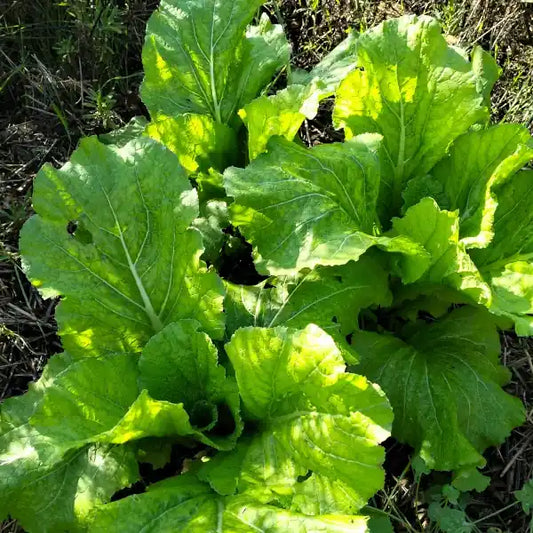
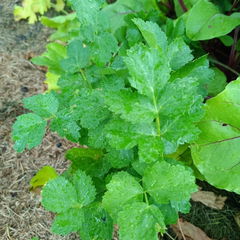
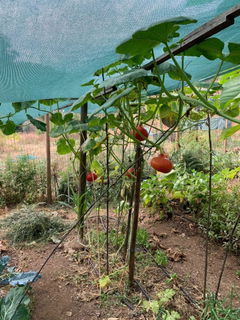
The biennial celery 'Tall Utah' is a fast-growing, high-yielding, and robust vegetable and medicinal plant with versatile uses. Its balanced and pleasant flavor is easy to grow. Ideal for direct sowing or pre-cultivation, pot culture possible, sowing in spring, good for mixed culture, harvesting of leaves and stems.
Description
The 'Tall Utah' celery stalk is a biennial vegetable and medicinal plant. Like all cultivated forms of celery, this variety is also descended from the wild form and has been widespread in Europe, North Africa, Madeira, the Canary Islands, Yemen, the Middle East, Central Asia and the Caucasus region since at least the Middle Ages. Celery was already used as a medicinal plant in ancient times. With dark green leaves and medium-sized celery sticks, this variety has a balanced and pleasant taste. The variety is fast-growing with a short cultivation period, high yield and robust. Not self-bleaching. Can be used in many ways in the kitchen, both raw and cooked. Can be grown in the autumn in mild climates in a greenhouse or with frost protection. This variety is sensitive to frost.
General information
Plant family: Apiaceae
Life cycle: Biennial
Days to harvest: 100 days
Plant height approx.: 60 cm
Root type: Deep and shallow rooter
Nutrient requirements: High
Water requirements: Medium
Winter hardiness: Up to 3°C
Location: Sunny
Soil: Permeable, humus-rich loamy soil
pH value: 6.5 to 7.5
Sowing and planting information
Germination type: Light germinator
Sowing depth: 0 cm
Optimal germination temperature: 18-22 °C
Germination time: 10-20 days
Plant and row spacing: 30x30 cm
Germination ability of seeds: 3-4 years
Mixed culture
Optimal mixed culture: Cabbage, Kohlrabi, Lamb's lettuce, Beans, Cucumbers, Chamomile, Leek, Chard, Rocket, Spinach, Tomato, Buckwheat, Mahonia, Marjoram, Shepherd's purse, Garlic
Unfavorable mixed culture: Artichoke, Dill, Carrot, Potato, Lettuce, Corn, Pepper, Parsley
Sowing by climate zone
Subtropic climate (Mediterranean) (e. g. B. Portugal, Spain, Italy)
Direct sowing from March to June is recommended. The plants should ideally be in a sunny location.
Moderate climate (e. g. B. Germany, Switzerland, Poland)
Pre-cultivation from March to May is recommended. The plants should ideally be planted in a sunny location.
General recommendations
For pre-cultivation, sow the seeds in a small bowl and let the seedlings grow until the first visible celery leaves appear, then transplant them into the desired containers. After transplanting, let the seedlings grow at moderate temperatures until they are ready to be planted out as seedlings. Plant the seedlings in the bed from the second pair of leaves after the cotyledons.
Celery stalk 'Tall Utah' prefers a permeable, nutrient-rich, moist and humus-rich loamy soil. Doesn't tolerate waterlogging.
Additional tips
When pricking out, make sure that the seedlings are not planted too deep. Celery can be grown on saline soils. After germination, ensure that temperatures are constant; a cold stimulus at this stage of development can trigger premature bolting. For a longer harvest period, care should be taken to harvest the outer stems first and not to damage the heart. Due to the fine, shallow roots, digging between the plants is not recommended. In order to quickly obtain a fine, crumbly and permeable soil with good nutrient and water storage capacity, it is recommended to also work in biochar and primary rock flour.
Type of propagation
Propagation occurs via seeds.
Plant care
Consistent watering is important for stable growth. Fertilization is recommended after 10 weeks.
Other names
Botanical names: Apium graveolens var dulce
English names: Celery stalk
German names: Stangensellerie, Staudensellerie
Portuguese names: Talos de aipo
Spanish names: Tallos de apio
French names: Branches de céleri
Origin
Country: Portugal