'Tondo di Chioggia' Red Beetroot - Beta vulgaris

<tc>'Tondo di Chioggia' Red Beetroot - Beta vulgaris</tc>
€3,00 EUR
€1.000,00 EUR kg
Price plus shipping
Delivery time: 1-2 business days (PT – international may vary)
reicht für ca. 10 m row

In stock

Traditional cultivation method & heirloom variety. Regionally adapted landrace. Genetically stable & open-pollinated - 100% free from hybrid breeding, GMOs, and synthetic fertilizers. Organically propagated - Non-proprietary variety.
Bohnensamen2

Harvest year:

2025

Seed viability:

5 years (species-specific)
Detailed information on germination capacity

Description

Cultivation & Characteristics

'Tondo di Chioggia' Red Beetroot – historic rarity with red-and-white ringed flesh. 

This traditional, open-pollinated variety from Italy impresses with decorative ringed flesh, a mild-sweet flavor, and tender texture. It is ideally suited for cultivation in open ground and greenhouses – robust, high-yielding, and perfect for self-sufficiency as well as organic gardening.


  Origin & History

‘Tondo di Chioggia’ is a historic beet variety from the city of Chioggia in Veneto, Italy. It has been cultivated since the 19th century and is known for its spectacular red-and-white ringed interior, which earned it the name “candy-striped beet” or “bull’s-eye beet.” As an open-pollinated variety, it can be freely propagated and is still appreciated today by lovers of historic vegetable varieties. Its unique appearance and mild flavor make it a true classic in the garden.


  Appearance & Characteristics

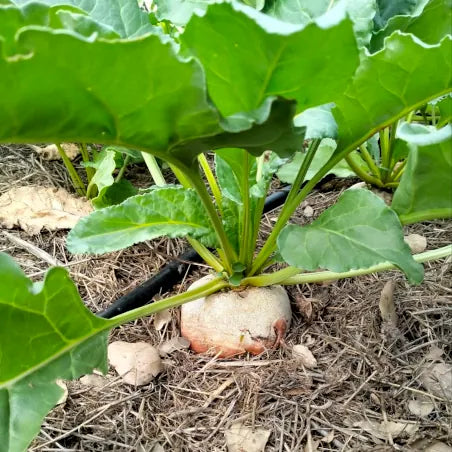
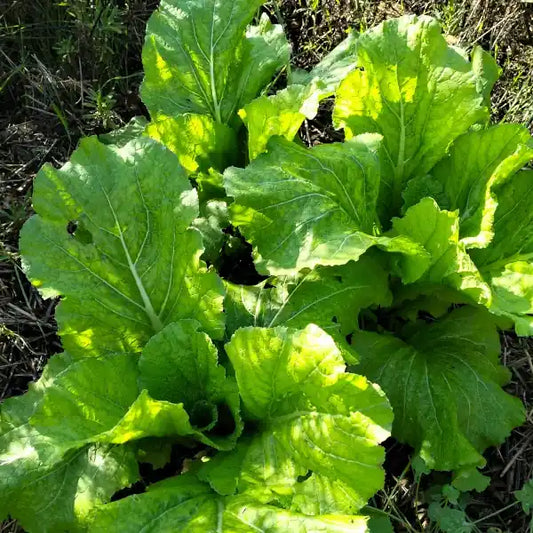
The plant is biennial and forms a compact leaf rosette with light green leaves in the first year. The tubers develop evenly and are visually particularly striking.

Root details:

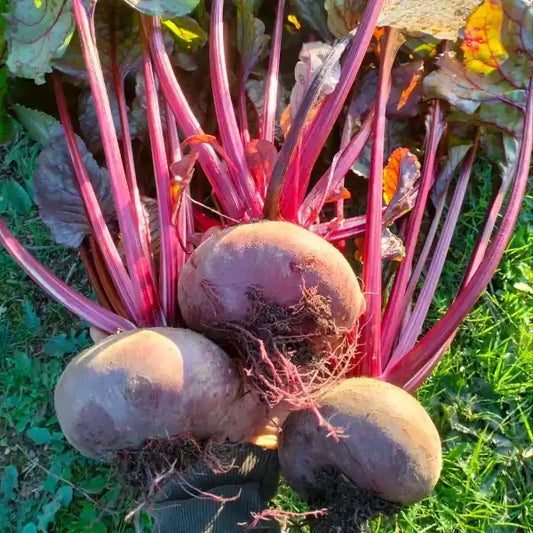
  • Size: Medium, approx. 6–8 cm in diameter

  • Shape: Round, evenly shaped

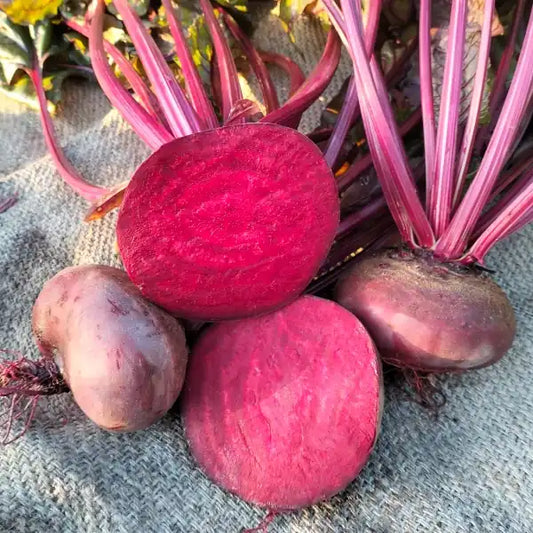
  • Color: Reddish on the outside, spectacular red-and-white ringed inside

  • Texture: Juicy, tender flesh

  • Flavor: Mild-sweet, less earthy than classic red beet


 Usage & Cultivation Highlights

The tubers of the variety ‘Tondo di Chioggia’ are excellent for raw food, carpaccio, fresh salads, roasted vegetables, and antipasti. With their decorative appearance, they are a real eye-catcher on the plate. Young leaves can be used like spinach or Swiss chard.

Thanks to its robustness, the beet grows reliably in open ground, in greenhouses, and in pots. It prefers humus-rich, deep soils and consistent water supply. In mixed cultivation, it harmonizes well with lettuce, kohlrabi, and herbs. The tubers store well when kept cool and dry – ideal for winter supplies.

Compared to classic red beet varieties, ‘Tondo di Chioggia’ is particularly mild and visually spectacular – ideal for gardeners who appreciate open-pollinated vegetable varieties with exceptional character.

Cultivation_Overview_-_Anbau_im_Uberblick_-_Visao_geral_do_cultivo_-_www

Origin & Cultivation at a Glance

First mention:

1841

Origin:

Italy

Breeder:

Unknown – heritage variety

Propagation site:

Hesse - Germany

Suitable for:

Open field, Greenhouse, Balcony / pot, Urban gardening, Raised bed, Plant towers or tiered systems

Care requirements:

Low – easy to care for, ideal for beginners.

Overwintering:

Not winter-hardy – can be cultivated outdoors as an annual. Can be overwintered in a greenhouse in mild climates. Overwintering only possible in frost-free conditions for seed production.

Special features:

Bolt-resistant, Heat-tolerant, Resilient, Low-maintenance, Sun-loving / sunny, Shade-tolerant / partial shade, High-yielding
Plant_Growing_Instructions_-_Pflanzen_Anbau-Anleitung_-_Instrucoes_de_cultivo_de_plantas_-_www

Cultivation guide for

<tc>Tondo di Chioggia</tc>

Growing difficulty:

Easy
In subtropical climates, sow from March in sunny or semi-shaded locations – indoor pre-cultivation possible from January.
In temperate regions, direct sowing from April after the last frost in full sun – pre-cultivation from March recommended.
Sowing in well‑drained, humus‑rich and nutrient‑rich loam soil – 2–3 cm deep. Plant spacing: 20 × 30 cm.

Cultivation tips:

Thin out early so the plants have enough space.
Good air circulation protects against aphids and fungal diseases.
For a staggered harvest, it’s recommended to sow seeds in intervals of 4 weeks.
Biochar and rock dust improve soil structure and enhance the retention of nutrients and water.

Storage instructions:

Store seeds in a cool, dry, dark, and airtight environment to maximize shelf life and germination.
Detailed information on seed storage
Plant_Profile_-_Pflanzen_Steckbrief_-_Ficha_da_planta_-_www

Plant Profile

Plant details

Botanical name:

<tc>Beta vulgaris L. subsp. vulgaris var. conditiva ‘Tondo di Chioggia’</tc>

Botanical family:

Amaranthaceae

Plant type:

Root & tuber vegetables

Growth habit:

Herbaceous, Forms a rosette, Compact growth with a rounded root

Plant width:

30 cm

Plant height:

60 cm

Root type:

Shallow to moderately rooted

Hardy to:

-2 °C short-term possible.

Cultivation period:

4-4.5 months

Life cycle:

Biennial (grown as an annual)

Propagation method:

Generative propagation by seed

Propagation:

This variety is cross-pollinated by wind and belongs to the species Beta vulgaris.
For seed production, a minimum isolation distance of 800–1000 m from other varieties of the same species is recommended, as cross-pollination is easily possible.
This plant is biennial – after flowering, it develops branched inflorescences with small to medium-sized seeds that mature well.
Seeds are ready for harvest once the seed heads are fully dried and slightly brittle.

Sowing & Planting

Germination type:

Dark germinator, Temperate germinator

Sowing depth:

1-2 cm

Germination temperature:

15-22 °C

Germination time:

7-10 days

Pot culture:

Requires a minimum container size of 5 liters.

Row spacing for baby leaf:

Limited suitability for baby-leaf cultivation. Swiss chard is the more suitable choice for baby-leaf cultivation.

Plant spacing:

15-20 cm

Row spacing:

25-30 cm

Pricking out / thinning out:

Thin out seedlings within 2 weeks after the formation of the first true leaf pairs.

Planting time:

Transplanted seedlings can be planted outdoors about 3 weeks after pricking out. Only once the soil is frost-free.

Soil

Soil type:

Well-drained, humus-rich loam soil

Soil pH:

6.0-7.5 – slightly acidic to alkaline

Nutrient requirements:

Moderate to heavy feeder

Soil moisture:

Evenly moist, Sensitive to waterlogging

Soil preparation:

Loosen soil before sowing, Prepare soil weed-free and with a fine crumb structure., Apply compost before planting., Consistent moisture and neutral pH soil promote root development., Mulch layer for moisture regulation

Companion planting, Crop rotation & Harvest

Companion plants:

Lettuce, Lamb’s lettuce, Brassicas, Cucumber, Bean, Broad bean, Onion crops, Dill, Savory, Calendula, Tagetes

Incompatible plants:

Spinach, Chard, Root crops, Corn, Potato, Celery

Crop rotation guidelines:

Do not plant after other Beta species (Swiss chard, beetroot) - a minimum interval of 3 years is recommended.
Repeated cultivation at the same site increases disease pressure, leads to nutrient depletion, and impairs soil structure.
Ideal previous crops include legumes, onions, root vegetables, and green manure – rotating crops supports healthy soil.
Crop rotation with low-nutrient-demanding plants is recommended to prevent soil fatigue and maintain healthy growing conditions.

Harvest time:

Spring, Summer, Autumn

Sowing to harvest:

2-4 months

Harvested parts:

Roots, Leaves

Suitable for consumption:

Yes - edible raw or cooked.

Intended use:

Raw consumption, Diet cuisine, Low Carb, Natural garden, Salad, Juice / juicing, Smoothies, Fermentation, Steaming, Cooking, Baking, Pickling, To purée, Freezing, Preserving

Care & Cultivation practices

Water requirements:

Moderate to high

Plant care techniques:

Thin out after germination when sown directly, Water regularly - even during dry periods, Maintain weed-free

Plant protection:

Mulching recommended, Slug protection recommended

Cultivation notes:

May develop mildew in damp weather – an airy location is recommended. Susceptible to slugs and snails in early development. At a later stage, the hardier leaves are less vulnerable. Sensitive to waterlogging – use well-drained soil.

Other names

EN - English names:

Red beetBeetrootGarden beetTable beet

DE - German names:

Rote BeteRandeRübe

PT - Portuguese names:

Beterraba vermelha

ES - Spanish names:

Remolacha roja

FR - French names:

Betterave rouge

Customer Reviews

Be the first to write a review
0%
(0)
0%
(0)
0%
(0)
0%
(0)
0%
(0)

Further recommendations for you

100% open-pollinated & reproducible