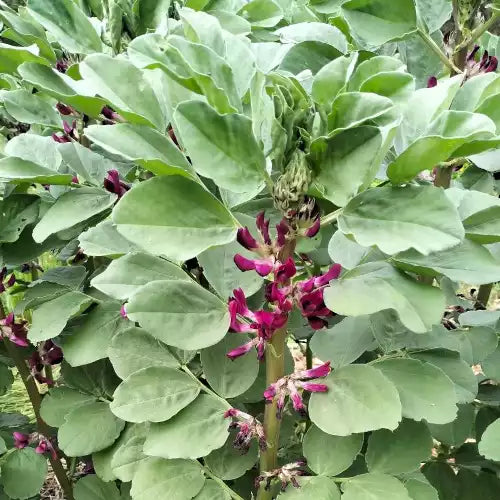
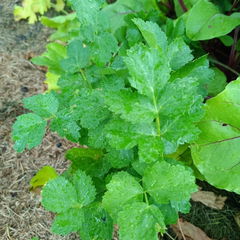
The annual pith pea 'Miracle of Kelvedon' is an early, cold-resistant and fully heat-tolerant pea variety. For fresh consumption with a soft, sweet and aromatic taste. Can be grown without trellises. Ideal for direct sowing, pot cultivation possible, sowing spring-autumn, good for mixed culture, harvesting fresh or dried peas.
Description
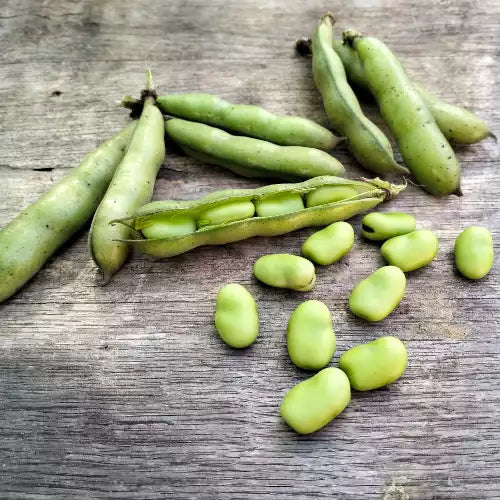
The 'Miracle of Kelvedon' pith pea is an old, annual, early, cold-resistant and heat-tolerant pea variety from England. The high-yielding and historic shell pea variety has been officially cultivated in Europe since 1944 and has been one of the best pea varieties for over 50 years. The plants form long, dark green pods with 7-10 dark green peas and can be grown without trellises. The taste is soft, sweet and aromatic and is suitable for fresh consumption or as dried peas.
General information
Plant family: Fabaceae
Life cycle: Annual
Days to harvest: 75 days
Plant height approx.: 60 cm
Root type: Heart rooter
Nutrient requirements: Low
Water requirements: Medium
Winter hardiness: Up to 4°C
Location: Sunny until semi shady
Soil: Permeable, deep, humus-rich loamy soil
pH value: 6 to 8
Sowing and planting information
Germination type: Dark germinator
Sowing depth: 3-5 cm
Optimal germination temperature: 10-20 °C
Germination time: 10-15 days
Plant and row spacing: 3x60 cm
Germination ability of seeds: 3-4 years
Mixed culture
Optimal mixed culture: Dill, Fennel, Cucumber, Cabbage, Corn, Carrot, Kohlrabi, Lettuce, Radish, Rhubarb, Spinach, Zucchini, Lamb's lettuce, Tarragon, Strawberry, Borage
Unfavorable mixed culture: Bean, Pea, Potato, Leek, Garlic, Tomato, Onion
Sowing by climate zone
Subtropic climate (Mediterranean) (e. g. B. Portugal, Spain, Italy)
Direct sowing is recommended from January to April and in autumn from September to November. The ideal location for the plants is open and sunny to partially shaded.
Moderate climate (e. g. B. Germany, Switzerland, Poland)
Direct sowing from March to June is recommended. The plants are ideally planted in an open, sunny location.
General recommendations
Dense direct sowing in rows is recommended. The optimal time for sowing is on average 10°C, but sowing can also be done at warmer temperatures. Once the plants are 10 cm tall, it is recommended to cover the plants with soil so that they thrive optimally.
The 'Miracle of Kelvedon' pith pea prefers a permeable, deep, nutrient-rich, calcareous, moist and humus-rich loamy soil. Doesn't tolerate waterlogging.
Additional tips
Since the soil is supplied with nitrogen via the roots, these should be cut off after harvest and left in the soil. Due to the nitrogen excretion on the roots of the peas, planting in mixed culture promotes surrounding plants. With marrow peas, only the seeds are harvested when they are green and ripe. This variety does not require a framework to guide the pea shoots up. In order to quickly obtain a fine, crumbly and permeable soil with good nutrient and water storage capacity, additional incorporation of biochar and primary rock flour is recommended.
Type of propagation
Propagation occurs via seeds.
Plant care
Occasional weeding helps the young plants develop. Loosened, nutrient-rich and moist soil is sufficient. No fertilization necessary.
Other names
Botanical names: Pisum sativum L. convar. medullare
English names: Pith Pea, Marrow pea, Wrinkled pea
German names: Erbse, Markerbse
Portuguese names: Ervilha, Ervilha de neve
Spanish names: Guisante, Guisante de tuétano
French names: Pois, Pois à moelle, Pois à courge
Origin
Country: Portugal