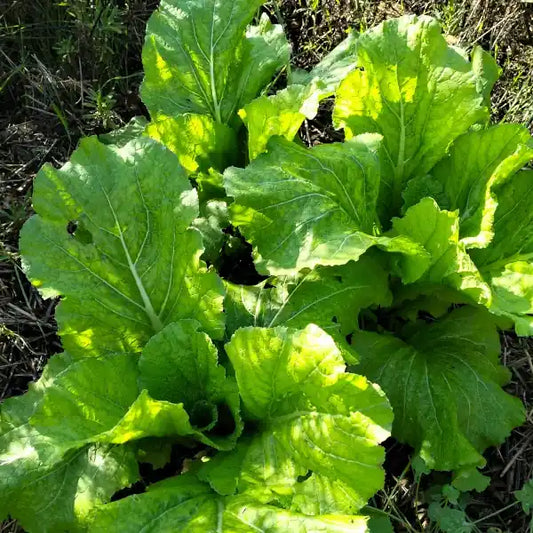
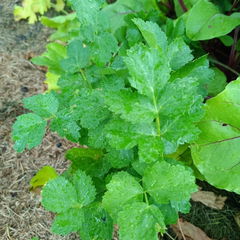
'Gewöhnlicher Schnitt' Leaf Celery - Apium graveolens var. secalinum

€2,50 EUR
€5.000,00 EUR kg
Price plus shipping
Delivery time: 1-2 business days (PT – international may vary)
reicht für ca. 10 m²

In stock

Traditional cultivated variety. Genetically stable & open-pollinated - 100% free from hybrid breeding, GMOs, and synthetic fertilizers. Organically propagated - Non-proprietary variety.
Bohnensamen2

Harvest year:

2024

Seed viability:

Up to 4 years (species-specific)
Detailed information on germination capacity

Description

Cultivation & Characteristics

'Gewöhnlicher Schnitt' Leaf Celery – aromatic celery leaf with an intense, savoury flavour. 

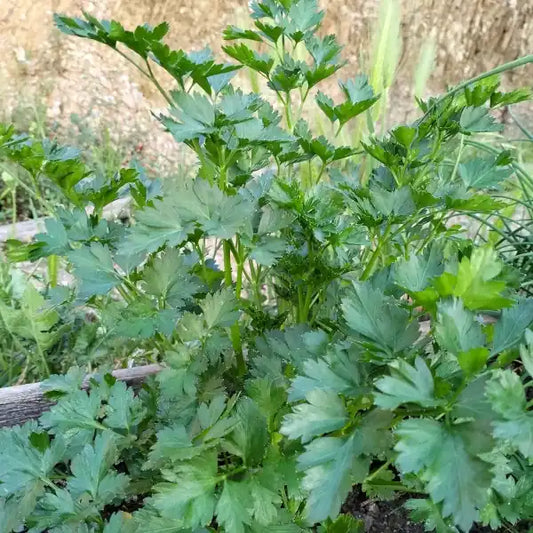
An annual cultivated culinary herb with a fresh, robust celery aroma and a high content of essential oils. The plants grow vigorously, are easy to care for and are suitable for open ground, raised beds, pots and herb gardens. In the first year they form a dense, upright rosette of leaves reaching 30–50 cm in height; if overwintered, the second year produces tall, branched flowering stems with numerous well‑ripening seeds. Cutting celery germinates reliably, responds well to regular harvesting and provides aromatic greens throughout the entire season. Ideal for self‑sufficiency, herb beds and fresh everyday cooking.


  Origin & History

‘Gewöhnlicher Schnitt’ is a traditional leaf form of celery from which later developed both stalk celery and celeriac. This celery type belongs to the traditional European garden heritage and has been used since the early Middle Ages. Botanically, cutting celery belongs to the family Apiaceae, subfamily Apioideae, genus Apium.

In the High Middle Ages this celery type was systematically cultivated in monastic gardens and was regarded as warming, strengthening and digestive. The leaves were used fresh in soups, herbal infusions and medicinal preparations. While Apium graveolens later gave rise to distinct cultivated forms such as celeriac and stalk celery, the cut‑leaf type remained in rural gardens. It was valued for its intense aroma and was a staple of everyday cooking.

The variety ‘Gewöhnlicher Schnitt’ stands in direct lineage to this historical leaf form and preserves its original characteristics: rapid growth, strong regrowth after cutting and a fresh, robust leaf aroma. In traditional herbal medicine the leaves, rich in essential oils, were used for their digestive, diuretic and metabolism‑stimulating properties. They appeared in herbal infusions, soups, strengthening remedies and as a warming kitchen herb.

Today, cutting celery remains a classic culinary herb in European home cooking and an essential component of many soup bases, herb blends and fresh everyday dishes. The variety ‘Gewöhnlicher Schnitt’ thus represents more than 1,100 years of continuous cultivation history and embodies the original, aromatic and easy‑to‑grow form of celery greens.


   Appearance & Characteristics

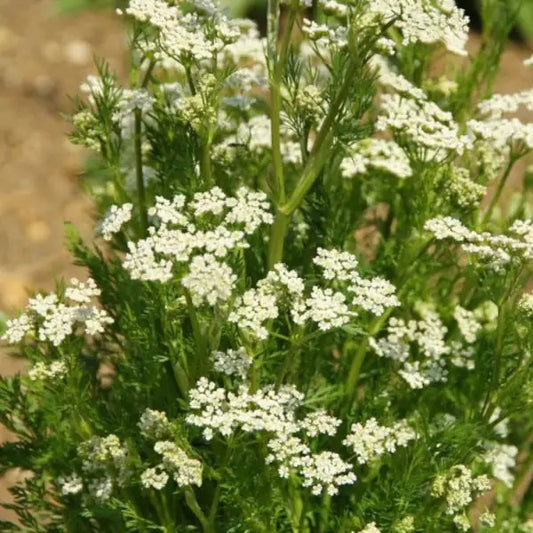
The plant is herbaceous and upright, forming a compact rosette of aromatic, pinnate leaves in its first year. Growth height is 30–50 cm. In a two‑year cultivation cycle, the second year produces 60–90 cm tall, branched flowering stems with white umbels that attract numerous pollinators. Cutting celery is robust, tolerant of frequent harvesting and reliably resprouts after each cut. Grown as an annual, not winter hardy.

Plant details:

  • Height: Medium, 30–50 cm

  • Form: Basal rosette in the 1st year; upright and branched in the 2nd year

  • Leaves: Pinnate, strongly aromatic

  • Flowers: White, in umbels

  • Flavor: Fresh‑savory, typically celery‑like


 Usage & Cultivation Highlights

'Gewöhnlicher Schnitt' Cutting celery is ideal for seasoning soups, broths, vegetable dishes, herb butter, dips, fillings and stews. The fresh leaves are rich in essential oils and give dishes an intense, fresh celery aroma. It can be used raw, steamed, cooked, dried or frozen. Finely chopped, it suits salads, herb blends, pestos and smoothies; when dried, it is excellent for soup seasoning and herb salts. It also enhances risottos, potato and grain dishes, light sauces, marinades and dressings, works well in omelettes, quiches and savoury bakes, and adds depth to wok dishes, curries and Mediterranean vegetable pans. It complements fish, seafood, pulses and light meat dishes, rounds off clear broths and stocks, and provides a fresh aromatic finish when sprinkled over warm dishes. It also develops its full aroma in herb oils, flavoured vinegars and savoury spreads.

In cultivation, 'Gewöhnlicher Schnitt' is uncomplicated: it prefers sunny to semi‑shaded sites, humus‑rich, evenly moist soil and regular cutting to encourage new growth. The plants are robust, sturdy and provide fresh greens over many months. It grows reliably in pots as well as in beds. If overwintered, the second year produces flowering stems and seeds for home seed saving. Cutting celery attracts beneficial insects, grows quickly, competes well with weeds and develops steadily even in changeable weather. Its moderate root depth makes it tolerant of short dry periods, while its compact rosette form allows close spacing and high yields per area. Thanks to its short cultivation period, it integrates flexibly into crop rotations, and successive sowings ensure continuous harvests into autumn.

Compared to other celery forms, 'Gewöhnlicher Schnitt' cutting celery is the easiest and fastest leaf type – ideal for anyone who values aromatic greens with high harvest frequency and versatile culinary use.

Cultivation_Overview_-_Anbau_im_Uberblick_-_Visao_geral_do_cultivo_-_www

Origin & Cultivation at a Glance

First mention:

No verifiable first year of mention

Origin:

Not officially documented

Breeder:

Not officially known – distributed through preservation initiatives

Propagation site:

Hesse - Germany

Suitable for:

Open field, Greenhouse, Polytunnel, Cold frame, Raised bed, Balcony / pot, Urban gardening

Care requirements:

Low – easy to care for, ideal for beginners.

Overwintering:

Not winter-hardy – can be cultivated outdoors as an annual.

Special features:

Quickly usable, Fast-growing, High-yielding, Resilient, Low-maintenance, Sun-loving / sunny, Shade-tolerant / partial shade, Heat-tolerant, Drought-tolerant, Cold-hardy
Plant_Growing_Instructions_-_Pflanzen_Anbau-Anleitung_-_Instrucoes_de_cultivo_de_plantas_-_www

Cultivation guide for

<tc>Gewöhnlicher Schnitt</tc>

Growing difficulty:

Easy
Sowing in subtropical climates from March to September in sunny or partial‑shade locations – pre‑cultivation is not recommended.
Sowing in temperate regions from April to June after frost in sunny to partial‑shade locations – pre‑cultivation is not recommended.
Sowing in deep, well‑drained, humus‑rich and nutrient‑rich loam soil. Light germinator – do not cover with soil. Plant spacing: 20 × 40 cm.
For baby leaf, sow densely with row spacing of 10-15 cm.

Cultivation tips:

Direct sowing is recommended - young plants grow quickly and vigorously.
Thin out early so the plants have enough space.
Good air circulation protects against aphids and fungal diseases.
Biochar and rock dust improve soil structure and enhance the retention of nutrients and water.

Storage instructions:

Store seeds in a cool, dry, dark, and airtight environment to maximize shelf life and germination.
Detailed information on seed storage
Plant_Profile_-_Pflanzen_Steckbrief_-_Ficha_da_planta_-_www

Plant Profile

Plant details

Botanical name:

<tc>Apium graveolens L. var. secalinum Alef. 'Gewöhnlicher Schnitt'</tc>

Botanical family:

Apiaceae

Plant type:

Leafy vegetables

Growth habit:

Upright growth, Bushy, Herbaceous, Forms a rosette

Plant width:

30 cm

Plant height:

50 cm

Root type:

Shallow to moderately rooted, Taprooted

Hardy to:

-3 °C possible for short periods

Cultivation period:

4-6 months

Life cycle:

Biennial

Propagation method:

Generative propagation by seed, Self-seeding

Propagation:

This variety is cross‑pollinating through insect pollination and belongs to the species Apium graveolens.
For seed production, a minimum isolation distance of 800–1000 m from other varieties of the same species is recommended, as cross-pollination is easily possible.
The plant is biennial – in the second year it produces tall, branched umbel inflorescences with numerous small, well‑ripening seeds.

Sowing & Planting

Germination type:

Light germinator, Temperate germinator

Sowing depth:

0 cm

Germination temperature:

15-24 °C

Germination time:

10-21 days

Pot culture:

Requires a minimum container size of 3 liters.

Row spacing for baby leaf:

10-15 cm

Plant spacing:

20 cm

Row spacing:

40 cm

Pricking out / thinning out:

No thinning required – direct sowing recommended.

Planting time:

Transplanting not required - direct sowing is recommended.

Soil

Soil type:

Deep, well-drained, humus-rich loam

Soil pH:

6.5-7.5 - slightly acidic to alkaline

Nutrient requirements:

Moderate to heavy feeder

Soil moisture:

Evenly moist, Adaptable, Sensitive to waterlogging

Soil preparation:

Loosen soil before sowing, Apply compost before planting., Prepare soil weed-free and with a fine crumb structure., Mulch layer for moisture regulation

Companion planting, Crop rotation & Harvest

Companion plants:

Lettuce, Spinach, Kohlrabi, Bean, Onion crops, Beetroot, Radish, Calendula, Tagetes, Borage

Incompatible plants:

Other umbellifers, Heavy‑feeding vegetable crops, Potato, Corn, Mint, Sunflower, Mustard, Rocket / Arugula

Crop rotation guidelines:

Don't plant after other umbellifers – a minimum interval of 3 years is recommended.
Avoid planting directly after heavy-feeding crops – allow the soil to recover and replenish nutrients first.
Ideal previous crops include legumes, onions, root vegetables, and green manure – rotating crops supports healthy soil.

Harvest time:

Spring, Summer, Autumn

Sowing to harvest:

1.5-2.5 months

Harvested parts:

Leaves, Stems, Young shoots

Suitable for consumption:

Yes - edible raw or cooked.

Intended use:

Diet cuisine, Low Carb, Culinary herb, Raw consumption, Salad, Steaming, Cooking, Roasting, Stuffing, Pickling, Fermentation, To purée, Juice / juicing, Smoothies, Tea, Freezing, Preserving, Drying / Dehydrating

Care & Cultivation practices

Water requirements:

High

Plant care techniques:

Thin out after germination when sown directly, Water regularly - even during dry periods, Loosen and hoe, Fertilize, Maintain weed-free

Plant protection:

Well-ventilated location and good drainage recommended., Mulching recommended

Cultivation notes:

Proven and easy to cultivate Susceptible to slugs and snails in early development. At a later stage, the hardier leaves are less vulnerable. Growth stops under drought – consistent water supply required. Sensitive to waterlogging – use well-drained soil.

Other names

EN - English names:

Leaf celeryCutting celeryChinese celery

DE - German names:

Leaf CeleryBlattsellerieStaudensellerie

PT - Portuguese names:

Aipo de folhaAipo cortadoAipo verde cortar

ES - Spanish names:

Apio de hojaApio de cortar

FR - French names:

Céleri à couperCéleri feuille

Customer Reviews

Be the first to write a review
0%
(0)
0%
(0)
0%
(0)
0%
(0)
0%
(0)

Further recommendations for you

100% open-pollinated & reproducible